- More than 80 Labour lawmakers urge Starmer to quit or set departure timetable after crushing election losses
- Under Labour rules, challenger would need backing of 81 lawmakers to force formal leadership contest
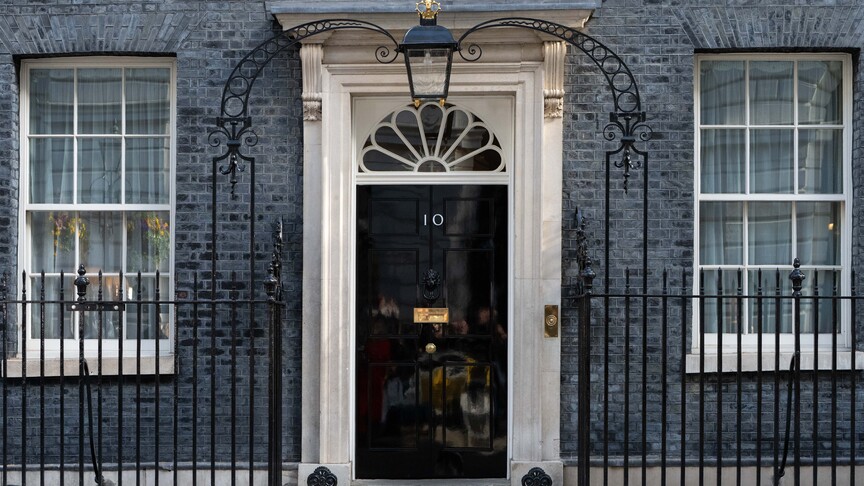
British Prime Minister Keir Starmer is fighting to remain in office after several ministers resigned from his government and dozens of Labour lawmakers called on him to step down or set a timetable for his departure following the party’s crushing election losses.
Health Secretary Wes Streeting, seen as a potential leadership challenger, became the latest to resign Thursday, saying he had “lost confidence” in Starmer’s leadership and accusing the prime minister of failing to provide vision or direction following Labour’s "unprecedented" electoral setback.
More than 80 Labour lawmakers have now either called on Starmer to resign or urged him to set a timetable for his departure, fueling speculation over whether the party could soon face a formal leadership contest.
However, Starmer has vowed to prove his “doubters” wrong and insisted he will not “walk away,” despite mounting pressure within the party.
Results trigger leadership crisis
The crisis follows major Labour defeats in elections across Scotland, Wales and England last week.
In Wales, Labour suffered a historic defeat in the Welsh Parliament elections, while in Scotland the Scottish National Party retained power for a fifth consecutive term.
Reform UK also continued its recent rise, winning more than 1,450 council seats and significantly expanding its local political presence.
In his resignation letter, Streeting warned that Reform UK represented “a dangerous English nationalism” and that a growing number of progressives are losing faith in Labour’s ability to counter that threat.
“Where we need vision, we have a vacuum. Where we need direction, we have drift,” he wrote in a letter published on social media.
Streeting also accused Starmer of failing to listen to colleagues and adopting a “heavy-handed approach to dissenting voices.”
Starmer has so far rejected calls to quit, telling ministers this week he would “get on with governing.”
How can a leadership challenge begin?
Under Labour Party rules, a leadership contest can begin either if the leader resigns or if 20% of Labour lawmakers nominate a challenger.
Since Labour currently has 403 lawmakers in parliament, a candidate would need the backing of 81 lawmakers to formally launch a challenge.
If a contest is triggered, additional candidates could also enter the race if they secure support from 81 lawmakers.
As sitting prime minister and Labour leader, Starmer would automatically appear on the ballot if he chose to contest the leadership election.
He would also remain prime minister during the contest.
How is a new leader elected?
Labour Party members and affiliated supporters vote by postal ballot, ranking candidates in order of preference.
Candidates with the fewest votes are eliminated, with their supporters’ next preferences redistributed until one candidate secures more than 50% of the vote.
The timetable for any contest would be set by Labour’s National Executive Committee.
During Labour’s previous leadership race in 2020, the contest lasted roughly six weeks after former leader Jeremy Corbyn stepped down following the party’s defeat in the 2019 general election.
What happens if Starmer resigns?
Under Britain’s parliamentary system, prime ministers remain in office unless they resign or lose the support of parliament.
If Starmer chose to resign, he could either remain temporarily during a transition period or step down immediately.
If he resigned with immediate effect, a senior Cabinet member would replace him in a caretaker role until Labour elected a new leader.
The winner of the Labour leadership contest would automatically become prime minister without a general election, provided they maintained the confidence of the House of Commons with majority support.
Who could replace Starmer?
Several senior Labour figures are already being discussed as possible successors, including Streeting, former Deputy Prime Minister Angela Rayner and Greater Manchester Mayor Andy Burnham.
Streeting’s resignation has intensified speculation that he could launch a leadership bid, although he has not formally announced a challenge.
In his resignation letter, he said it was clear that Starmer “will not lead the Labour party into the next general election” and called for a broad debate with the “best possible field of candidates.”
Rayner was among the first senior Labour figures to publicly criticize Starmer after the election losses, warning that the government would be judged by its actions “not just words.”
Burnham is also viewed as a potential contender but is currently unable to stand because he is not a member of parliament.
His supporters reportedly hope any contest could be delayed long enough for him to return to parliament through a by-election. He was blocked from doing so earlier this year by the Labour Party's decision-making body.
What has Starmer said?
Starmer has acknowledged Labour’s “very tough” election losses but insists he remains committed to leading the government.
“I take responsibility for not walking away, not plunging our country into chaos,” he said Monday.
He has also defended his government’s record, arguing Labour had “got the big political choices right.”
Late Thursday, the BBC reported that Starmer warned ministers and lawmakers that a leadership battle could “plunge us into chaos” as he attempted to rally support behind what he described as a “radical” plan to change the country.