Jo Harper
22 May 2026•Update: 22 May 2026
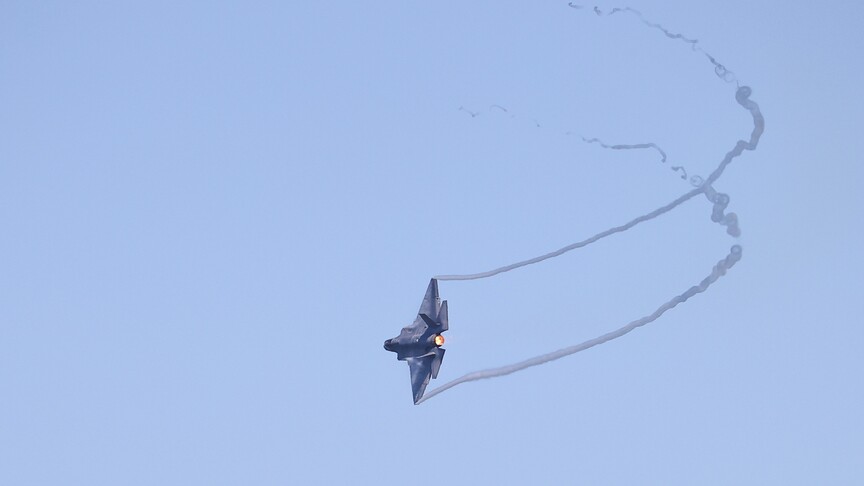
Poland has reached a milestone in its military modernization program with the arrival of the first F-35A fighter jets on Friday, underlining Warsaw’s continuing strategic bet on the United States as its main security partner.
Poland is the first NATO country on the alliance’s eastern flank to operate the F-35, placing it ahead of several neighboring states in adopting fifth-generation combat aviation.
Defense Minister Wladyslaw Kosiniak-Kamysz highlighted the political and symbolic dimension of the arrival in a post on the US social media company X, stating that Poland is entering “a new era” of air capability and stressing that the aircraft’s arrival reflected years of investment not only in equipment but also in infrastructure, training, and operational readiness.
The ministry emphasized that Polish crews and ground personnel have already been preparing in the United States and that the transfer marked the beginning of operational integration rather than the end of the process.
Poland ordered 32 F-35A aircraft under an agreement with Washington signed in January 2020 for roughly $4.6 billion, including training and logistics packages. The aircraft carries the Polish designation "Husarz."
Defence24 reported that the first three aircraft would arrive this month, with further deliveries planned over the coming years and initial operational capability expected before the end of the decade.
For Poland, the F-35 program is not simply about replacing aging Soviet-era equipment but completes a shift that began after NATO accession in 1999 and accelerated after Russia annexed Crimea in 2014 and especially after the war with Ukraine in 2022.
The arrival also comes at an interesting political moment.
Over the last several months, Polish political debate has been filled with anxiety over the reliability of long-term US commitments, especially following renewed discussion in Washington about force posture in Europe and reports surrounding planned adjustments to US troop deployments.
Those concerns have sharpened arguments inside Poland about whether Warsaw remains too dependent on Washington for security guarantees.
Whatever tactical adjustments happen to troop numbers, defense procurement, and military-industrial integration between Poland and the US continue moving forward.
Poland is already among the largest purchasers of US defense equipment globally, having committed in recent years not only to F-35s but also to Patriot systems, Abrams tanks, Apache helicopters, and HIMARS launchers.
The logic visible in Warsaw across successive governments has been consistent: anchor American interests in Poland not only through diplomacy and troop presence but also through procurement, training pipelines, and industrial dependence.
The arrival also serves as a reminder that Poland’s relationship with Washington increasingly rests not only on troop presence but also on long-term defense entanglement.
F-35s bind together training pipelines, software ecosystems, maintenance chains, and industrial cooperation in ways that outlast electoral cycles on either side of the Atlantic.