Ilayda Cakirtekin
26 October 2026•Update: 26 October 2026
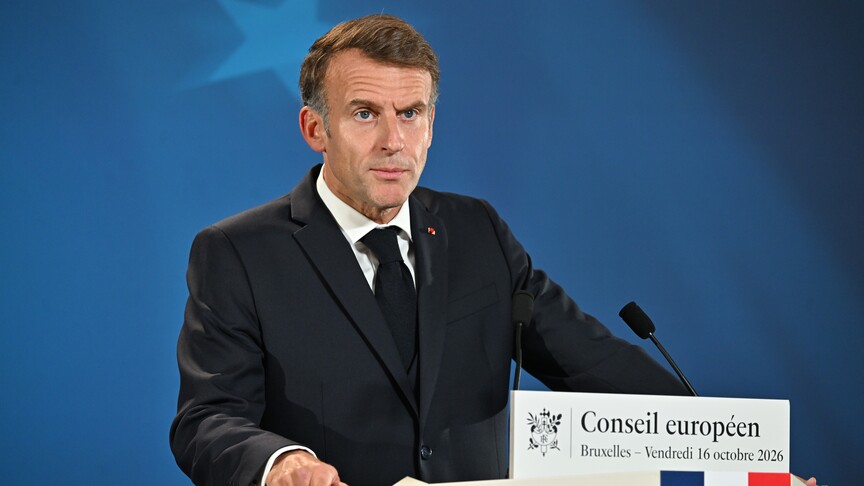
French President Emmanuel Macron warned on Monday that next Saturday would remain a “high-risk day” amid protests, with unions calling for nationwide mobilization on Oct. 31.
"We know that next Saturday is still a high-risk day. We know that Nov. 5 will see a day of national mobilization involving all the trade unions, and there are also the other Saturdays ahead," Macron told reporters during his visit to Marseille.
He reaffirmed that it was "not inevitable" that such patterns could persist every Saturday, underlining that authorities would continue to organize and protect property, people and city centers.
Macron added that he had asked the government to respond to the "legitimate demands at the root of this social movement," recalling that Prime Minister Sebastien Lecornu would meet representatives of the high school community during the day.
He further signaled "significant announcements and progress aimed at bringing about changes now and launching initiatives in the very short term" after Lecornu's planned meeting.
“We will do the same with trade unions and employers’ organizations, and so all of this must gradually return to normal, with respect," Macron added.
He further acknowledged that there were not enough security forces at the Oct. 17 protests and the events "had not been anticipated."
"We had not anticipated that so many far-left groups would mobilize very early in the morning, in a highly unusual manner. (...) We had also not anticipated that, beyond the mobilization of the far left, criminal elements would join in. As a result, police forces were not deployed in sufficient numbers," he said.
Macron noted that authorities were "currently maintaining the Republic and public order without a state of emergency," rejecting criticism for not declaring the measure and reaffirming that the authorities were "rigorous and firm."
He further said that social media played a role in the mobilization, adding that "social media are damaging our democracies because they fuel polarization, create a kind of shock and paralysis in the face of scenes of violence."
“They were used, particularly on Oct. 17, to bring young people and older people to places where criminal acts, attacks and looting were taking place, because violence on social media is being presented in a way that makes it seem unreal," he further said.