- Paris principal warns of practical challenges in enforcing ban saying it was enacted just as school year started leaving little time to plan
- Parents group stresses need to educate students on digital risks rather than just restrict access
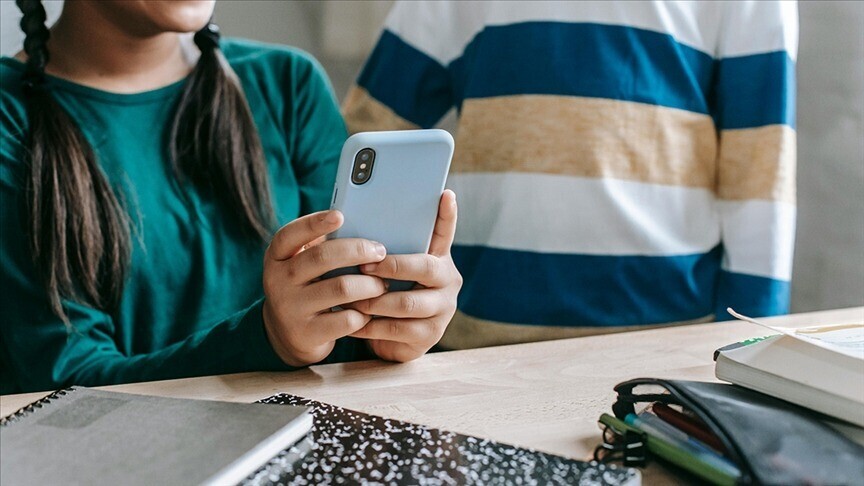
When French high school students walked through the gates for the new school year last week, they entered classrooms under a new rule: their phones were off-limits during the school day.
France has extended its existing restrictions on mobile phones in middle and high schools, bringing students aged roughly 15 to 18 under the measure for the first time.
The ban took effect with the start of the 2026-27 school year on Sept. 1. It is part of a broader government effort to reduce young people’s exposure to screens and social media.
But while the principle is straightforward, its implementation is not.
Schools have been left to decide how phones will be stored, when exceptions can be made and how violations will be handled. Some are using lockers or individual pouches, while others are relying on students to keep phones switched off and inside their bags.
At the High school des Metiers Nicolas Louis Vauquelin in Paris, principal Carole Zerbib said the challenge was turning a national rule into something that works in the daily life of a school.
The law was enacted just days before the start of the school year, she said, leaving schools little time to devise plans.
- ‘A difficult measure to implement’
For Zerbib, the first challenge is practical: what happens to phones once students enter the school.
At Vauquelin, students are expected to keep their phones switched off and stored in their bags. The school is relying primarily on students’ responsibility and trust, she told Anadolu.
But storage and confiscation can create additional work. If a student violates the rule, the phone may be confiscated and taken to the administration, where it must be stored securely and its confiscation and return recorded.
“There is a risk of theft, loss or damage,” Zerbib said, noting that managing phones can require additional staff time.
The French Federation of Parents’ Councils shared with Anadolu concerns about how the measure will be applied from one school to another.
Mustafa Ozcelik, vice president of the parents council, said schools do not have the same facilities, equipment or human resources, creating a risk that implementation could vary across the board.
The parent council, he said, supports exceptions for medical needs, disabilities and specific educational requirements.
‘A rule is accepted when it is understood’
The measure has not been popular among students, according to Zerbib, who said enforcement could be particularly difficult during breaks.
The school plans to offer activities including chess, board games and choir as alternatives to phone use.
Zerbib said the rule is more likely to be accepted when students understand why it is being introduced.
Ozcelik echoed the view saying removing phones is not enough.
He said high school students are older and more independent than middle school pupils, and that schools should therefore focus on teaching them how to regulate their own digital use rather than relying solely on restrictions.
“The high school is a space for autonomy, maturity and critical thinking,” he said, arguing that a blanket approach risks overlooking the educational role schools can play in helping students.
This includes teaching students about social media, notifications, algorithms, cyberbullying and data protection.
What the government wants
The government has presented the measure as a way to improve concentration, learning and school climate.
Ozcelik acknowledged that limiting phone use during lessons could have positive effects.
But he said a phone ban alone could not address all the factors affecting concentration and school success, pointing to issues such as fatigue, sleep, learning conditions, school climate and social and family difficulties.
Zerbib also expects the measure to have positive effects, particularly on concentration and direct interaction among students.
She said reducing social media use could also help reduce bullying.
Beyond the school gates
Zerbib said families and adults also have a role in setting limits around screen use and warned that the measure would have limited value if students simply compensated at home for the time spent without their phones at school.
Ozcelik said protecting children and adolescents from digital risks should involve more than restrictions, including greater responsibility for platforms.
“Our objective is not simply to make the phone disappear from the high school,” Ozcelik said.
“Our objective is to allow young people to learn to control it and gradually become autonomous in digital use.”