Necva Tastan Sevinc
03 July 2026•Update: 03 July 2026
A group of 50 Lithuanian lawmakers on Friday submitted a constitutional amendment to remove a provision banning the deployment of nuclear weapons in the Baltic country, following a political agreement that the restriction is no longer suited to the current security environment.
The proposal would amend Article 137 of Lithuania's Constitution, which prohibits the stationing of weapons of mass destruction and foreign military bases on Lithuanian territory, LRT news reported.
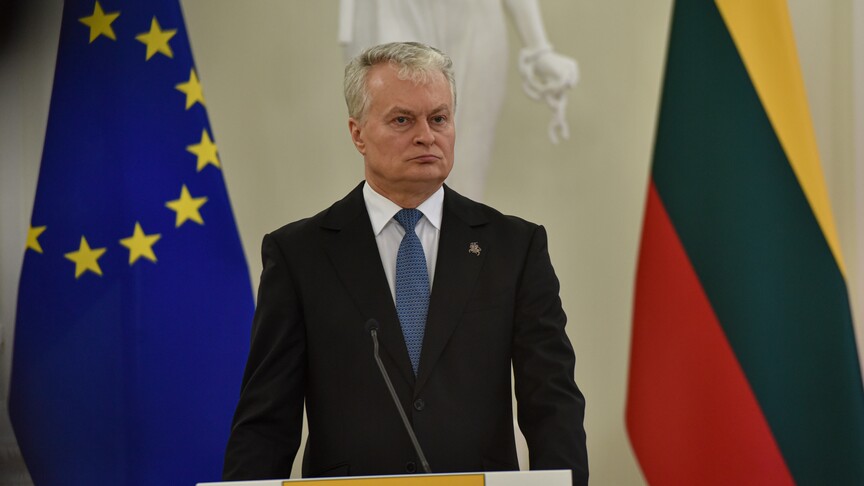
The initiative comes a day after President Gitanas Nauseda met parliamentary and government leaders, as well as heads of parliamentary factions, who agreed that the constitutional provision had become outdated.
Supporters of the amendment argue that Lithuania's security situation has changed significantly since the provision was adopted. Nauseda has said Lithuania is now virtually the only NATO member with a constitutional ban on the deployment of nuclear weapons on its territory.
Amending the Constitution requires the proposal to be approved twice by at least 94 of the 141 members of parliament, with a minimum three-month interval between the two votes.
Parliament Speaker Juozas Olekas said on Thursday that Lithuania does not intend to host nuclear weapons during peacetime.
Government coalition representatives have also stressed that removing the constitutional restriction would not affect Lithuania's commitments under the Treaty on the Non-Proliferation of Nuclear Weapons or other international agreements.
The debate has intensified since French President Emmanuel Macron proposed in March creating a European nuclear deterrence framework that could allow partner countries to temporarily host France's nuclear-capable strategic forces.
It also follows a report by the Financial Times last month that the United States is considering deploying nuclear weapons in additional NATO member states in Europe. After the report, Lithuanian Defense Minister Robertas Kaunas said Lithuania was participating in ongoing discussions on the issue.