Necva Taştan Sevinç
03 June 2026•Update: 03 June 2026
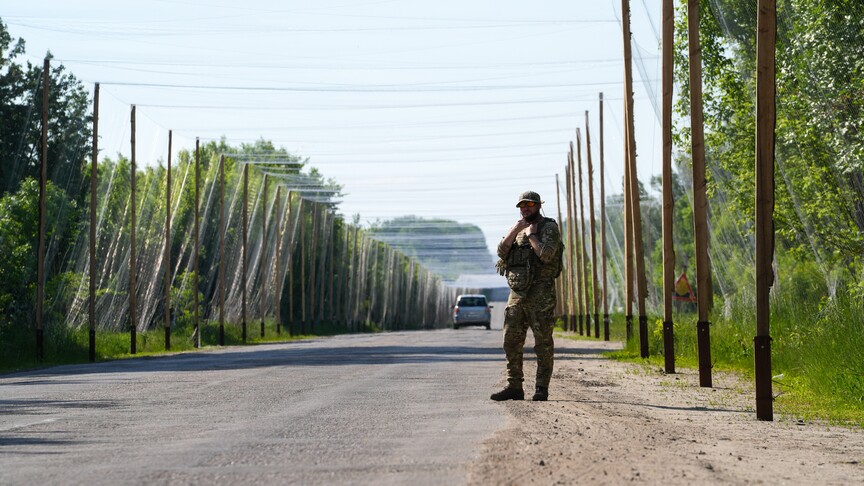
Poland on Wednesday extended a restricted-access zone along part of its border with Belarus for another 90 days, saying migration pressure on the EU's eastern frontier remains a security concern despite a sharp decline in illegal crossing attempts.
The Polish Interior Ministry said the exclusion zone, covering about 78 kilometers (48 miles) of the border, will remain in force until Aug. 31. The measure, first introduced in June 2024, has now been extended for the eighth consecutive time.
According to ministry data, authorities recorded 215 illegal crossing attempts between January and May this year, down from more than 10,600 during the same period last year, a decline of about 98%.
Despite the drop, the ministry said maintaining the buffer zone remained necessary to ensure "the highest operational vigilance and high effectiveness of border protection."
“The reduced pressure does not mean the end of the crisis,” the ministry said, arguing that Belarus has shifted its efforts toward the borders with Lithuania and Latvia.
The ministry added that most of this year's crossing attempts occurred within the restricted area, reinforcing the need to keep the zone in place.
The announcement came as Interior Minister Marcin Kierwinski hosted Irish Justice Minister Jim O'Callaghan at the Kuznica-Bruzgi border crossing for talks on EU border security ahead of Ireland's assumption of the rotating presidency of the Council of the European Union in July, Polish broadcaster TVP World reported.
Poland has faced sustained migration pressure along its border with Belarus since 2021. Warsaw and Brussels accuse Belarusian President Alexander Lukashenko of facilitating migrant flows from the Middle East and Africa in an effort to destabilize the EU, an allegation Minsk denies.
In response, Poland has strengthened border security measures, including the construction of a steel barrier and the deployment of surveillance systems.
Kierwinski said Warsaw has spent nearly 3 billion zloty ($800 million) on border protection over the past two years.
Human rights groups have criticized Poland's border policies, accusing authorities of carrying out unlawful pushbacks and restricting access to asylum procedures.