Beyza Binnur Donmez
24 June 2026•Update: 24 June 2026
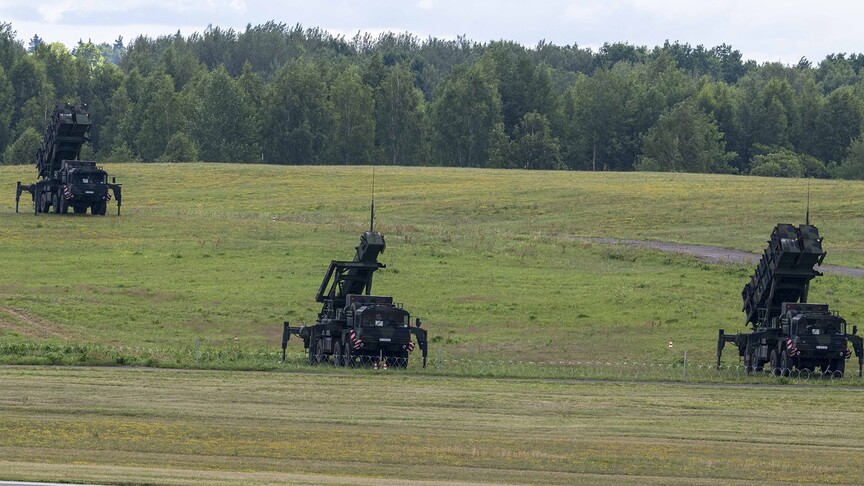
Switzerland will resume payments for its US-made Patriot air defense system while simultaneously pursuing the procurement of a second long-range air defense system, the Federal Council said Wednesday.
The government said the move reflects a worsening security environment and the need to strengthen protection against long-range attacks.
"Switzerland must strengthen its air defense due to the deteriorated geopolitical situation," the Federal Council said in a statement.
The decision comes after the US reprioritized Patriot deliveries in favor of Ukraine, which has contributed to delays and rising costs amid growing demand in global arms markets.
The Federal Council said canceling the Patriot procurement was not an option, given the security situation and uncertainty about potential termination costs.
"Canceling procurement without an alternative system is not an option for the Federal Council due to the security situation. It would also be unclear what costs would result from demolition," it said.
It instructed the Federal Department of Defense, Civil Protection and Sport (DDPS) to resume suspended payments under the US Foreign Military Sales program to minimize delays and additional costs.
The government also said continuing the Patriot project would help avoid jeopardizing other US defense procurements, including the acquisition of F-35A fighter jets and spare parts for Switzerland's F/A-18 fleet.
At the same time, the DDPS has been authorized to begin contract negotiations with manufacturers from France, Israel and South Korea for a second long-range ground-based air defense system, according to the statement.
The Federal Council said initial information received at the end of May indicated that systems offered by the three countries generally meet Swiss military requirements and performed best in cost-benefit assessments.
A second system would provide additional defensive capacity, reduce dependence on a single supplier and strengthen supply security, according to the government.
A final decision will also take into account Switzerland's armaments policy, which favors procurement in Switzerland or Europe when possible, as well as factors including delivery speed, integration into Swiss military operations and the resilience of ammunition and spare-parts supply chains.
The Federal Council said it will decide on the next steps once contract negotiations are completed.