Aysu Biçer
04 November 2026•Update: 04 November 2026
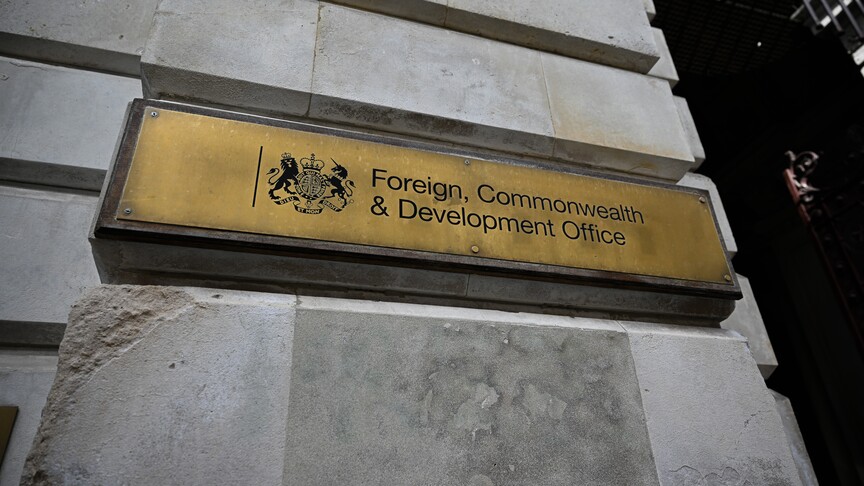
The UK government is open to formally apologizing for its role in the transatlantic slave trade but will not pay reparations, Foreign Secretary Ed Miliband said Wednesday.
Speaking on the BBC's Newscast podcast, Miliband said the government wanted to confront Britain's historical involvement in slavery without imposing additional costs on British taxpayers.
Prime Minister Andy Burnham has ruled out paying reparations to countries affected by the slave trade but has not clarified whether the government's new approach could involve additional public spending.
Miliband criticized former Prime Minister Tony Blair's handling of the issue in 2007, describing it as a "sorry not sorry situation."
Blair had expressed "deep sorrow and regret" over Britain's involvement in the slave trade, but Downing Street subsequently distanced itself from his remarks, according to Miliband.
The foreign secretary said the issue had continued to affect relations within the Commonwealth and was raised during a recent conversation between Burnham and Barbados Prime Minister Mia Mottley.
"This has really been hanging around as an issue for the Commonwealth for sort of 20 years, really. But it's grown and grown," he said.
Miliband also recalled tensions at the 2024 Commonwealth Heads of Government Meeting in Samoa, where disagreements over slavery and its legacy sparked heated exchanges.
"To use sort of diplomatic speak, it ended up in a sort of punch up, a sort of verbal punch up about this whole issue," he said.
He said he and Burnham had agreed that the government needed to address the issue rather than continue avoiding it.
'Over 3 million people shipped'
Miliband said he had requested a historical account of Britain's involvement in the transatlantic slave trade and described the findings as harrowing.
"Over three million people shipped, really with the British state's complicity, over a long period of time, couple of centuries actually, hundreds of thousands of them didn't make it and died," he said.
He added that those who survived the Atlantic crossing faced "appalling conditions" aboard ships and after arriving in the Caribbean and the Americas.
Defending the government's willingness to consider a formal apology, Miliband argued that acknowledging historical wrongdoing demonstrated national strength.
"Is it weak to do this? I think it's the opposite of weak. I think fragile weak countries can't face up to their past. I'm really proud of Britain, but being proud of your country is also being willing to face up to things you didn't do, right?" he said.
Ministers are beginning what they describe as a "structured dialogue" with countries affected by the slave trade.
A formal apology could come around November 2027, when Burnham is due to host the G20 summit of world leaders in Manchester.