- Premier to remain in post till September
- Former Greater Manchester Mayor Andy Burnham confirms running to replace Starmer
- Burnham stands out as strongest candidate
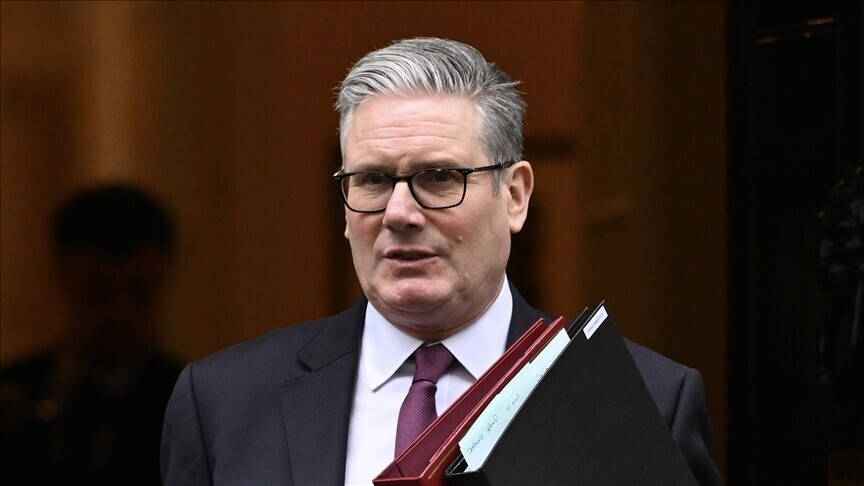
Standing in front of reporters on Downing Street, British Prime Minister Keir Starmer announced what had been expected for some time.
After months of mounting pressure over the May election results, Starmer announced his resignation as both the Labour Party leader and, ultimately, the prime minister.
“The question my party is asking now is whether I am best placed to lead us into the next general election. I have heard the answer of my parliamentary party to that question, and I accept that answer with good grace,” Starmer said during a news conference.
Elected Labour Party leader in 2020 and prime minister in 2024, Starmer’s resignation now raises many questions about what will happen next, what the timeline and process will look like, and who will replace him.
What led to resignation?
Although discontent toward Starmer had been rising for some time over his decisions on several major policies, the pressure peaked when the Labour Party lost significant ground in May’s local elections.
With his position already weakened by high-profile controversies and several Cabinet resignations, former Greater Manchester Mayor Andy Burnham’s victory in the Makerfield by-election last week marked a turning point in the leadership challenge within the party.
Securing 55% of the vote in last week’s contest and finishing more than 9,200 votes ahead of far-right Reform UK’s Robert Kenyon, Burnham’s victory represented his long-stated challenge to Starmer for the party leadership and his return to the UK parliament.
Sophie Stowers, from research and polling organization More in Common, told the BBC that Starmer’s resignation announcement would not necessarily come as a shock.
Stowers noted that their polling showed that more than half of those questioned believed Starmer should step down as prime minister after May’s elections.
What will happen now?
During his speech, Starmer reaffirmed that he would ask the Labour Party’s National Executive Committee to set out a timetable, with nominations opening on July 9 and the process completed by the summer recess on July 16.
“In the case of a contest, this will ensure a new leader is in place before parliament returns in September,” he said.
Starmer added that he would remain in post as prime minister until the contest is complete.
According to the Labour Party rulebook, candidates wishing to nominate themselves should be supported by 20% of the party’s MPs and either 5% of constituency parties or at least three affiliates.
This means that out of 403 Labour MPs, support from 81 would be needed to nominate a leadership challenger.
Voting takes place through a preferential ballot. The candidate receiving more than half of the votes is declared elected.
If no candidate reaches the required total in the first round of preference votes, votes are redistributed according to preferences indicated on ballot papers until someone reaches 50%.
What are the potential candidates?
Burnham, who is set to be sworn in as Makerfield’s new MP later Monday, has long stood out as the strongest candidate to challenge and now replace Starmer.
Right after Starmer’s announcement, Burnham said he would run to replace Starmer for Labour leader and the prime minister.
“I will put myself forward as part of this process,” he said, according to Sky News.
Former Health Secretary Wes Streeting, who had previously confirmed his intention to enter the leadership contest and was seen as a potential opponent, announced that he would not run against Burnham.
“We could spend the summer exaggerating small differences, or we can roll up our sleeves and help him to deliver the change our party and our country needs,” Streeting said, clearing Burnham’s path to leadership.
Former Deputy Prime Minister Angela Rayner is also considered a potential challenger, according to the BBC, and is favored by some on the left of the party.
While there is still a possibility of an unexpected candidate emerging, the stakes for someone standing against Burnham while he remains the overwhelming favorite remain low.
A growing number of Labour MPs, in fact, expect a direct “coronation,” with Burnham standing as the single candidate, according to the BBC.
In terms of timing, while some of Burnham’s supporters favor him taking over in September as it would give him more time to prepare, others think a three-month interim period would lead to speculation about his plans for government.
As polls suggest Burnham is the most popular Labour politician, he is known to be a candidate from the left of the party, according to the BBC.
He was MP for Leigh from 2001 to 2017 and served in government under Tony Blair and Gordon Brown.
As he announced his candidacy, Burnham said his party’s priorities should focus on “progress on economic growth, cost of living, public services, housing and opportunities for the next generation.”