Anadolu Ajansı © 2026


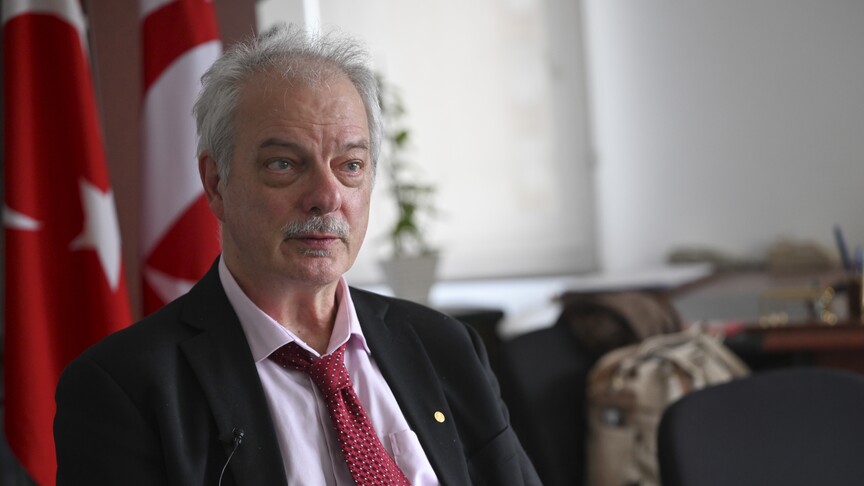
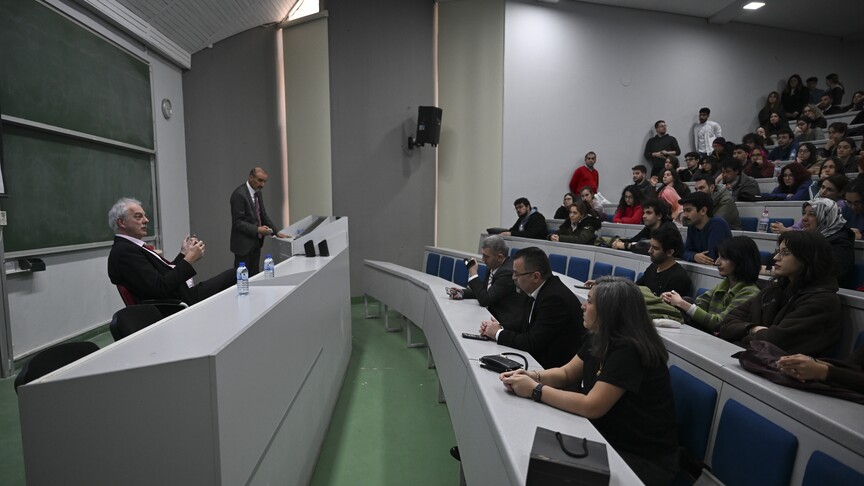
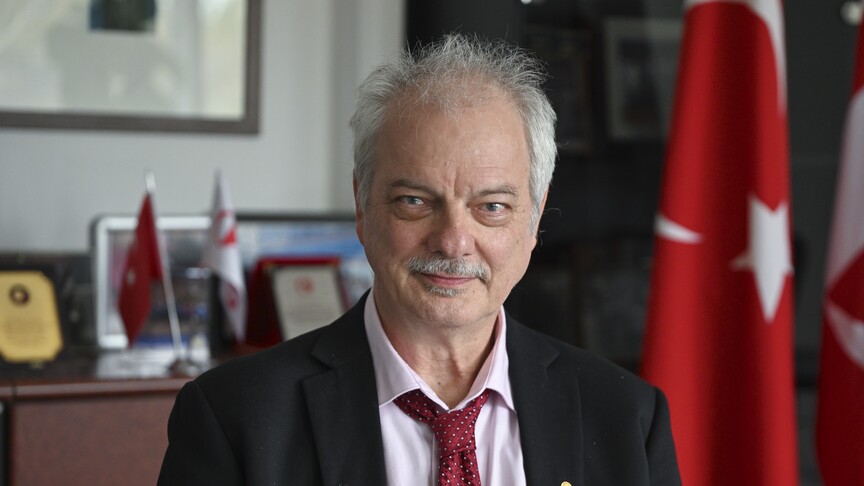
Nobel Prize winner in Chemistry, Prof. Morten Meldal, said that they are working on a method to eliminate side effects in cancer treatment, saying: "Dream is that cancer is treated like any other disease, preferably with a drug that doesn't have all the side effects that you would see in current cancer treatment."
Danish scientist Meldal was awarded the Nobel Prize in Chemistry in 2022 for his discoveries in the field of "bioorthogonal chemistry," which lays the foundation for "click chemistry", enabling molecules to link together quickly and efficiently, and allowing these reactions to occur within living cells without disrupting natural processes.
In an interview with Anadolu, Meldal, who came to Türkiye to participate in various events at Middle East Technical University (METU), spoke about the potential of click chemistry in cancer and Alzheimer's treatment, water-based synthesis methods that prevent the formation of toxic waste in drug production, the future of artificial intelligence in scientific discovery processes, and how his personal life has changed after receiving the Nobel Prize.
Q: You are paying a very meaningful visit to Türkiye and meeting with college students. What are your primary impressions from this experience?
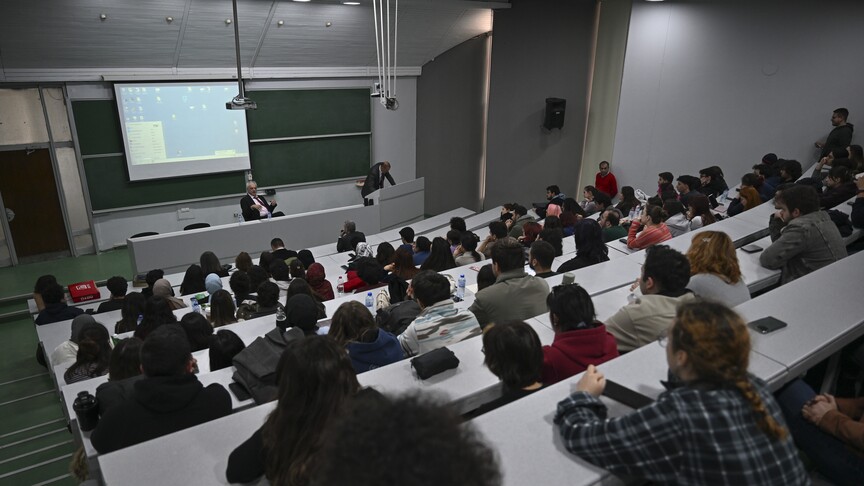
A: It has been a wonderful day. I am very privileged to face many young talents that you have here at METU. I am also very impressed with METU and the structure of both the research facility and the teaching that you have here, all the curriculum. I think it's very important that you stay with the high-quality education that you have here at METU.
The questions that I just had in the Q&A with the students was really excellent, and they are looking for the spark, that's the first step. And we discussed how to find that spark, I think they very much agreed on what I said, and how to get to that spark, and how to avoid the problem. A lot of problems in science is associated with failure, failure of success with projects that are designed, but doesn't work the way that they were designed, and the students have problems, and they have to find their way through that.
My solution to that for them is to be concerned with the moment, and be concerned with the molecule at hand, rather than the target molecule down the road. So that you're actually interested in the process, and create the small successes on the way to the final step, and see each of these as really good achievements. So that is where I find that the students, they have a lot of interest actually, in what they're doing. And the students are all concerned about their future, because of the environmental crisis that we have created for them, and the students are looking at this as a real problem for their future. They are interested in actually following up on that with their research, and see if they can help out in that. It's very important for the young generation to get more education, not less education. More education is extremely important, because education is the one investment that gives the highest return. Education in a society, long term, gives the highest return on investment.
Q: Some people explain the concept of click chemistry as a "molecular lego set". Do you agree with this analogy? If you were to explain click chemistry with a simple analogy, what would that be?
A: You could describe it as lego, but I think actually it's more like velcro. So velcro has two components that fit together and it doesn't fit together with any other materials around. But when you stick velcro together it sticks. And that's the same with click chemistry. And that actually has allowed us to do new molecular architectures which are very complicated. Usually, we have had molecular entities like in drugs where you have a single function of the molecule. So a molecule that removes anxiety by interacting with a protein or a molecule that removes pain and so on. But now we can build molecules that can do several different functions like small molecular robots. And this is only possible because we can link the function molecules together one by one. In a much more accurate, quick way and a sort of more green way also because this is all done in water.
Q: Did you ever anticipate that this work of yours would culminate in a Nobel Prize? What were your emotions when you first heard about you receiving the Nobel?
A: My emotions were very strong because the Nobel Prize is the highest acknowledgement you can obtain in science, and of course, I was extremely happy. It changed my life overnight, actually, because it's so influential on what you can do and what you are invited to do also as a scientist. And my research has been possible for me because of the Nobel Prize. I'm now 72 and I still do very active research. I think that's a real privilege and that's probably due to the Nobel Prize as well.
Q: Could you foresee that your work would win a Nobel Prize?
A: No, because that has never been my intention. The intention is to be in the moment. I very much work in the moment with the research that I'm doing right now. I'm not looking much into future applications and so on. So, I didn't discover the importance of this reaction until 4 years later, when suddenly citations of our primary work started going up exponentially. And that, of course, is a good indication that there is something special. We were utilizing this tool already immediately after the discovery. So, we used this tool in all sorts of molecular architectures and synthesis.
The reason that click chemistry received this attention is because it's so useful in many different fields. In medicine, where you can make new kinds of drugs with higher specificity, higher selectivity towards a particular disease, not having influence on other cells in the body. And you can use click chemistry to synthesize drugs, very green synthesis of drugs, because you can do these reactions in water. You can use click chemistry to function on surfaces, make entirely new materials, like materials that can capture sunlight and so on, with molecules sitting on the surface of electric leading materials. In various fields you can use this kind of chemistry, and that is why it became so popular.
Q: What is the primary focus of your current research at the Centre for Evolutionary Chemical Biology? Have you obtained any new findings that will contribute significantly to the scientific literature?
A: I think so. We have some very good results recently with the peptide field. So, peptides are small fragments of proteins. We have developed a method to synthesize peptides in water, so we can completely construct these in water. Also, currently we are working on oncology, trying to establish new ways to target cancer. I think we have some very good results there, and plans as well, that will give a very nice future.
Q: You mentioned that you are working on oncological problems and cancer. Could you elaborate on that?
A: Rather not, actually, because this is quite new, and we would not like to break the news before we publish. But what I can tell you is that we think that we have a new way to get very selectively the drug that kills cancer cells to those cancer cells. Dream is that cancer is treated like any other disease, preferably with a drug that doesn't have all the side effects that you would see in current cancer treatment. So an anti-cancer drug, that would be compatible with all the other processes that you have in life, and which wouldn't lead to loss of hair and all of the other things associated with that.
Q: So, would you like to erase the side effects?
A: Erase the side effects, and be sure that you get a cure. And preferably with a method that would be quite general for many types of cancer, because cancer is not a single disease. Cancer is so many different diseases. But there are some common operators in cancer that you can actually target. The other big hurdle in the modern society, cardiovascular, and then Alzheimer's, dementia, and other neurodegenerative diseases. I think it's a very important area, because if we don't get that handled, it will increase dramatically over the coming years. It's predicted that there will be 150 million people in the world that will be affected by Alzheimer's in 2050. And we are about half of that now, so it's a really serious problem, and it's constantly increasing as well.
Q: So, do you also want to cure Alzheimer's and dementia?
A: I don't know if I can do that, but I definitely want to work on trying to get there. So, getting rid of plaques in the brain if we can, and getting rid of the toxic material that is produced in plaques. To that end, we have some molecules that can dissolve fibrils, with the fibrils that form the plaques in the brain. But to get these molecules in and be active in the brain is very difficult. So, we also work on trying to get things across the blood-brain barrier and into cells. This is another area where we are very active.
Q: Artificial intelligence is transforming every field today. What are your thoughts on this? In your opinion, can AI shorten the timeline for Nobel-worthy researches and discoveries?
A: So artificial intelligence is just like when we got the computer. It will accelerate research, it will accelerate a lot of different processes in society. And it is a tool. It's not an independent entity. It's a tool that we use as human beings. But in order to have really competitive AI, which can also be competitive with human intuition and so on in research, you will need to build a consciousness. And this is probably the next step with AI. I think an underlying consciousness that you build in a different type of computer, which is simulating the brain network, I think in that case you can actually accomplish something that could be really competitive with the human research process.
AI inherently has all the information in it. So, you have fed information to the AI. If you have fed the right information, it gives you very good results. AlphaFold, which is a program that can predict protein structure, a very important program, this is actually working well because the data that was used to train this are very accurate crystal-based data, crystal structure-based data, whereas information and disinformation on the Internet is a very, very poor learning set for an AI. It's a vast amount of information. But as the AI is destroying it by making misinformation by itself, it's actually more and more hallucinating what is going on with these AIs that are trained on the Internet.
Q: You have mentioned that you have a keen interest in music and some other fields of art in your previous interviews. As a scientist, do you believe that there is a fundamental connection between art and science?
A: Yes, I think that's very much two sides of the same coin. So, an artist in particular, an artist that is concerned with picturing three-dimensional space on a canvas or a sculpture, is using a three-dimensional representation of something, a thought, a concept, an actual picture, and is transforming that on a two-dimensional canvas into a three-dimensional space. We do the same with chemistry. Chemistry, as we learned it as children, is two-dimensional on a paper surface. But actually, chemistry is three-dimensional. The three-dimensional chemistry is necessary to understand that in order to understand the processes that go on.
Q: We heard that you are a member of a rock band, is that still going on?
A: Not anymore. Since I got the Nobel Prize, it hasn't been possible to pursue that because that's a very committing activity. You have to be able to train and play and so on.
Q: We know that your spouse is also a scientist. As a Nobel laureate, how do you spend a typical day with your family?
A: Well, we love to have friends over so we arrange very often. Then we prepare food, and we love to do that together. We have a very beautiful evening with lots of nice discussions, often with scientific content or political content. Sometimes we even put on music and entertain ourselves. Also, we like to travel, so this situation with the Nobel Prize is really beautiful because we have something in common, where we can actually share it, like we do here in Turkey. We both go, we both give a lecture, and we can discuss this from different perspectives. Before we go, after we have been here, we can discuss this at home.
Q: What advice would you give to Turkish scientists, researchers, students and academics in chemistry?
A: That's a big question. I think it's important that you do things out of curiosity and feeling good about it. So, if you do research, it's not because you are anxious about your position. It's not because you want to win a Nobel Prize. It's because you are interested in making new discoveries within your field. And this is the same process, independent of whether it's chemistry, physics, whether you are a student or PI. Let curiosity be your leading star in your activities and great things come to you. Also, do what you find is most important to yourself. Don't do what other people think is important. Find the real key to the importance inside.
news_share_descriptionsubscription_contact