Beyza Binnur Dönmez
17 July 2026•Update: 17 July 2026
- 'The risk of spillover is real,' warns Celestin, noting that after Uganda, cases are also surfacing close to South Sudan
The International Organization for Migration (IOM) on Friday warned that the Ebola outbreak in the Democratic Republic of the Congo and Uganda is spreading faster than response efforts, urging greater international support to contain the virus.
"The virus is spreading faster than our ability to contain it," Frantz Celestin, IOM regional director for East, Horn and Southern Africa, told reporters in Geneva.
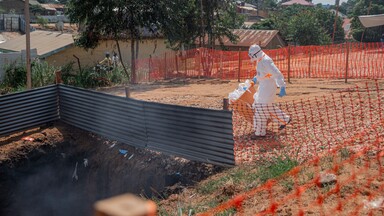
As of July 14, more than 2,000 Ebola cases and 700 deaths had been reported across Congo and Uganda, with Congo being the most severely impacted.
"The outbreak is growing at approximately 70% from what we saw two weeks ago, with an average of more than 40 new cases reported on a daily basis, and that suggests the severity and the gravity of what we're dealing with today," he said.
Celestin said about 60% of reported deaths occurred in communities rather than health facilities, underscoring persistent challenges in early detection, surveillance and timely access to care.
He warned that insecurity, displacement and limited humanitarian access are hampering response efforts, leaving the true scale of infections in some communities unknown.
Nearly 150,000 internally displaced people are living in 69 IOM-supported sites in eastern Congo, while another 300,000 people in host communities have also been affected, he said.
The expansion of the outbreak into two new provinces near the capital, Kinshasa, highlighted the need to strengthen surveillance at border crossings and along the Congo River to prevent further spread, Celestin added.
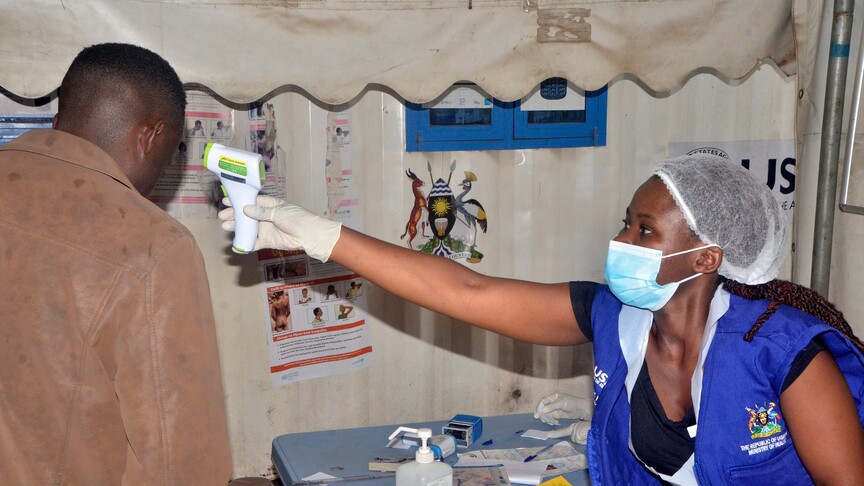
He said IOM has conducted nearly 7 million health screenings and supports more than 200 points of entry and control, but warned that 63% of the agency's $55.8 million regional response appeal remains unfunded.
"The risk of spillover is real," Celestin said, noting that Uganda has already reported cases and that infections are now emerging closer to the South Sudan border.