JUBA
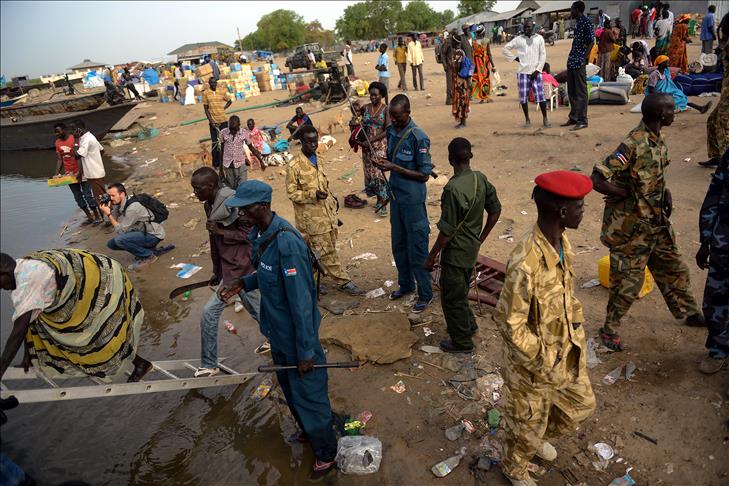
Heavy rainfall has made the lives of internally-displaced peoples (IDPs) in troubled South Sudan much more difficult, a United Nations official said Friday.
"The rains have affected them heavily because they are in huts without roofs and the drainage systems are also very poor," Ariane Quentier, spokesperson for the U.N. Mission in South Sudan, told Anadolu Agency.
For the past two days, the U.N. compound in Juba has been submerged due to the heavy rainfall.
"What we're trying to do is to move these people to larger places," Quentier said. "We have acquired land in Juba and also in Bor."
"With these rains, it is the reason why we're asking the government to help us," she added.
Clement Taban Dominic, undersecretary for humanitarian aid at South Sudan's Ministry of Gender, Children and Social Welfare, said IDPs faced a "critical time."
"A big number of IDPs are facing a critical time with increased need for shelter, food, medicine and water," Dominic said. "How to transport aid to them has also become a problem."
The South Sudanese official said the worst affected IDPs were in states hard-hit by the country's ongoing political crisis.
"The IDP's frustrations are worst in Upper Nile state, Unity and for those in Jonglei; we at the ministry aren't sleeping," he said.
"This month, we have already received tents from the Chinese government, which will help the IDPs during this rainy season. We're still facing the issue of transportation, but we need to rescue them with all that is needed," Dominic added.
Dominic pointed out that Upper Nile State hosted the largest number of IDPs and was the most affected region.
"This is the state with the biggest number of IDPs – over 400,000 – since Malakal fell into rebel hands. It has been difficult to get in touch with the people in the town and in other places like Renk," Dominic added.
"Even to transport affected people from the villages to the relief distribution centers is a problem," the official lamented.
"The ministry has laid out its plans and proposals to work on the IDP situation and to visit all the eight states where the IDPs are displaced to look into their problems and basic needs," he said.
Dominic also complained of insufficient aid assistance.
"The ministry has received donations from sisterly countries to help towards relief for the IDPs, but they're still not enough to cater to all these people. As you know, over 740,000 are at risk with the rains," he stressed.
South Sudan has been shaken by violence since last December, when President Salva Kiir accused his sacked vice president, Riek Machar, of staging a failed coup.
The conflict has already claimed more than 10,000 lives. The UN estimates that some 3.7 million people in South Sudan are now "severely food insecure," while more than 820,000 have been displaced.
Following a month-long IGAD-sponsored first round talks in Addis Ababa, the two warring rivals signed a cessation of hostilities agreement in January.
englishnews@aa.com.tr