Abdelraouf Arnaout and Mohammad Sio
10 September 2026•Update: 10 September 2026
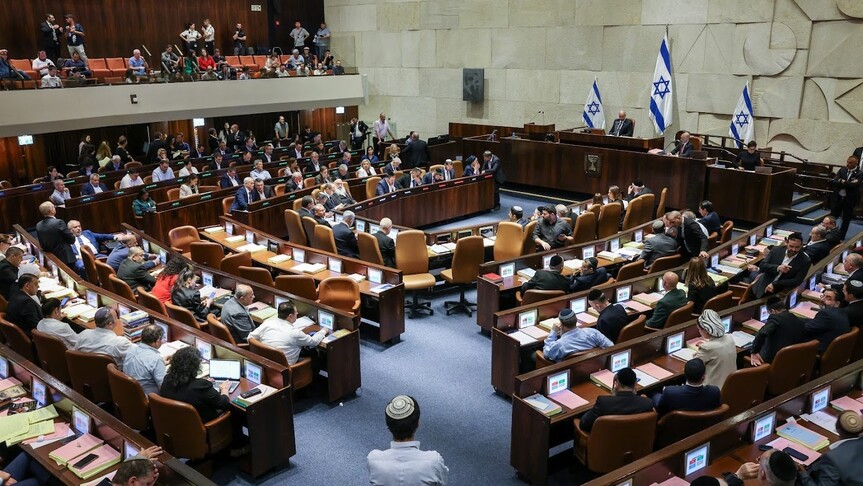
The last of 38 parties submitted their candidate lists for Israel’s Oct. 27 Knesset election, with opinion polls indicating that 13 could win seats in the 120-member parliament.
The deadline for parties and blocs to submit their lists to the Central Elections Committee expired Tuesday evening. The committee has begun reviewing the lists and examining objections filed against them.
According to the committee’s website, a legally registered party may submit a list containing between one and 120 candidates eligible to stand for election.
A list may also be submitted by two or more parties, and every candidate must provide written consent to have their name included.
Opinion polls suggest that 13 parties could enter the Knesset.
The leading Jewish opposition parties include the Yashar party headed by former Israeli army chief Gadi Eisenkot and the Together party led by former Prime Minister Naftali Bennett.
Other prominent opposition parties are the Democrats headed by former deputy army chief Yair Golan and the Yisrael Beiteinu party led by former Defense Minister Avigdor Lieberman.
Israeli Prime Minister Benjamin Netanyahu’s bloc includes his Likud party, the Otzma Yehudit party headed by National Security Minister Itamar Ben-Gvir, the religious Shas party led by Aryeh Deri, the United Torah Judaism party and the Religious Zionism party headed by Finance Minister Bezalel Smotrich.
Among Arab parties, polls indicate that the Joint List, an alliance of three Arab parties, and the United Arab List headed by Mansour Abbas could win seats.
The People of Israel party led by Ofer Winter and the Reservists parry led by Yoaz Hendel are also competing, with polls offering mixed projections of their chances of crossing the electoral threshold.
By contrast, polls suggest that the Blue and White party headed by former Israeli army chief Benny Gantz will fail to win any seats.
- Objections and disqualifications
According to the Central Elections Committee, objections to candidate lists may be submitted until Sept. 15, while a challenged list or candidate has until Sept. 18 to respond.
If the committee decides to disqualify a candidate, the decision is referred to the Supreme Court for approval. The court’s ruling is final and cannot be appealed.
The committee will publish the final candidate lists in the official gazette no later than Oct. 18, nine days before the election.
Section 7A of the Basic Law: The Knesset provides for the disqualification of a party or candidate if their objectives or actions explicitly or implicitly include denying Israel’s existence as a Jewish and democratic state, inciting racism, or supporting armed struggle by a hostile state or terrorist organization against Israel.
- First announced objection
In the first publicly announced objection, Israel’s Yedioth Ahronoth daily reported Wednesday that Ben-Gvir’s Otzma Yehudit party had filed a petition with the Central Elections Committee seeking to disqualify the United Arab List and Mansour Abbas from the election.
The newspaper quoted Ben-Gvir as claiming that Abbas and his colleagues are “terrorists” and supported the Palestinian group Hamas.
The 39-page petition alleged that the United Arab List “denies Israel’s existence as a Jewish state and supports armed struggle by hostile states and terrorist organizations against it.”
There was no immediate comment from the United Arab List or Abbas regarding the petition.
- First election on schedule since 1988
Knesset elections are held every four years if parliament completes its full term. The Knesset may also be dissolved early through legislation supported by at least 61 lawmakers.
The Central Elections Committee says elections have been brought forward 12 times in Israel’s history.
According to the Israel Democracy Institute, the election for the 26th Knesset will be the first held on schedule since 1988.
The candidate lists now enter a review and objections stage before their final approval, while the election campaign is expected to remain shaped by the political divisions Israel has experienced in recent years.
Forming a government requires the support of at least 61 members of the Knesset.
For weeks, opinion polls have shown the Israeli opposition ahead of Netanyahu’s bloc, complicating the prime minister’s prospects of forming a government after the election.
Netanyahu has been wanted by the International Criminal Court since 2024 on charges related to war crimes and crimes against humanity against Palestinians in Gaza.