Hussien Elkabany and Mohammad Sio
04 August 2026•Update: 04 August 2026
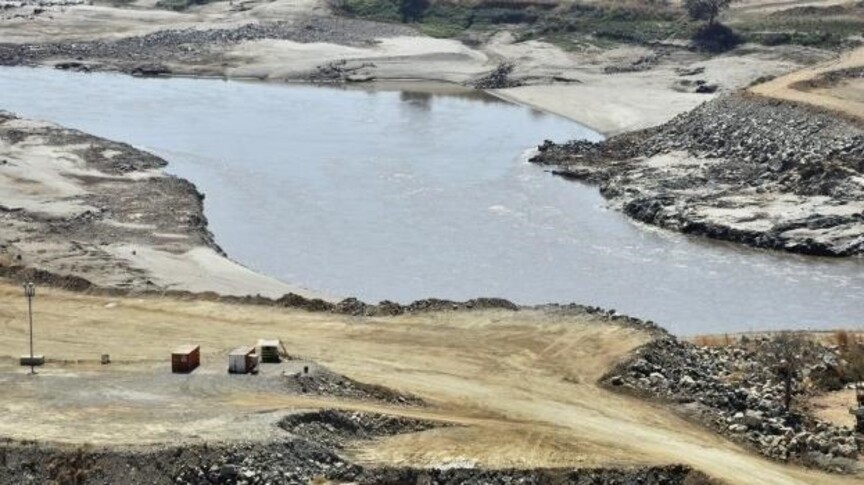
Egypt “will not allow” Ethiopia to build new dams on the Nile River, Irrigation Minister Hani Sewilam said Tuesday amid a long-running dispute over the Grand Ethiopian Renaissance Dam (GERD).
Sewilam's remarks came about two weeks after media reports said that Ethiopia is planning to build three additional dams on the Nile alongside the GERD, although Addis Ababa has not officially commented on the reports.
“It is well known that Ethiopia has plans to build new dams, but will the Egyptian state allow that? No,” Sewilam said at a press conference in Cairo, as cited by local media.
He stressed that Egypt has repeatedly called for a clear and legally binding mechanism for exchanging operational data on the GERD to enable downstream countries Egypt and Sudan to know the expected water releases and annual operating plans.
The absence of such information places Sudan in an “extremely difficult position,” preventing Sudanese authorities from effectively operating their own dams or managing water storage without accurate data on the volume and timing of water releases from Ethiopia, Sewilam said.
“Sudan should not be blamed for any disruption in water management under such circumstances,” he added, saying responsibility lies with Ethiopia for refusing to commit to a legally binding mechanism for data sharing and coordination with the downstream countries.
The minister reaffirmed that Egypt remains committed to reaching a legally binding agreement governing the filling and operation of the GERD, ensuring regular data exchange “in a way that safeguards the interests of all parties and reduces the risks associated with managing shared water resources.”
There was no immediate Ethiopian comment on the Egyptian minister’s remarks.
Egypt and Sudan have long been at odds with Ethiopia over the filling and operation of the GERD, whose construction began in 2011. Cairo and Khartoum insist on a legally binding trilateral agreement before the project is fully operated.
Ethiopia, however, maintains that such an agreement is unnecessary and says the dam will not harm the interests of downstream countries. The dispute led to a three-year suspension of negotiations before talks resumed in 2023, only to stall again in 2024.
The Nile River, which stretches about 6,650 kilometers (4,132 miles), is shared by 11 countries: Burundi, Rwanda, the Democratic Republic of the Congo, Kenya, Uganda, Tanzania, Ethiopia, Eritrea, South Sudan, Sudan and Egypt.