Switzerland and the UN will host the sixth round of international consultations on Sudan on Wednesday, after five previous meetings produced commitments and a technical cooperation framework but no comprehensive ceasefire.
The meeting at the Palais des Nations will bring together 22 countries and five international and regional organizations to discuss de-escalation, humanitarian access and prospects for an inclusive political process.
The consultations come more than three years after fighting erupted between the Sudanese Armed Forces (SAF) and the paramilitary Rapid Support Forces (RSF) in April 2023.
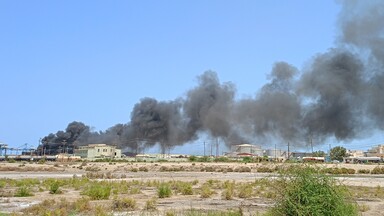
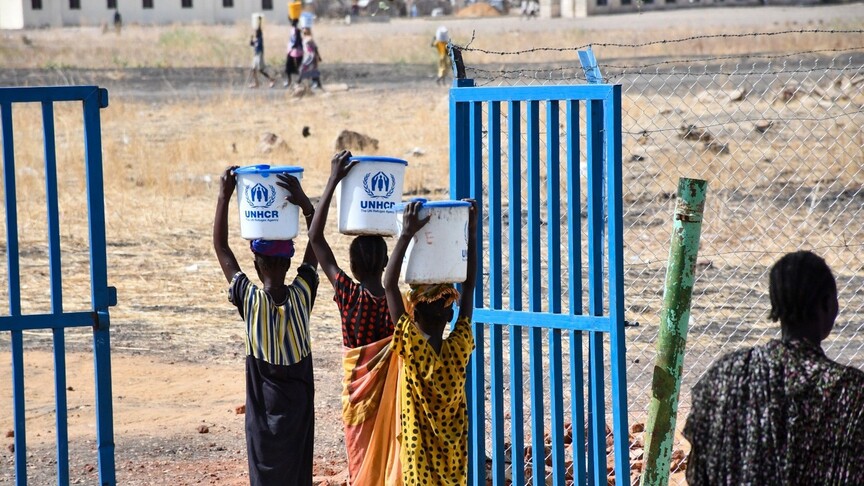
The conflict has killed tens of thousands of people and displaced around 13 million, according to UN estimates and tracking organizations
Worsening famine and humanitarian conditions have made Sudan one of the world’s worst humanitarian crises.
A separate operational meeting on Sudan's humanitarian situation is scheduled for Tuesday afternoon.
The mechanism was established to coordinate international and regional initiatives seeking to end conflict in Sudan, rather than being a direct negotiation between the warring parties.
Speaking at a UN briefing in Geneva on Friday, Nayla Hajjar, political affairs officer and special assistant to the UN secretary-general's personal envoy for Sudan, said the meeting would allow participants to assess existing initiatives and explore ways to reinforce one another's efforts.
The discussions will also address the war's regional consequences, particularly its spillover into neighboring countries.
The meeting will be co-hosted by Switzerland and Pekka Haavisto, personal envoy for the UN chief for Sudan.
The consultative process began in Cairo in June 2024, followed by a second meeting in Djibouti in July and a third in Nouakchott, Mauritania, in December.
The fourth round took place in Brussels in June 2025, followed by a fifth meeting in Cairo in January 2026.
The meetings aimed to strengthen coordination among international stakeholders involved in efforts to resolve Sudan's conflict, reinforce diplomatic initiatives and support de-escalation, humanitarian access and respect for international humanitarian law.
They also sought to align international efforts behind an "inclusive and credible" political process.
At the meeting in Nouakchott, participants adopted operating arrangements for a technical-level working group intended to improve information-sharing and coordination among mediators.
The group was expected to begin work under UN auspices in January 2025 and meet once or twice monthly in Addis Ababa or New York.
Participants also called for an immediate ceasefire, protection of civilians and implementation of commitments under the May 2023 Jeddah Declaration.
At the meeting in Brussels, participants examined de-escalation, humanitarian access and civilian and political dialogue, reaffirming support for Sudan's unity and a return to civilian transition.
"The participants of the Consultative Group concurred on the urgency of collective and coordinated action towards silencing the guns in Sudan, restoring the path towards a civilian transition and urgently addressing the future of Sudan’s war-affected population, in particular, women and youth," the EU said in a statement following the meeting.
The fifth meeting, chaired by Egyptian Foreign Minister Badr Abdelatty, addressed efforts to end the "bloody" fighting and advance a political settlement.
While the consultations established coordination commitments and plans for a technical working group, the available documentation does not establish whether its activities directly influenced negotiations.
Nor do the documented outcomes demonstrate that the five meetings themselves secured a lasting ceasefire or comprehensive political settlement.
The meeting will bring together 22 countries, including the US, Saudi Arabia, Egypt and the United Arab Emirates -- collectively known as the Quad -- alongside China, Russia, Britain, France, Türkiye, Qatar and several of Sudan's neighboring countries.
Five international and regional organizations will also participate: the UN, African Union, EU, Intergovernmental Authority on Development (IGAD) and League of Arab States.
The meeting will be at the high level, with delegations headed by ministers, state ministers, deputy foreign ministers, and directors from the capital.
Hajjar said Sudanese representatives would not attend because the mechanism was specifically designed for international and regional mediators to coordinate their initiatives.
She added that the UN remained in contact with Sudanese authorities and other actors, who would be informed about the meeting and briefed afterward.
Around 80 participants are expected, including senior government officials and representatives of international organizations.
The sixth meeting follows renewed international efforts to align peace initiatives.
In a September statement, participants in a ministerial meeting convened in New York by the African Union, EU, France, Germany, Britain and the US urged Sudan's warring parties to resume ceasefire negotiations.
They also backed efforts by the Quintet -- comprising the UN, African Union, EU, IGAD and League of Arab States -- to facilitate an inclusive, Sudanese-led political dialogue.
Switzerland, meanwhile, is pursuing a separate diplomatic track, the Nyon Process, aimed at building trust among Sudanese political actors.
The informal dialogue platform "aims to strengthen trust among the various Sudanese political forces and … promote consensus on a political path for a lasting resolution of the conflict," Swiss Foreign Ministry spokesperson Paola Ceresetti told Anadolu in a statement.
She said the initiative was intended to support official peace efforts, while the Geneva consultations sought to coordinate the various international initiatives aimed at ending hostilities in Sudan.
The UN is aiming for a joint statement reaffirming shared commitments and potentially identifying actionable points for future diplomatic engagement.
Hajjar said the precise outcome would depend on the discussions.
Ceresetti, for her part, said Sudan is "a priority" for Swiss peace policy and that Switzerland proactively coordinated with other actors to identify complementary efforts and avoid duplication.
She said: "Switzerland expects the other participants in the consultation to commit to collaborating in order to identify common paths that can lead to an end to the conflict in Sudan, which is currently facing the worst humanitarian crisis on the planet."
Wednesday's consultations will begin at 9.30 am (0730GMT) with opening remarks by Haavisto and the head of the Swiss delegation, followed by closed-door discussions and a press conference scheduled for 5.30 pm (1530GMT).
The central question is whether the sixth round can build on previous coordination efforts and translate diplomatic commitments into practical steps toward reducing violence, improving humanitarian access, and advancing a political settlement.
news_share_descriptionsubscription_contact

contact_the_ombudsman
is_there_an_error_in_this_story