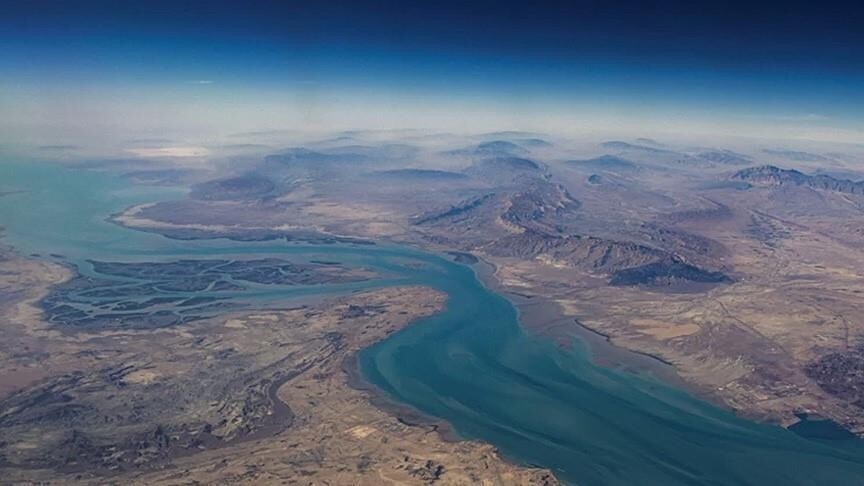
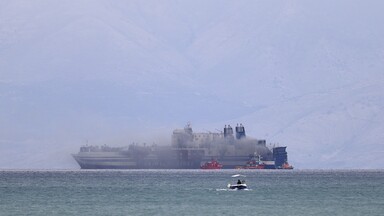
Gulf countries are looking to find alternative oil and gas export routes due to the security crisis in the Strait of Hormuz after the joint US and Israeli attacks on Iran at the end of February prompted Tehran to close the vital waterway in retaliation, exposing vulnerabilities in the region’s energy infrastructure.
The Strait of Hormuz typically handles around 20% of global oil supplies, and its closure led to varying outcomes depending on the alternative infrastructure capacities and vulnerabilities among Gulf nations.
Only Saudi Arabia and the United Arab Emirates (UAE) have active pipeline infrastructure able to bypass the strait, according to the US Energy Information Administration (EIA).
Kuwait, Qatar, and Bahrain rely on maritime transit via the strait and have no alternative export capacity, while Oman benefits from its unique geographic location outside the chokepoint.
Kuwait suffered massive economic disruptions, having no immediate bypass options, with its daily crude production plummeting from a pre-war level of 2.6 million barrels to a low of 573,000 in May after its storage facilities maxed out.
Kuwaiti crude exports partially recovered to 1 million barrels per day by September while still remaining below 36% of pre-war levels.
Even though Kuwait is in talks with Saudi Arabia on long-term pipeline bypass projects, such multi-year infrastructure solutions do not offer immediate relief to the country’s short-term economic dependence on the Strait of Hormuz.
Qatar is in a similar situation, facing a structural crisis as one of the world’s largest exporters of liquefied natural gas (LNG), which cannot be transported via pipelines in its liquefied state.
A Qatari commercial vessel suffered direct attacks, and escalating regional tensions prompted Doha to scale back operations at its Ras Laffan plant.
The prolonged maritime transit suspension is estimated to have led to a shortfall of around 30 million metric tons in Qatar’s 2026 LNG export targets, analysts say.
Constructing new facilities outside the strait is not possible for Qatar, as country officials said they will not pursue bypass pipelines. Instead, the Qatari government is mediating US-Iran diplomatic talks alongside Pakistan to restore maritime security and reopen the Strait of Hormuz.
At the same time, Bahrain suffered direct infrastructure damage in addition to logistical bottlenecks amid the maritime blockade.
The Sitra BAPCO refinery, Bahrain’s only oil processing plant, was forced to idle its 400,000-barrel-per-day capacity as its storage tanks maxed out.
The situation worsened when drone and missile strikes set fire to storage tanks and severely damaged them at the Sitra facility on April 5, further crippling the Bahraini energy economy.
In contrast, the UAE navigated the crisis mostly unscathed, relying on its Habshan-Fujairah oil pipeline, which is also known as the Abu Dhabi Crude Oil Pipeline (ADCOP).
The 360-kilometer (223.7-mile) ADCOP transports up to 1.8 million barrels of crude per day directly from Abu Dhabi to the Gulf of Oman.
The UAE is planning new infrastructure investments to double its bypass capacity amid its push to reach its production goal of 5 million barrels per day by next year, having recently withdrawn from the Organization of the Petroleum Exporting Countries (OPEC) to evade quotas of up to 3.5 million barrels per day.
The situation in Saudi Arabia showed the vulnerabilities of multi-billion-dollar bypass systems.
Saudi Arabia relies on the 1,200-kilometer (745.6-mile) East-West Crude Oil Pipeline to transport up to 7 million barrels per day to the Red Sea port of Yanbu.
Drone strikes by Iranian-backed Yemeni Houthi militias on Sept. 11 damaged the pipeline’s pumping stations, which led Saudi Aramco to shut down the system and cancel October deliveries to at least two European refineries.
Riyadh was forced to reroute its shipments back via the Strait of Hormuz to meet its contractual obligations, causing its daily transit via the waterway to rise from 700,000 barrels in August to 2.9 million barrels this month.
The East-West pipeline resumed limited operations last week, but experts estimate it will take up to eight weeks to repair the damaged pumping stations, leaving the route vulnerable to future Houthi attacks.
Meanwhile, only Oman has been able to turn this regional crisis into an advantage through its Sohar, Duqm, and Salalah ports along the Arabian Sea, serving as a secure transshipment hub for other Gulf producers making ship-to-ship oil transfers.
Crude exports from Hormuz-reliant Gulf nations fell 36.4%, costing $15.2 billion in lost oil revenues during the first month of the crisis alone, according to the Turkish Center for Energy Strategies and Policy Research (TESPAM).
Texas-based think tank Baker Institute confirmed these economic impacts in a recent report, which showed that the lack of alternative export infrastructure concentrated the most severe effects of the crisis squarely on Kuwait, Qatar, and Bahrain.