Sahin Demir
25 July 2026•Update: 25 July 2026
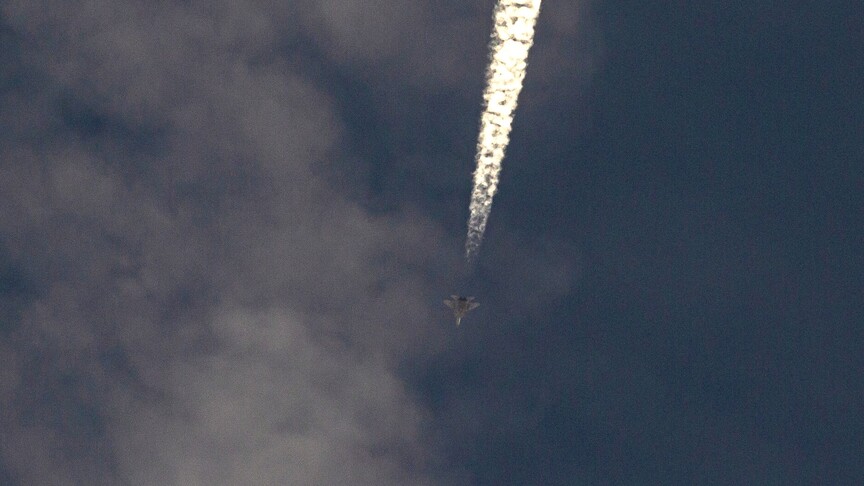
Iran claimed Saturday that its armed forces destroyed 11 US warplanes and helicopters on the ground during the recent 15-day conflict with the US.
Speaking to the semi-official Tasnim News Agency, Islamic Revolutionary Guard Corps (IRGC) spokesman Brig. Gen. Hossein Mohebbi said the attacks were carried out between July 8 and July 22.
Mohebbi claimed the destroyed equipment included 17 reconnaissance and operational drones, including eight that were “brand new,” one F-15 fighter jet inside a hardened shelter, one P-8 maritime patrol aircraft, one C-17 military transport aircraft and eight aerial refueling aircraft.
He said the aircraft were destroyed while stationed on the ground at US military bases but did not specify their locations.
Mohebbi also claimed Iranian strikes damaged nine command-and-control centers, five satellite communications systems, six Patriot air defense radars, three air and naval surveillance radars, eight reconnaissance and early-warning radars, seven air missile defense radars, five electronic positioning system (EPS) radars, including two long-range systems, five additional long-range radars, two air defense radars, one tactical radar complex, six missile hangars, 17 weapons depots, 12 fuel tanks, three logistics centers, six fighter aircraft maintenance centers, six missile launch platforms, four HIMARS rocket launcher platforms, one fuel pier, one unmanned surface vessel storage facility, one intelligence data center, four fighter aircraft hangars, four helicopters and six missile depots.
The IRGC spokesman further claimed that more than 200 US service members were killed after Washington violated the memorandum of understanding, dismissing US casualty figures as “absolute lies.”
He said Iranian forces struck eight locations where US troops were stationed, including one site containing 20 shelters, which he claimed were destroyed.
Mohebbi said the number of wounded US personnel was “far higher” than the reported death toll and challenged Washington to allow journalists to visit the strike sites to independently assess the casualties.