Sahin Demir
10 April 2026•Update: 10 April 2026
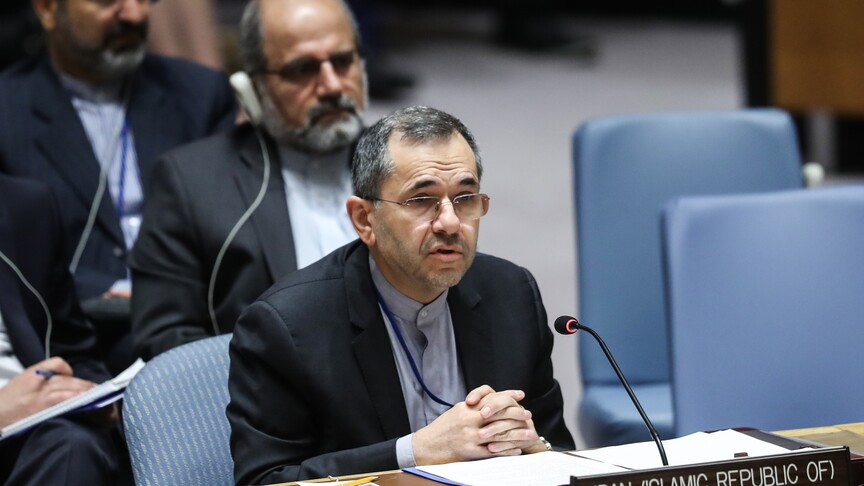
Iran’s Deputy Foreign Minister Majid Takht-Ravanchi said Tehran’s proposed 10-point framework has been accepted as the basis for upcoming negotiations, while reiterating that Iran would not support a ceasefire without guarantees against renewed aggression, according to state broadcaster Islamic Republic of Iran Broadcasting.
Speaking at a meeting attended by foreign ambassadors, heads of diplomatic missions and representatives of international organizations in Tehran, Takht-Ravanchi said Iran continues to support diplomacy and dialogue but not under conditions based on misleading information or aimed at enabling further military action.
"Iran has always welcomed diplomacy and dialogue," he said, adding that negotiations must not be used as a pretext for deception or to prepare the ground for renewed aggression.
He reiterated Tehran’s opposition to a ceasefire that would allow what he described as an aggressor to regroup and launch further attacks.
“We do not want a ceasefire that enables the enemy to rearm and carry out aggression again,” he said, adding that such a situation would not be accepted without guarantees against repetition.
Takht-Ravanchi also said Iran’s approach toward neighboring countries is based on a policy of good neighborliness, stressing that Iran’s actions should not be interpreted as attacks against them.
He said Iran’s operations were defensive in nature and targeted US bases and facilities located in those countries that were used in military operations against Iran.
The proposed 10-point framework, as outlined by Iranian officials, includes guarantees of non-aggression against Iran; continued Iranian control over the Strait of Hormuz; recognition of Iran’s right to uranium enrichment; lifting all US primary and secondary sanctions; termination of UN Security Council resolutions against Iran; termination of resolutions by the International Atomic Energy Agency Board of Governors; payment of compensation to Iran; withdrawal of US combat forces from the region; and ending hostilities across all fronts, including in Lebanon.
Regional tensions have escalated since the United States and Israel launched a joint offensive on Iran on Feb. 28, according to Iranian authorities. Tehran retaliated with drone and missile strikes targeting Israel as well as Jordan, Iraq and Gulf countries hosting US military assets. Iran also restricted the movement of ships through the Strait of Hormuz.
The US and Iran announced a two-week ceasefire on Tuesday, brokered by Pakistan, as a step toward a possible broader agreement to halt the conflict that has left thousands dead and wounded.
US President Donald Trump said the ceasefire followed what he described as a “workable” 10-point proposal presented by Iran, with negotiations expected to determine whether a longer-term agreement can be reached.