Iran says Pakistan army chief’s Tehran visit yielded ‘diplomatic achievements’
Iranian lawmaker says Munir carried US message urging Tehran to return to Islamabad memorandum, revive stalled political process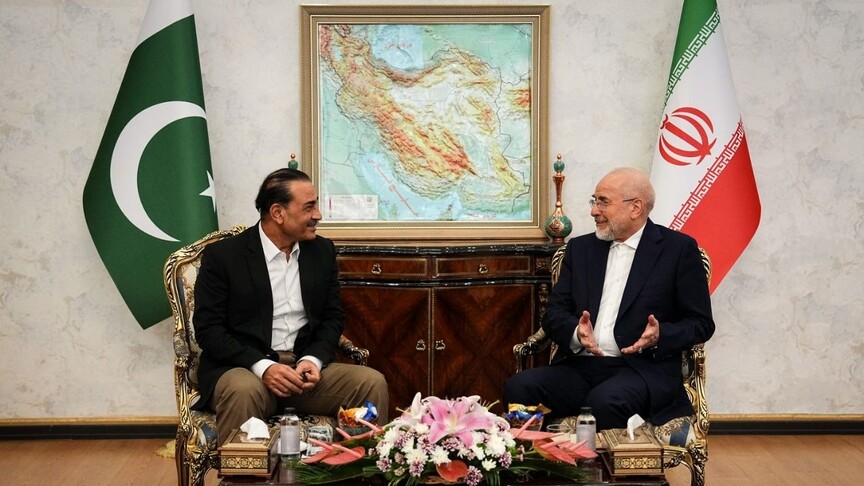
Iran said Tuesday that the Pakistani army chief’s visit to Tehran was “highly productive” and yielded “significant diplomatic achievements,” with results to “become apparent soon.”
“Contrary to some inaccurate media speculation, the visit of Field Marshal Asim Munir, the army chief of friendly Pakistan, to Iran was highly productive and yielded significant diplomatic achievements, the results of which will become apparent soon,” Seyed Mehdi Tabatabaei, deputy for communications and information at the Iranian President’s Office, said on US social media company X.
Abbas Golrou, chairman of the Iranian parliament’s Foreign Relations Committee, said Munir carried a message from the US urging Tehran to return to the Islamabad memorandum and revive the stalled political process.
Golrou told the semi-official ISNA news agency that Washington had asked Pakistan to engage with the Iranian side and encourage Tehran to return to the political track.
“Asim Munir conveyed a message to Iran on behalf of the US that Iran should return to the memorandum,” Golrou said.
He said Washington was sending direct and indirect messages for negotiations while simultaneously issuing threats and imposing new sanctions.
Golrou added that the main purpose of Munir’s visit appeared to be to “revive the stalled political process,” adding that it remained to be seen what the main message of the visit was.
Munir visited Tehran on Monday, where he met Iranian President Masoud Pezeshkian, Parliament Speaker and chief negotiator Mohammad Bagher Qalibaf, Supreme National Security Council Secretary Mohsen Rezaei, and Interior Minister Eskandar Momeni.
According to Pakistan’s military, the talks focused on preventing further escalation, reopening the Strait of Hormuz, and efforts to end the Iran-US conflict, as well as ways to reach a negotiated settlement.
Pakistani Interior Minister Mohsin Naqvi, who accompanied Munir, said the discussions also addressed steps needed from Tehran and Washington to restore the Islamabad memorandum of understanding and move toward a comprehensive settlement.
Naqvi said Tuesday that “significant progress” had been made during the visit, without providing details.
Iran and the US signed a 14-point memorandum of understanding in June aimed at ending the war, but the interim deal quickly faltered.