Said Amori, Rania Abushamala
24 October 2026•Update: 24 October 2026
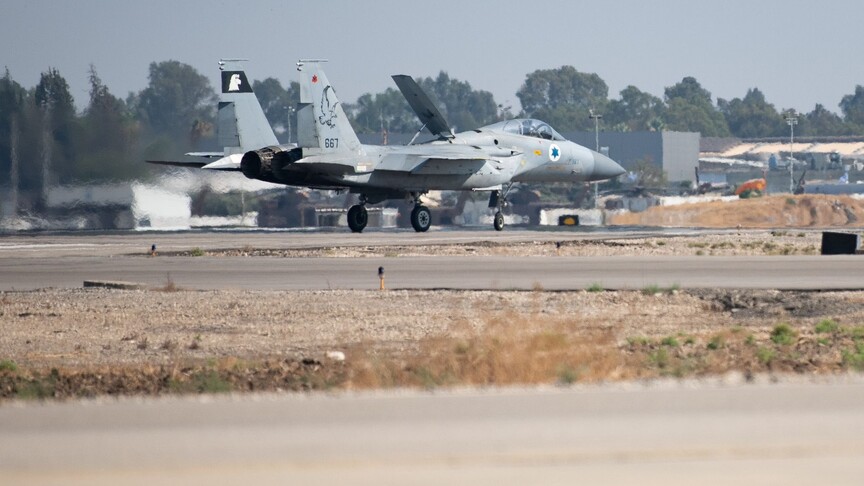
The Israeli army announced Friday that it will hold large-scale military exercises in northern and central Israel on Sunday and Monday, simulating surprise attacks and aerial and ground infiltrations ahead of Tuesday’s parliamentary elections.
The army said in a statement that the drills aim to test and improve its readiness to defend multiple fronts and prepare for possible military escalation along the borders.
The exercises will involve the air force and several military divisions, including the Northern Command’s 210th Division, the West Bank Division and the Central Command’s 98th and 96th divisions, according to the statement.
Troops will practice scenarios, including surprise attacks and infiltrations into Israeli territory by air and land. Increased movements of security forces and aircraft are expected in the areas involved.
The army said the exercises are part of its annual training plan for 2026 and an ongoing effort to improve military proficiency and readiness, stressing that there were no concerns about a security incident.
Although the drills will take place immediately before the elections, the army did not link the two events.
Israeli Chief of Staff Eyal Zamir announced Monday that military readiness would be raised to its highest level, soldiers’ leave restricted starting Thursday and troop deployments in the West Bank reinforced to ensure the elections take place safely and on schedule.
Despite the army’s assurances that the exercises were scheduled in advance, warnings about possible attacks, heightened military readiness and restrictions on soldiers’ leave could give security greater prominence in public debate ahead of the vote. The statements announced no specific imminent threat.
A poll published Friday by the Maariv newspaper projected that Prime Minister Benjamin Netanyahu’s bloc would win 48 seats, down three from the newspaper’s poll a week earlier, compared with 54 for the Jewish opposition bloc.
Neither bloc would secure the 61 seats required for a majority in the 120-member Knesset.
The poll projected 19 seats for Netanyahu’s Likud, seven for Itamar Ben-Gvir’s Jewish Power, seven for United Torah Judaism, eight for Shas and seven for Bezalel Smotrich’s Religious Zionism party.
Within the Jewish opposition bloc, Gadi Eisenkot’s Yashar party was projected to win 21 seats, followed by Naftali Bennett’s Together party with 15, Yair Golan’s Democrats with 10 and Avigdor Lieberman’s Yisrael Beiteinu with eight.