Ikrame Kouachi
23 September 2026•Update: 23 September 2026
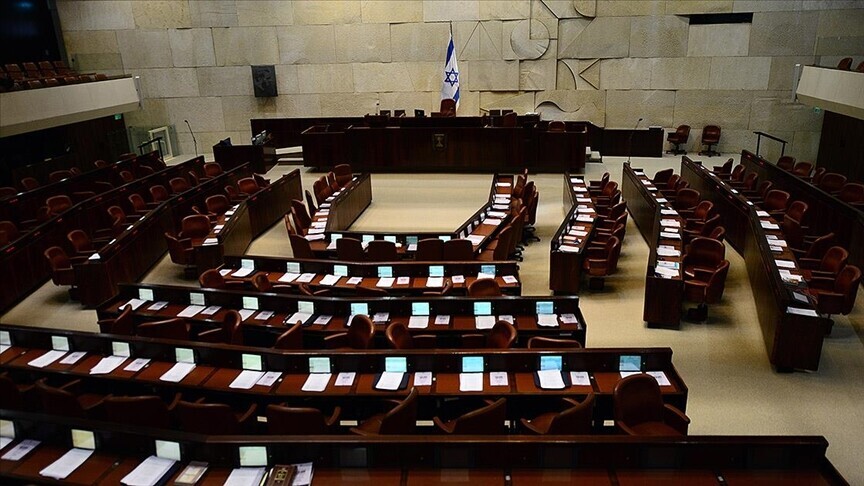
Israel's opposition bloc would secure 54 seats in the Knesset (parliament) compared with 50 for Prime Minister Benjamin Netanyahu's coalition if elections were held today, according to a poll released late Tuesday by Channel 12.
Neither bloc would reach the 61 seats required to form a government, while Arab parties would win 12 seats, according to the poll, done just weeks before Israel's Oct. 27 general elections.
The survey, done by the Sample research and consulting firm for Channel 12, included 2,498 respondents and had a margin of error of 4.4 percentage points.
Gadi Eisenkot's Yashar party would emerge as the largest party with 23 seats, followed by Netanyahu's Likud with 20, according to the poll. Naftali Bennett's Together party would win 13 seats, while the Democrats, led by Yair Golan, and Avigdor Liberman's Yisrael Beiteinu would each secure nine.
Together, Yashar, Together, the Democrats and Yisrael Beiteinu would hold 54 seats, according to the results.
On Netanyahu's side, United Torah Judaism would win eight seats, Shas seven, National Security Minister Itamar Ben-Gvir's Otzma Yehudit six, Finance Minister Bezalel Smotrich's Religious Zionism five, and the Reservists-New Economic Party, led by Yoaz Hendel and Yaron Zelekha, four. Along with Likud's 20 seats, the bloc would have 50.
Ofer Winter's Amcha Yisrael party would win four seats, while Arab parties would secure 12, including seven for the Joint List and five for the Ra'am party led by Mansour Abbas.
In a separate question on respondents’ preferred prime minister, Eisenkot got 41% compared with 38% for Netanyahu, according to the poll.
A total of 38 lists have registered to contest the upcoming Knesset elections, while polls indicate that 13 are expected to win parliamentary representation.
A government requires the support of at least 61 members of the 120-seat Knesset.
The elections will be held amid a fragmented political landscape, with Arab parties projected to hold a significant number of seats but with major Jewish parties having generally ruled out relying on Arab lawmakers to form an alternative government to Netanyahu's coalition.
Netanyahu has headed the current government since December 2022.
He is facing corruption charges, while the International Criminal Court has issued an arrest warrant for him over alleged war crimes and crimes against humanity in the Gaza Strip.