Mohammed Al Ragawi
26 June 2026•Update: 26 June 2026
Lebanon and Israel signed a US-sponsored "framework deal" in Washington on Friday, concluding the fifth round of negotiations between the two sides.
A senior Lebanese official source told Anadolu that the deal includes a “gradual” withdrawal of Israeli forces from southern Lebanon, without specifying a timeline or the areas covered by the withdrawal.
Live footage showed the signing ceremony, though full details of the agreement were not immediately announced.
The senior Lebanese source, speaking on condition of anonymity, told Anadolu negotiations had made “progress on the outstanding issues” between the two sides.
Rubio says framework 'beginning of beginning' for peace
Speaking at the ceremony, US Secretary of State Marco Rubio said the framework was intended to establish a foundation for lasting peace and security.
“It’s the beginning of the beginning,” Rubio said. “We don't in any way underestimate the difficulty of the task ahead, but we understand the importance of it.”
He emphasized that the agreement seeks to terminate decades of "outside interference" that utilized Lebanese territory as a "launch pad for attacks."
In a separate statement, Rubio said the framework establishes a "clear and structured process" to restore Lebanon's sovereignty, disarm Hezbollah, dismantle its infrastructure, and enable Israel to "return to its borders once the threat to its citizens is removed."
Rubio said the agreement also creates a US-facilitated Military Coordination Group for Lebanon (MCG4L) to oversee implementation of the framework. He said the deal provides Lebanon with "a genuine pathway out of a long crisis" while offering Israel "a verifiable path" to eliminating the persistent security threat along its northern border.
"The United States will remain fully engaged and commit significant resources, including an immediate $100 million in humanitarian assistance in coordination with the UN," he said.
Lebanese recovery, sovereignty
Nada Hamadeh Moawad, the Lebanese ambassador to the US, characterized the trilateral framework as a "historic" milestone for national recovery. She said that the document serves as a foundation for "restoring Lebanese sovereignty and territorial integrity."
The ambassador underscored that the ultimate goal remains "securing a permanent and final cessation of hostilities," which would finally allow displaced Lebanese citizens to return to their homes.
Exclusion of external actors
Israeli Ambassador Yechiel Leiter framed the accord as a victory for the doctrine of "peace through strength."
“In this performance-based trilateral framework agreement, Iran is out, Hezbollah is out, and the road to peace between Israel and Lebanon is in,” said Leiter.
He said that the final destination is a "real peace" where the sovereignty of both nations is respected and protected.
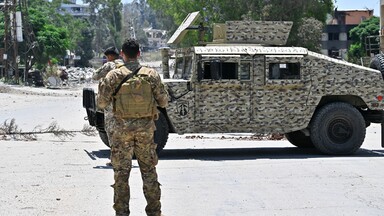
Israel continues to occupy areas in southern Lebanon, some held for decades and others seized during the 2023-2024 war. During its latest offensive, Israeli forces advanced more than 10 kilometers (6.2 miles) into Lebanese territory.
Since March 2, 2026, Israel's offensive in Lebanon has killed more than 4,000 people, wounded more than 12,000 others, and displaced more than one million people, according to official Lebanese figures.
*Writing by Rania Abushamala in Istanbul