Serdar Dincel, Sahin Demir
10 June 2026•Update: 10 June 2026
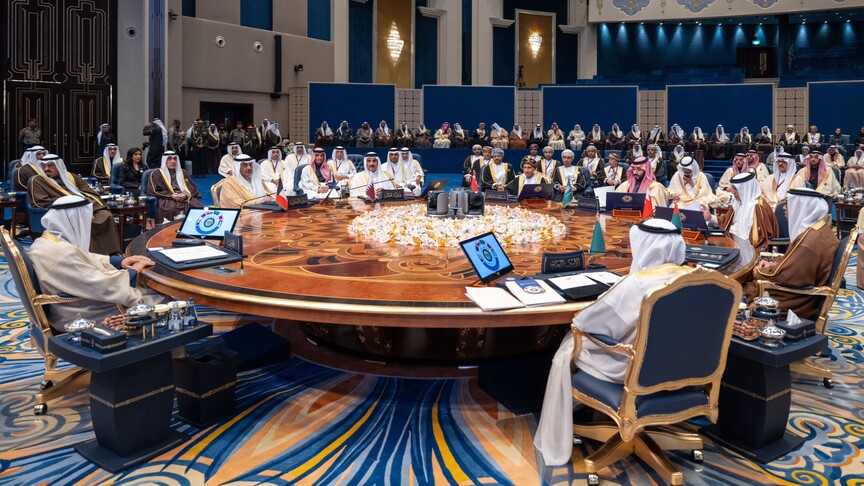
Gulf Cooperation Council (GCC) Secretary General Jassim Al-Budaiwi said on Wednesday that Gulf security is “indivisible,” calling for a return to dialogue amid escalating tensions between Iran and the US.
“Iran is violating international and humanitarian law with its attacks on the Gulf states,” he said during a GCC ministerial meeting in the Bahraini capital Manama.
He warned that restrictions on shipping in the Strait of Hormuz “don’t only harm the Gulf states, but also the global economy.”
“We must return to the path of dialogue and diplomacy to resolve the conflict,” he added.
Bahraini Foreign Minister Abdullatif Al-Zayani, for his part, said the Iranian attacks represented a “clear violation of international law.”
In a final communique after the meeting, the bloc condemned Iranian drone and ballistic missile attacks targeting Bahrain, Kuwait and Jordan.
It said the attacks constituted “a blatant violation of international law, the UN Charter and the sovereignty of the targeted states.”
GCC ministers reaffirmed that the security of member states is “indivisible” and said that an attack against one GCC country constitutes an attack against all member states.
The statement expressed “full solidarity” with Bahrain, Kuwait and Jordan, and held Iran “fully responsible” for the attacks and their repercussions on regional security, international navigation and energy supplies. It called on Tehran to immediately halt any targeting of GCC states, their interests and citizens.
The ministers said GCC countries retain the right “to defend themselves individually and collectively in accordance with Article 51 of the UN Charter.”
They urged the UN Security Council and the international community to condemn the Iranian attacks and hold those responsible accountable.
Despite the condemnation, the GCC reiterated its commitment to dialogue, diplomacy and good-neighborly relations as the preferred means of resolving regional disputes.
Iran’s Islamic Revolutionary Guard Corps said early Wednesday that it had launched retaliatory attacks on 21 American military targets at US air and naval bases across the region, including those in Kuwait and Bahrain.
The attacks came hours after the US launched strikes in southern Iran following the downing of a US Apache helicopter.
The latest escalation followed months of regional tensions that began on Feb. 28, after Israeli and US strikes on Iran triggered a cycle of military confrontations, retaliatory attacks and diplomatic disputes.
Iran and Israel also exchanged strikes in recent days before pulling back, highlighting the fragility of a ceasefire and ongoing efforts by regional and international mediators to revive diplomacy and prevent a broader conflict.