Sovereignty incomplete unless state controls decisions on war, peace: Lebanese premier
Nawaf Salam stresses need to complete implementation of Taif Agreement and build strong state institutions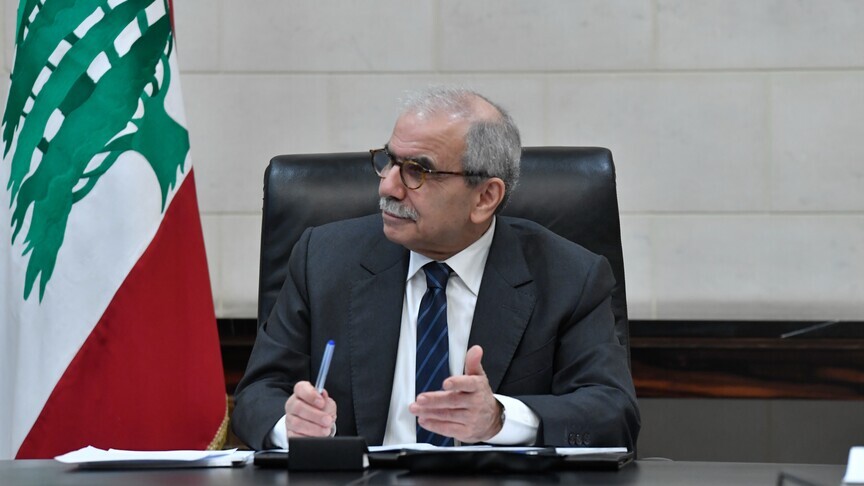
Lebanese Prime Minister Nawaf Salam said Wednesday that the country’s sovereignty could not be complete unless decisions on war, peace and national security were placed exclusively in the hands of state institutions.
Salam made the remarks at the opening of an exhibition marking the 100th anniversary of Lebanon’s Constitution at the National Library in Beirut.
He stressed the need to complete the implementation of the Taif Agreement and continue the process of building state institutions.
Salam said the Taif Agreement affirmed that Lebanon is “a final homeland for all its citizens, Arab in identity and affiliation,” and that its system is a “democratic parliamentary” one based on the separation, balance and cooperation of powers.
He added that the agreement introduced key principles into the preamble of the Constitution that have since become part of the very definition of the Lebanese state.
But the most important aspect, he said, was that Taif established a road map for completing the process of state-building.
The agreement states that “abolishing political sectarianism is a fundamental national objective” and calls for achieving it through a phased plan, Salam said.
“There is no meaning to popular sovereignty if there are multiple sources of authority outside the institutions that represent the people, and there is no meaning to the rule of law if the law does not apply to everyone,” he said.
“State sovereignty is not complete if sovereign decisions, such as decisions on war, peace and national security, are made outside its constitutional institutions,” he added.
The Taif Agreement was signed by Lebanese political forces in the Saudi city of Taif in 1989 under the sponsorship of Saudi Arabia and other Arab countries, ending Lebanon’s 15-year civil war.
The agreement redistributed political powers among Lebanon’s religious communities in an effort to strengthen political participation.
It transferred some powers of the presidency to the Council of Ministers and Parliament and established equal political representation between Christians and Muslims.