Mariam Ashalem De Andres
19 August 2026•Update: 19 August 2026
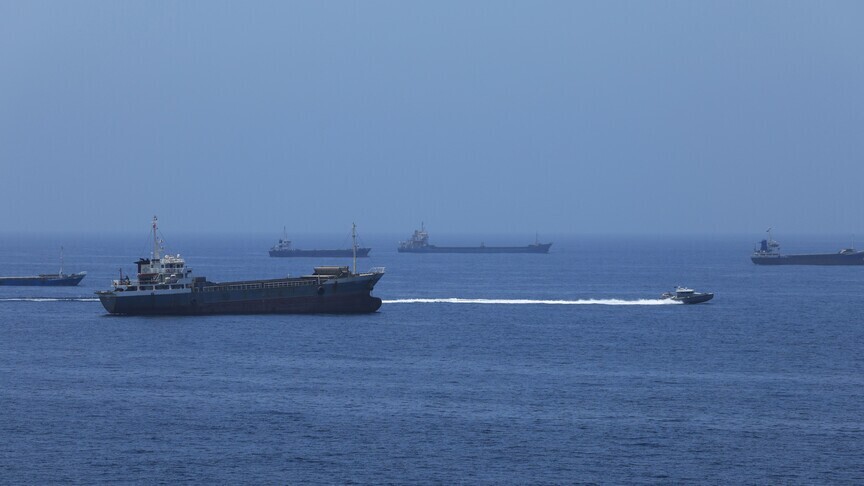
The US military has established a shipping corridor through the Strait of Hormuz that is allowing millions of barrels of oil to leave the Gulf each day despite the war with Iran, Axios reported Wednesday, citing two US officials.
“There is a tremendous amount of oil coming out of the Strait of Hormuz,” US President Donald Trump told Axios. He also said Washington is not currently negotiating with Iran.
The operation has been underway for several weeks, the officials reportedly said. It allows 15 to 20 tankers to pass through the strait each night using a southern channel along the coast of Oman, according to Axios.
About 10 million barrels of oil per day are now moving through the strait, roughly half the pre-war level, the officials said.
US forces are also helping empty tankers enter the Gulf from the Arabian Sea, load oil from the United Arab Emirates, Bahrain and Kuwait, and return through the strait, according to the report.
“We have been controlling the southern lane of the Strait of Hormuz for two months now,” one US official said, according to Axios, adding that Iran’s Islamic Revolutionary Guard Corps “doesn’t control the strait.”
The operation is coordinated by a task force run from the Army’s 82nd Airborne Division headquarters at Fort Bragg, North Carolina, Axios reported.
The US military organizes vessels into scheduled inbound and outbound groups and assigns checkpoints for ships to report their movements. US Air Force fighter jets also patrol overhead to detect potential missile and drone attacks, according to the officials.
They said the operation became possible after a two-week US Central Command (CENTCOM) campaign that damaged Iran’s radar and maritime surveillance capabilities.
Iranian forces have continued to target shipping routes with drones and cruise missiles, according to the report. One US official said American forces shot down eight Iranian drones and two cruise missiles Monday night.
The officials said oil shipments through the strait have recently approached 10 million barrels per day, with some nights seeing between 15 million and 20 million barrels transported.
The Strait of Hormuz is a major route for oil exports from Gulf producers to international markets. Disruptions to shipping through the waterway have affected global energy supplies and oil prices.
The report comes amid heightened tensions between Tehran and Washington following months of conflict.
Iran and the US signed a memorandum of understanding in June aimed at ending the war and paving the way for a broader agreement, but talks have since stalled amid disputes over its implementation and navigation through the Strait of Hormuz.
Negotiations involving Iran and Oman over arrangements for navigation through the strategic waterway, meanwhile, have continued without a breakthrough.