- Thomas Greminger is executive director of the Geneva Center for Security Policy (GCSP) and former secretary general of the Organization for Security and Cooperation in Europe (OSCE).
In 1848, Lord Palmerston told the House of Commons that Britain had “no eternal allies” [1] and “no perpetual enemies”; its interests, he argued, were “eternal and perpetual.” Charles de Gaulle would later express a similar thought in sharper French form: nations do not have friends, only interests. There is nothing uniquely British or French about this view. It is the grammar of diplomacy.
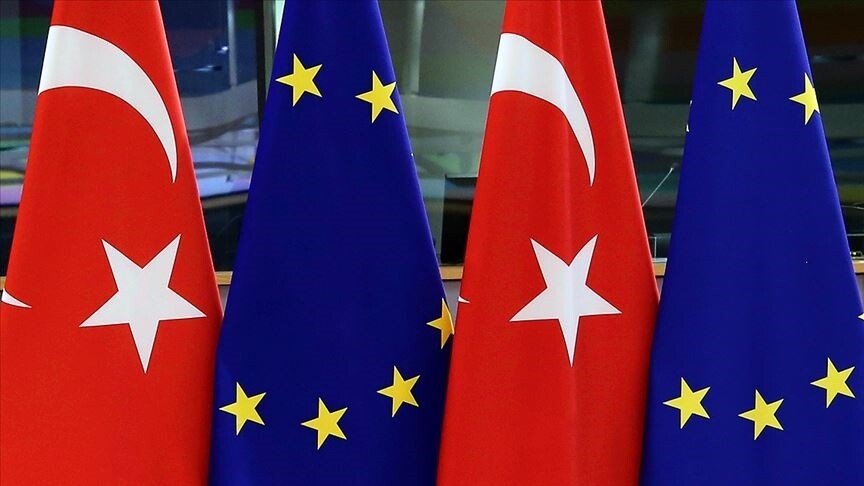
EU-Türkiye relations are a case in point. Türkiye is formally an EU accession candidate, militarily a NATO ally and an independent regional power with interests of its own. European Commission President Ursula von der Leyen’s recent remarks in Hamburg brought this tension into view.
Speaking at an event marking the 80th anniversary of German weekly Die Zeit, she argued that Europe “must succeed in completing the European continent so that it does not fall under Russian, Turkish or Chinese influence” [2]. The formulation was notable. It placed Türkiye, at least rhetorically, in the same category as Russia and China.
Taken literally, one could read the remark as suggesting that the president of the European Commission sees Türkiye as a rival whose influence on Europe should be kept at bay. That reading would be too strong. Von der Leyen’s statement does not amount to a formal change in the European Union’s approach to the Republic of Türkiye. It is better understood as a revealing moment in a relationship that has long been defined by differing interests and geopolitical reality.
Commission spokesperson Paula Pinho later clarified [3] that the reference to Türkiye was not meant to place Ankara on the same footing as Russia or China, but to acknowledge its geopolitical influence, particularly in the Western Balkans. NATO Secretary-General Mark Rutte also appeared to distance [4] himself from the formulation, listing China, Russia, and Iran as threats, but not Türkiye.
A slip that reveals Europe’s ambivalence
But the statement does reveal a deeper unease in Brussels. The EU still speaks of Türkiye as a partner and candidate country. At the same time, it encounters Ankara as a regional power whose influence cannot always be folded neatly into European preferences.
This is the difficulty. Europe needs Türkiye more than it sometimes likes to admit. But cooperation with Ankara comes with political friction: governance debates, regional disputes, different interests in the Western Balkans and, most recently, diverging views on the Middle East.
That tension was visible in the EU’s decision not to invite Türkiye to Friday’s summit with Middle Eastern states in the Greek Cypriot Administration. One may understand the diplomatic calculation. But if the EU wants to play a more active role in the region, it cannot easily leave a consequential regional actor outside the room.
A partner Europe cannot ignore
Geography alone makes Türkiye difficult to bypass. It sits at the connecting point of Europe, the Black Sea, the Middle East, the Caucasus and Central Asia. Trade adds another layer. The EU is Türkiye’s most important trading partner, and Ankara matters for Europe’s energy security, supply chains and regional connectivity.
Security points in the same direction. Türkiye has NATO’s second-largest army and considerable experience in its neighborhood. In the war in Ukraine, Ankara has kept channels open to both Moscow and Kyiv, provided military support to Ukraine, and helped broker the Black Sea Grain Initiative.
Nor is Europe’s relationship with Ankara decided in Brussels alone. Rome, Madrid, Warsaw, London and other European capitals have each found practical reasons to move closer to Türkiye. Defense cooperation, energy, migration and regional stability are the issues that make Ankara a necessary partner for much of Europe.
Recent months have also shown that both sides remain interested in pragmatic rapprochement. In February, Turkish Foreign Minister Hakan Fidan and EU Enlargement Commissioner Marta Kos reaffirmed [5] Türkiye’s candidate status and the strategic importance of EU–Türkiye relations.
Ankara, for its part, follows its own logic. Its foreign policy is shaped by geography and pressure, but also by domestic politics and the ambition to widen its maneuvering room. Türkiye hedges between Europe, Russia, the Middle East, and Central Asia.
Ankara pursues its own interests, sometimes in ways that diverge from European positions. But that is precisely why the relationship cannot be managed through labels alone. Candidate country, NATO ally, regional power, challenging neighbor: Türkiye is all of these at once.
Von der Leyen’s remark was therefore perhaps a Freudian slip, unintended but revealing. It pointed to the central question in EU-Türkiye relations: how to balance real differences with the strategic interests both sides still share. Lord Palmerston and de Gaulle would have understood the dilemma. A serious European policy toward Türkiye must begin where foreign policy always begins, with interests, constraints, and power.
[1] https://thedailyeconomy.org/article/we-should-follow-lord-palmerstons-example/
[2] https://www.zeit.de/politik/2026-04/80-jahre-zeit-ursula-von-der-leyen-europa-hamburg-eu-kommissionspraesidentin-giovanni-di-lorenzo
[3] https://audiovisual.ec.europa.eu/en/media/video/I-288024
[4] https://www.tagesspiegel.de/internationales/arger-uber-von-der-leyen-eu-ladt-zu-nahost-treffen-ein--aber-nicht-die-turkei-15513485.html
[5] https://enlargement.ec.europa.eu/news/joint-statement-turkish-foreign-minister-he-hakan-fidan-and-eu-commissioner-enlargement-he-marta-kos-2026-02-06_en
*Opinions expressed in this article are the author’s own and do not necessarily reflect the editorial policy of Anadolu.