The writer is the Head of Development at the Bloomsbury Intelligence and Security Institute (BISI).
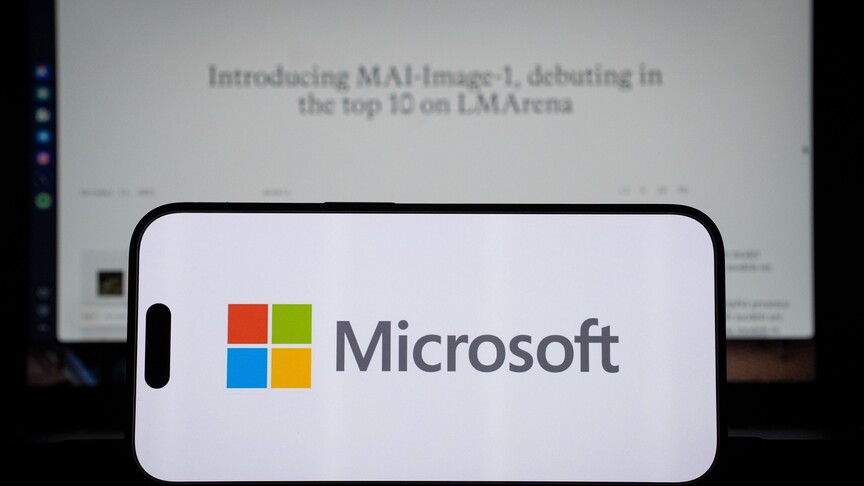
Microsoft once treated the idea of leaving China as unthinkable. However, that assumption seems to be shattering; at least 15 branch offices and joint ventures have been closed [1] over five years, marking a strategy of retreat. Microsoft still insists it has no plans to exit, and both realities hold at once. That contradiction captures the bind confronting every international technology firm. The era of operating fully in both the US and China has ended and the exit is rarely clean. Microsoft's drawdown is the sharpest illustration so far of how a global company adapts when the ground beneath a two-market strategy gives way.
Two forces, unequal weight
Pressure on Microsoft arrives from opposite directions, and their relative weight is routinely misjudged. Washington's export controls on advanced chips [2] shifted in January 2026 to case-by-case licensing for Nvidia's H200, with a 25% tariff, a volume cap and compulsory US testing attached. The rule has flipped between restriction and relaxation so frequently that it now functions as permanent uncertainty rather than a settled barrier. It has capped Microsoft's room to scale its artificial intelligence and cloud capacity inside China, though this lever is cyclical, tied to each swing of the political calendar.
Beijing's substitution drive is the structural force. The government has pushed for domestic software and its self-reliance program [3] presses state enterprises to swap foreign tools for local ones. The procurement record shows the effect. Of six central government purchasing guides published between December 2023 and May 2026, only one mentioned Microsoft. In August 2026, Beijing ordered state agencies to strip out a customized Windows build [4] ahead of schedule and move to domestic Linux systems. No policy reversal in Washington reopens that door. The clearer reading, then, is that Beijing's replacement drive, more than Washington's controls, forms the lasting constraint.
The cost of a foot in both camps
Microsoft's answer complicates the familiar demand to pick a side. Instead of choosing, it has fallen back to a defensible niche, supplying Azure cloud and Western AI models to Chinese firms such as ByteDance and Shein [5] that run international operations and need compliant infrastructure beyond China's borders. The tactic is clever, but it conceals a structural weakness. What survives is the connective tissue joining the two ecosystems, and severing that tissue is exactly what both governments now pursue, Beijing through its data-security regime and Washington through the US Data Security Program. Microsoft has fallen back into the position most vulnerable to the next escalation. No bilateral accord governs cross-border data and cloud, and that absence is telling: the very institution a durable settlement would require does not exist, leaving the bridge to stand at the mercy of two rival capitals.
A partial split, not a clean break
The divide runs deepest in hardware. China's chip self-sufficiency has climbed due to heavy subsidies, and Nvidia now describes itself as effectively foreclosed [6] from that market. Yet the consumer layer tells a different story: Windows still accounts for a large proportion of desktop web traffic in China, underscoring how difficult it would be to displace Microsoft's consumer footprint overnight. The separation is nonetheless contested rather than total. Licensed trade, equipment sales and rare-earth flows still cross in both directions, and Beijing's retaliatory mineral controls [7] are read as leverage held in reserve rather than a door slammed shut. The digital economy is parting into two stacks at the sensitive core, government systems and advanced compute, while staying knitted together at the commercial edge.
Outlook
The firms best placed for a divided landscape are not those with the largest China revenue but those whose presence is either already slight or based on portable manufacturing rather than domestic-market share. Apple can relocate US-bound iPhone output to India [8] within a few quarters, whereas market access, once surrendered, does not return when policy eases. The most exposed are the vendors whose worth depends on selling into China's home market, from advanced-chip suppliers to enterprise-software incumbents, and the repricing is already visible in survey data showing China's standing as a top investment priority sliding from 62% to 52%. More Western firms will very likely adopt Microsoft's managed-retreat template, holding on to cross-border services while surrendering the domestic market. A full divorce remains unlikely while both capitals guard the off-ramps they keep using, and a clean severing of the commercial edge, over this horizon, remains a remote possibility. The defining task of the decade is no longer which market to choose, but how to build exposure that endures whichever way the two systems pull.
[1] https://www.reuters.com/world/china/microsoft-retreats-china-ai-boom-helps-it-keep-window-open-2026-08-13/
[2] https://bisi.org.uk/reports/trump-reverses-us-ai-chip-export-policy-to-china
[3] https://www.rand.org/pubs/research_reports/RRA4104-3.html
[4] https://www.bloomberg.com/news/articles/2026-08-18/china-axing-microsoft-windows-from-state-agencies-ahead-of-plan
[5] https://www.firstpost.com/tech/microsoft-scales-back-china-presence-as-ai-business-continues-to-grow-report-14038027.html
[6] https://www.tomshardware.com/tech-industry/artificial-intelligence/jensen-says-nvidia-now-has-zero-percent-market-share-in-china-says-us-export-policy-has-already-largely-backfired
[7] https://tech-insider.org/china-rare-earth-export-controls-hardware-2026/
[8] https://www.rte.ie/news/business/2026/0813/1587753-microsoft-retreats-in-china/
*Opinions expressed in this article are the author's own and do not necessarily reflect the editorial policy of Anadolu.