31 March 2016•Update: 08 April 2016
By Kyaw Ye Lynn
YANGON, Myanmar
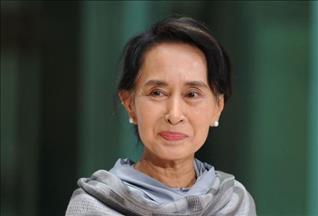
Myanmar's parliament is to vote on a bill that creates a new “advisor to the state” post for election victor Aung San Suu Kyi, who is barred from becoming president under a constitutional clause.
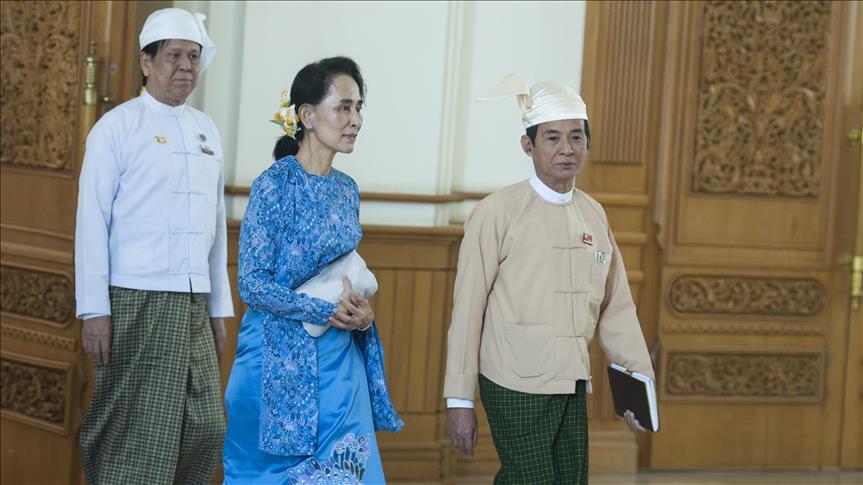
Suu Kyi took four ministerial posts -- including Foreign Minister -- in the new cabinet led by newly sworn-in President Htin Kyaw, when the National League for Democracy (NLD) took power Wednesday.
On Thursday, an NLD lawmaker submitted the bill to the upper house to let the government appoint Suu Kyi as advisor to the state -- a post that would see her fulfill role similar to that of a prime minister.
The upper house has said it will debate and vote on the bill Friday.
“The bill is not against the constitution, and would give Suu Kyi the power to rule the country from above the president officially,” Win Htein of the NLD told Anadolu Agency by phone on Thursday.
If agreed on, it is expected to be approved by both lower and upper houses next week, he added.
“As she has already said, she will rule the country anyway."
As both houses are dominated by NLD members, the bill -- which would give Suu Kyi the power to work on all the key issues of government and meet whoever she pleases -- appears set for approval.
Outside of taking the Foreign Minister post and three other top posts in the new cabinet announced this week, Suu Kyi was also included in the 11-member National Defense and Security Council (NDSC) formed by newly sworn-in President Htin Kyaw on Thursday.
The new council was formed with the president, the two vice presidents, two parliament speakers, foreign minister, commander-in-chief of the armed forces and his deputy, and the ministers of defense, home affairs and border affairs who are appointed by the military.
The military-drafted constitution states the 11-member NDSC is the highest authority in the government, and grants powers to impose martial law, disband parliament, and rule directly, but only if the president declares a state of emergency.
However, it also provides a legal channel for the military to re-impose direct military rule in the country as six of its member are military members, including the commander-in-chief of the armed forces.