By Shadi Khan Saif
KABUL
The continuing delay in the formation of a fully-functional cabinet in the nascent Kabul government has marred its first 100 days in power.
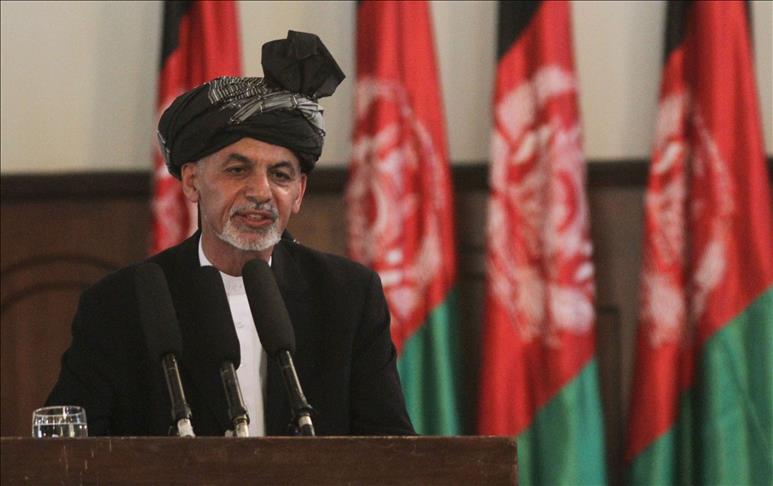
The National Unity Government was formed on Sept. 29 when President Ashraf Ghani took oath after a disputed and prolonged electoral process in 2014.
Ghani, an economist and an anthropologist-turned-politician, promised the Afghans a new era of tolerance and self-reliance in the wake of NATO’s withdrawal. He also teamed up with his former rival Abdullah Abdullah, who is now the chief executive officer of Afghanistan.
Abdullah, a former anti-Soviet resistance fighter, too vowed to lead the country out of uncertainties.
But as the government got 100 days older Tuesday, the delay in forming a cabinet unleashed a Pandora’s box of vagueness, confusion and above all, fear of a fallout between the two top Afghan officials.
The delay in posting key ministers in the security, finance and education fields, have brought the system of governance to a standstill.
A number of civil society activists have already lost their patience, vowing to take to the streets if there was a further delay.
Bari Saleem, a Kabul-based civil activist told the Anadolu Agency that plans were underway to hold rallies soon.
"The six-month electoral process followed by delay in cabinet formation have left us with no choice but to take to the streets and push the leaders to think beyond their petty interests," Saleem said.
A source close to the government said Ghani and Abdullah had finally agreed on five important ministries that would soon be announced in the parliament this week.
"They have agreed on names for the ministries of interior, defense, finance, foreign affairs and local governance," the source said, while adding that there remained differences over other posts.
There are 25 ministry slots that need to be filled. During the past decade, pro-Abdullah ministers have dominated most of them, especially the security related ones, but Ghani is believed to be resisting against continuation of that trend and wants them to be replaced with either his followers or neutral technocrats.
Waheed Mujda, an Afghan political analyst said that the wheeling and dealing continued at full pace in a bid to secure more power and perks.
"In some instances, Ghani and Abdullah might be on the same page, but they have to listen to other power brokers that want to see their men on key posts," Mujda said.
Those power brokers include Vice President Gen. Abdul Rasheed Dostum, Vice CEO Muhammad Muhaqiq, former President Hamid Karzai and former U.S. Ambassador of Afghan origin Zalmay Khalilzaad, he added.
"Afghanistan is being considered as a piece of sweet cake, everyone seems to be fighting for his or her part," he added.
The government has missed several deadlines given by the upper and lower houses of the parliament in this regard. However, the issue is seldom raised by Ghani during his public remarks.
Abdullah, too, refrains from discussing the differences in public. In his last public speech, he said the unity government was a significant step in bringing the nation together and minimizing ethnic, linguistic and regional differences.
Analysts like Mujda, however, are not convinced. "There is a deep-rooted mistrust among the leaders, they just joined hands due to the pressure from the U.S.," he said.