By Charles Newbery
BUENOS AIRES, Argentina
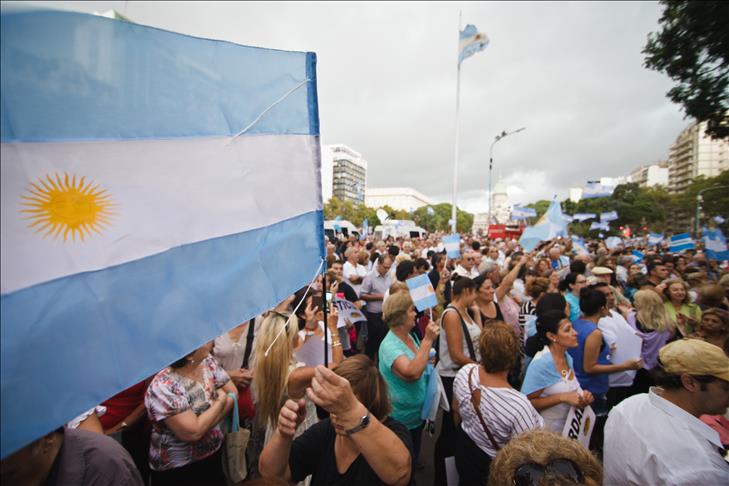
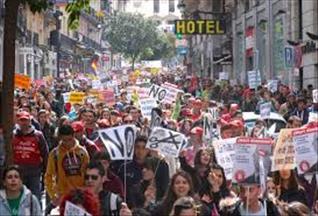
Argentina’s government sought Thursday to minimize the political impact of a march that saw 400,000 demonstrators brave a downpour to honor a dead prosecutor and voice complaints against state corruption.
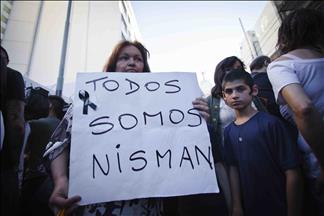
Anibal Fernandez, the general secretary for President Cristina Fernandez de Kirchner, said the march wasn’t to remember Alberto Nisman, a prosecutor who was found dead last month four days after charging the president of a criminal cover-up.
“It was an opposition march,” Fernandez said in televised comments to the press outside his office.
“There is a vocation to destabilize” this government, he added in an indirect reference march leaders.
A group of prosecutors organized the so-called silent march to pay their respects to Nisman, who is widely thought to have been murdered Jan. 18 on the eve of testimony before Congress about his accusations against the president, officials and government supporters.
Prosecutors led the march along with Nisman’s family and his ex-wife, federal judge Sandra Arroyo Salgado. Opposition political leaders walked behind and were followed by tens of thousands of Argentines.
The Buenos Aires Metropolitan Police estimated the turnout at 400,000, while other marches across the country saw as many as 40,000, including in Mar del Plata. No violence was reported, and the mood was largely subdued, with few chants other than “Argentina,” “Silence” and the singing of the national hymn.
Echoing Fernandez, the president’s chief of Cabinet, Jorge Capitanich, also said the march a ploy to undermine the government ahead of the Oct. 25 presidential election.
The judicial system, he said during a televised press conference, is independent of the executive branch, “but it is not independent of the corporations that influence it directly and indirectly to agitate the normal operation of the institutions.”
The march was one of the largest during the ruling party’s rein since 2003, topping an anti-crime demonstration in 2004 that gathered an estimated 150,000 and a pro-farmer march with more than 200,000 in 2008. Still, it was shy of a march against judicial reform in 2013.
Fernandez de Kirchner has come under incressed pressure for alleged corruption since Nisman exposed what he claimed was her orchestration of a cover-up to try to hide Iran’s alleged involvement in a 1994 bombing that killed 85 people – a move aimed at rebuilding trade ties between the two countries.
Her vice president, Amado Boudou, also has been charged with corruption.
Demonstrators said they came first to pay their respects to Nisman but that they also wanted to show the government that they won’t stand for corruption.
“We don’t know how he died, but he was one of us, and we are here to march for him, to pay him our respect,” Glauco Antonini, an 88-year-old architect, said about Nisman while taking cover from the rain under the eaves of an office building before starting the march.
Half way through the march, Juan Vodanovich, an 87-year-old lawyer, took a break in front of a hot dog restaurant. He said his biggest hope is that the government takes note of what the people want: less corruption and more abidance to the law.
“This government lives in its own world, and they hear what they want to hear, not the people,” he said.
Vodanovich said that this doesn’t mean that he wants the government to step down before its term ends Dec. 10, a suggestion the government has often made by calling its critics coup-mongers.
“I bet if you took a survey of the people in the march, 90 percent would say that they want this government to end its term well,” he said.
Despite the strong turnout, Enrique Caruso, a 48-year-old real estate worker said he doubts the government will listen to demands for justice and less corruption.
“This government is blind, it is deaf,” he said while looking on the hundreds of umbrellas held by marchers. “They will not listen to us. They have holed themselves up in a block of confidants.”