Argentina transport unions mulls calling off strike
If transport workers decided not to strike, it would be in response to a government decision to meet a major demand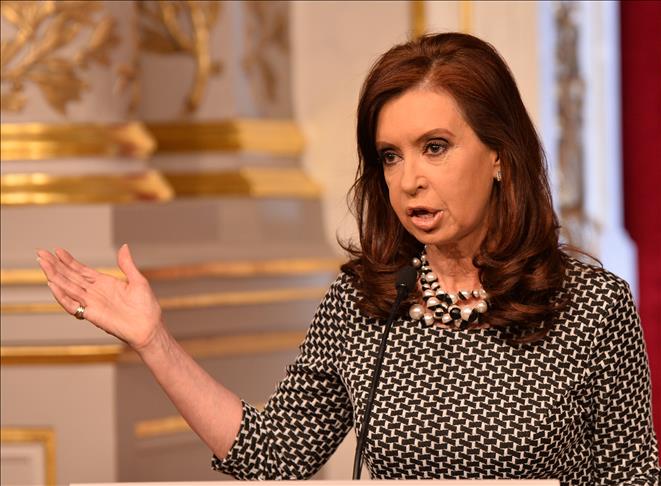
By Charles Newbery
BUENOS AIRES
Argentina’s transport unions said Thursday they will likely call off a planned 24-hour strike this month after President Cristina Fernandez de Kirchner met one of its leading demands.
Late Wednesday, the president said she would exempt end-of-year bonuses from income taxes for those earning less than $4,096 (35,000 pesos) per month.
This will bring “relief” to workers, said Hugo Moyano while speaking to Radio Mitre. The trucker runs a faction of the General Labor Confederation, the country’s largest labor umbrella group.
Moyano said a decision on the strike, which was announced Wednesday ahead of the president’s decision, will be made later Thursday after a meeting with other union bosses.
Separately, Roberto Fernandez, secretary general of a union for bus drivers, said he believes there will not be a strike.
“You have to repay this gesture with another gesture,” he told Radio America with respect to the president’s decision. “We are not going to announce any strike.”
The transport unions held a three-hour strike Nov. 27 and began planning a longer walkout to pressure Fernandez de Kirchner to hear their demands for less tax pressure as surging inflation eats up spending power.
This is the latest labor unrest in Latin America’s third-largest economy, as a contracting economy and 40 percent inflation make it harder to get by and raises the risk of layoffs.
While bankers, teachers and other sectors have walked off the job in recent weeks, the transport unions have been the most vociferous.
A main demand is for the government to raise the threshold for paying income taxes, helping to sustain consumer-spending power.
As salaries have gone up about 30 percent in 2014, many workers have found themselves pushed into higher income-tax brackets so that they have to pay a tax they previously did not. The higher income bracket has also caused many to lose access to social programs, including child welfare.
The government refused to meet any demands until Wednesday, hours after the transport unions announced the strike.
Fernandez said he was “surprised” by the president’s decision.
Regardless of the gesture, Moyano said that Fernandez de Kirchner still doesn’t understand the difficulties that workers are facing, chiefly the impact of inflation on spending power.
“She is either misinformed or she is trying to confuse people,” he said. Her statements “have nothing to do with reality,” he said in reference to the president’s remarks that “salaries continue to beat inflation in Argentina.”
Most economists say salaries are lagging inflation by 7 or 8 percent this year
Moyano added that the president could have made the announcement earlier to ease tensions, but chose to do it after the strike was announced “to blame others for what happens” and to distract attention “from this economic downturn.”
Jorge Capitanich, the president’s chief of Cabinet, shot down speculation that the decision came as union pressure mounted.
“The president never makes decisions because of pressure,” he said in a televised press conference Thursday. “She makes decisions based on conviction” and after “meticulous analysis.”