By Jill Fraser
MELBOURNE
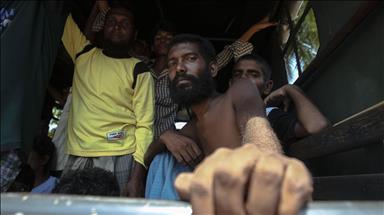
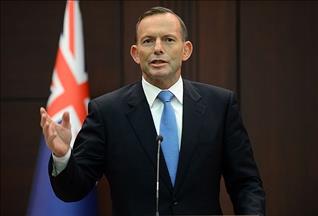
On the day when a high profile celebrity campaign was launched urging the Australian government to release children from detention centers, Immigration Minister Scott Morrison was removing the resettlement rights of thousands of refugees in Indonesia.
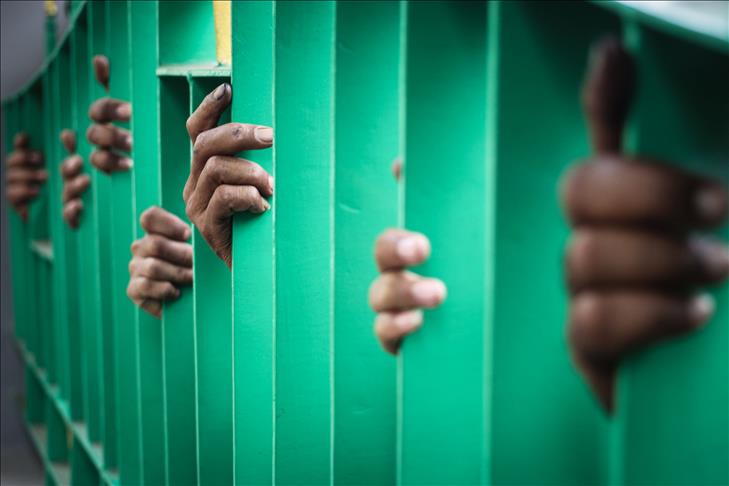
The opposing sentiments illustrate how the immigration issue has polarized Australian society, particularly the policy of mandatory detention for refugees at centers in Australia and further afield on the South Pacific island of Nauru and Papua New Guinea's Manus Island.
In an exclusive interview with Anadolu Agency, Greens Senator Sarah Hanson-Young referred to the policy of detaining children in such centers as "government-sanctioned child abuse."
The "We're Better Than This" campaign has recruited actress Rachel Ward, former rugby captain George Gregan, cricketing great Ian Chappell and businesswoman Janet Holmes a Court among other prominent Australians to front a nationwide push to put an end to child detention.
Conditions in such detention centers have been regularly criticized and children kept in immigration detention have been shown to suffer from high rates of depression and mental health problems.
In July, a Human Rights Commission inquiry heard disturbing claims of a government cover-up about the scale of mental illness and medical neglect among child asylum-seekers.
Hanson-Young, immigration spokeswoman for the Greens, told of her concerns for children held in centers.
“The children who have been dumped in the Nauru detention center are not safe,” she told AA, criticizing Morrison for “leaving people, including families, women and children, in harm’s way.”
She added: “Australians don’t want to see children in detention. People from all levels of the community are raising their voices as one and standing up for vulnerable refugees, especially children.
“Exposing families and children to the shocking conditions in immigration detention is nothing short of government-sanctioned child abuse.”
Statistics released last month show that Iranians make up the single largest group held in Australia’s onshore and offshore detention network, accounting for 31.5 percent of detainees. Stateless individuals account for 12.6 percent of the centers' populace while 9.1 percent are from Vietnam, 6.7 percent from Sri Lanka and 5.6 percent from Afghanistan.
There are currently 603 children being held in detention on Australian soil, including Christmas Island, with a further 186 on Nauru, according to the Department of Immigration.
Currently, the average length of detention is more than 14 months.
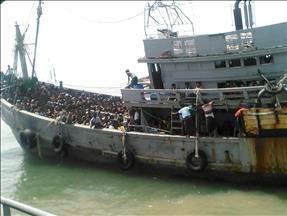
The celebrity-led campaign to remove children from detention coincided with Morrison's announcement that the government will no longer accept refugees who seek asylum in Australia via Indonesia unless they registered before July 1.
Australia will also cut its U.N. refugee intake from Indonesia by a quarter, to 450 people a year.
Morrison referred to the decision to remove resettlement eligibility for refugees in Indonesia as “taking the sugar off the table.”
He told the ABC News: "We're trying to stop people thinking that it's OK to come into Indonesia and use that as a waiting ground to get to Australia.”
The Greens and refugee advocates have attacked the policy. "It's cruelty writ large to say that the Taliban are shocking and what they're doing to Hazaras [an Afghan minority] is wrong, but we will not take any of those refugees,” Greens leader Christine Milne said in a press conference.
The Refugee Council of Australia described the decision as “adding insult to injury.” Chief Executive Paul Power said it was “unconscionable” to prevent asylum seekers from entering Australia while claiming to be trying to “stop the boats.”
“The [immigration] minister has very little understanding of the global situation for refugees," Power said. “His perspective that people should not move from one country to another is in complete denial that people are in significant danger."
Power said the announcement would send a clear signal that the Australian government was more interested in pursuing political objectives than in supporting poorer countries in protecting refugees.
He added that if the United Nations High Commissioner for Refugees finds people in need of protection, “how can we refuse to help our closest neighbor by offering these refugees the long-term safety and security that Indonesia is in no position to provide?”
In April, the U.N.'s refugee agency recorded more than 10,500 asylum seekers and refugees awaiting resettlement in Indonesia, when around 100 people a week were registering at its Jakarta office.
Yasonna Laoly, Indonesia's human rights minister, said Australia had burdened his country with looking after far more asylum seekers and refugees than it is able to handle.
www.aa.com.tr/en