By Mainul Islam Khan
DHAKA, Bangladesh
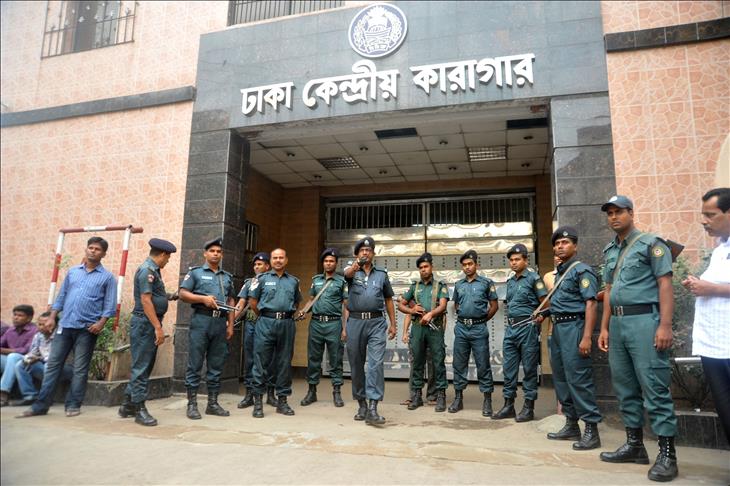
Bangladesh's top court has upheld the death sentence handed to an opposition politician for alleged war crimes committed during the country's 1971 independence war.
The Supreme Court on Wednesday rejected the appeal by Salahuddin Quader Chowdhury, a senior member of the main opposition Bangladesh Nationalist Party and adviser to the party's leader and former Prime Minister Khaleda Zia.
The spokesperson for the Ganajagaran Mancha movement, which pushed for punishment against war criminals, Imran H. Sarker said: "We are happy with the court’s decision."
Chowdhury’s lawyer Khandker Mahbub Hossain told reporters they would appeal for a review petition as soon as they receive the full judgment.
The International Crimes Tribunal, a special domestic court to investigate war crimes, found Chowdhury guilty of the charges that included torture, murder and looting.
He hails from a political family in the port city Chittagong and his father Fazlul Quader Chowdhury also opposed Bangladesh's independence from Pakistan and was at the time the speaker in Pakistan's parliament.
Bangladesh has accused the Pakistani army and its local collaborators of killing up to 3 million people during the 1971 war, as well as decimating entire villages and raping thousands of women.
After the partition of India in 1947 and until 1971, Bangladesh was known as East Pakistan. The war began after the Pakistani army tried to suppress a movement in then-East Pakistan calling for equal rights and greater autonomy after decades of alleged oppression.
Bangladesh has already executed two of the death sentences for Abdul Quader Molla and Mohammad Kamaruzzaman, leaders of the Jamaat-e-Islami party.
Jamaat-e-Islami is the third largest political party in Bangladesh but most of its membership were allegedly militia commanders accused of committing war crimes and have been sentenced to death.
The International Crimes Tribunal, set up in 2009 to investigate the war crimes, has so far passed 19 verdicts, sentencing most to death or life imprisonment.
Bangladesh’s opposition parties and international organizations such as Human Rights Watch have criticized the process and expressed concerns about the accused not receiving fair trials.