26 November 2015•Update: 27 November 2015
LONDON
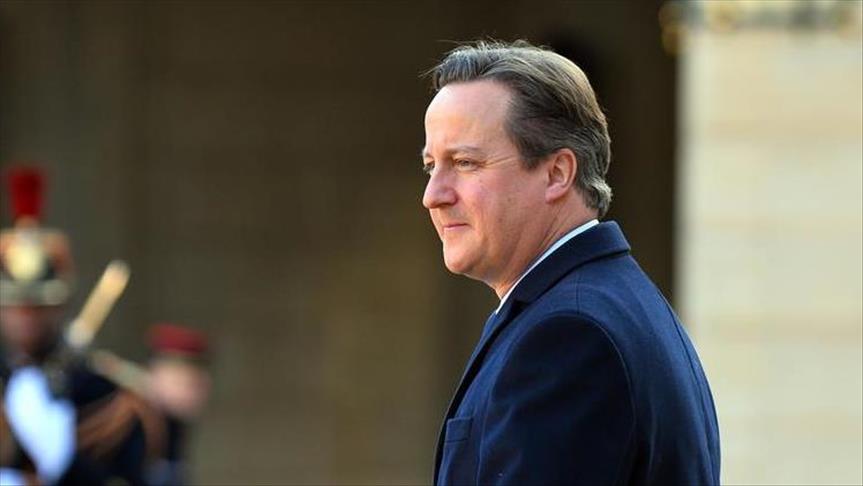
Britain cannot wait for a representative government to emerge in Syria and must launch immediate airstrikes to eradicate Daesh, U.K. Prime Minister David Cameron has said.
In a statement to the House of Commons on Thursday morning, Cameron said that he was launching what he called his “ISIL [Daesh] first strategy” to tackle the Syrian civil war.
He said U.K. air strikes would be legal in international law following last week’s U.N. Security Council resolution and added British aircraft had permission to use Turkish airspace to conduct them.
“The initial objective is to damage ISIL and reduce its capacity to do us harm and I believe that this can, in time, lead to its eradication,” he said.
“No-one predicted ISIL’s rise and we should not expect that it’s somehow impossible to bring them to an end. They are not what the people of Iraq and Syria want, they don’t represent the true religion of Islam and they’re losing ground in Iraq following losses in Sinjar and Baiji.”
In the debate that followed, opposition leader Jeremy Corbyn said that there was no military or diplomatic strategy coordinated by the United Nations and asked whether this could increase the risk of “dangerous incidents”, such as Tuesday’s shooting down of a Russian aircraft in Turkish airspace.
Cameron responded: “Obviously what happened in Turkey, as I said yesterday, we have to get to the bottom of that. But, obviously, we have permission to overfly Turkish airspace and Turkey is our ally in this conflict”.
Later in the debate he added: “Russia so far has done more to inflict damage on the moderate forces than on ISIL. There is some sign of that changing and we need to encourage that to change more, not least because … the Russians have accepted that people like the Free Syrian Army and their civilian representatives should play a part in the future of Syria.”
Asked by Corbyn whether he believed last week’s U.N. Security Council resolution presented a legal justification for British air strikes and was unambiguous, Cameron said: “I believe it is. I believe the language in that resolution is very clear and that’s why I quoted it in some detail.”
The British premier was responding to a Nov. 3 parliamentary committee report that said it was “not yet persuaded” that U.K. airstrikes in Syria could help defeat Daesh and end the conflict in Syria.
Britain has been striking Daesh targets in Iraq from the air since Sep. 2014, although Cameron has long wanted to broaden the mission to include the northern Syrian city of Raqqa. Such a move would require parliamentary approval.
He acknowledged many parliamentarians have to come to regret Britain’s involvement in the 2003 war to topple then-Iraqi leader Saddam Hussein: “Whatever anyone thought of the Iraq war, terrible mistakes were made in the aftermath in dismantling the state and the institutions of that country and we must never make those mistakes again.”
But he said his country’s ultimate objective was for a Syria without President Bashar al-Assad.
“The political process in Syria will in time deliver new leadership and that is the transition we must support. We are not in the business of dismantling the Syrian state or its institutions,” he said.
Cameron also confirmed a U.K. parliamentary motion, if tabled, would grant authority to strike Daesh and would not be a pretext to launch action against other parties in the conflict, such as the Assad regime.
Earlier in November, Britain’s cross-party Foreign Affairs Select Committee had recommended against a parliamentary vote because it did not yet believe military action would work.
Its report said it was “not persuaded by the Government’s attempts to treat ISIL [Daesh] in Syria and the broader Syrian civil war as separate issues, and note that our witnesses called for a more joined-up strategy to tackle closely interlinked crises”.
But in a sign of increasing support to authorize air strikes, the committee’s chairman, Crispin Blunt, said during Thursday’s debate that he would now personally support a vote in parliament.
There was also support from the Democratic Unionist Party, the largest Northern Irish group in parliament – although the Scottish National Party appeared to indicate it would oppose the motion.
Labour leader Jeremy Corbyn was due to meet his shadow cabinet at 1 p.m. local time to discuss the position their party should adopt.