Riyaz ul Khaliq
07 April 2026•Update: 07 April 2026
China Tuesday urged the warring sides in the Middle East to “demonstrate sincerity” towards ceasefire proposals while cautioning the UN Security Council ahead of an expected vote on the Strait of Hormuz.
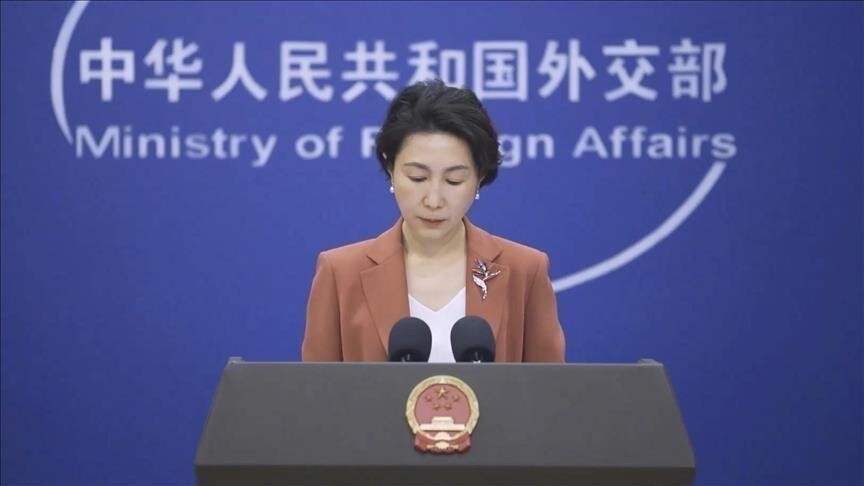
“All parties need to demonstrate sincerity and quickly end this war that should not have taken place,” Chinese Foreign spokeswoman Mao Ning told reporters in Beijing, when asked about the exchange of proposals between the US and Iran.
Mao reiterated Beijing’s position on the war, saying the “root cause of the conflict is US-Israeli military attacks on Iran in violation of international law.”
“The use of force does not bring peace, political settlement is the right way forward,” said Mao, adding: “The top priority is to bring an immediate end to military operations and return to dialogue and negotiations so as to fundamentally resolve the issues and restore peace and stability in the Middle East.”
The statement came after Iran on Monday said it had responded to a proposal from the US with its own 10-point demands, exchanged through Pakistan.
“China welcomes all efforts that are conducive to peace and supports Pakistan in its active mediation efforts,” said Mao.
On an expected vote at the UN Security Council later Tuesday in New York, Mao urged caution.
“Currently, the spillover of the conflict in Iran is still continuing; what is important is to promote peace talks and a ceasefire,” said the Chinese Foreign Ministry spokeswoman.
The UN Security Council “should promote ceasefire and not add fire to the flames,” said Mao.
The Security Council is expected to vote on a resolution to protect commercial shipping in the Strait of Hormuz, which has been effectively taken under control by Iran amid war with the US and Israel.
As a "responsible" and P5 country, China is willing to play a constructive role in promoting a ceasefire for peace and stability in the region, she added, referring to the five permanent members of the Security Council.
She recalled Chinese Foreign Minister Wang Yi had made 26 phone calls amid the ongoing war, speaking to counterparts from the Middle East, Iran and Israel as well as Russia, stressing the need to end the war.
Whether Wang also spoke to his US counterpart Marco Rubio remains unknown.