LONDON
Calls for an EU army are dividing Europe, with Germany openly supporting the move but the U.K. remaining bitterly opposed to military unity.
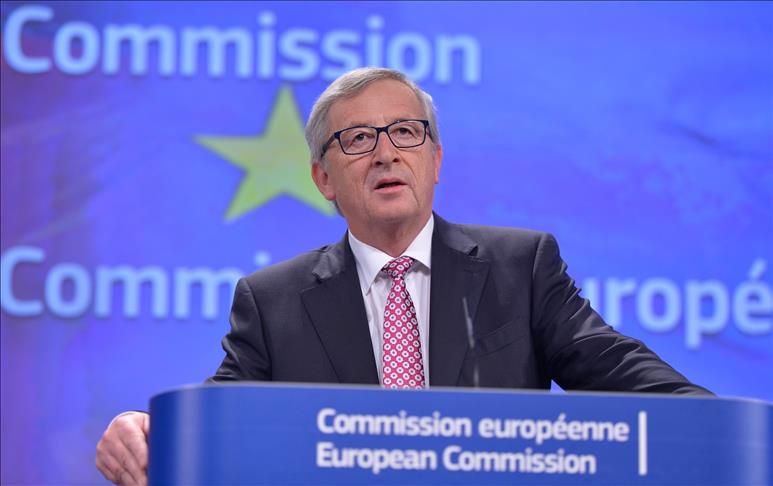
European Commission President Jean Claude Juncker used an interview with a German newspaper on Sunday to call for the creation of an "EU army" in order to solve problems within the European Union and to combat external threats.
Speaking to Welt am Sonntag, Juncker said an EU army would demonstrate to the world that there would be "no more war" between European countries.
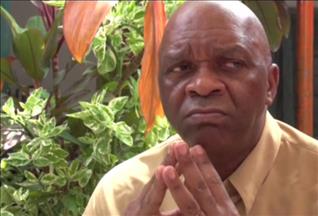
The chairman of the Istanbul-based Center for Economics and Foreign Policy Studies, Sinan Ulgen, told The Anadolu Agency that “creating an EU military force is not a new suggestion; it was on the agenda for a long time but could not proceed.”
He claimed that Juncker's main reason for putting the issue back on the agenda is Russia's threat to Europe. "We see some countries in the EU having serious concerns about the creation of a military force similar to NATO,” Ulgen said, adding that the U.K. leads this opposition.
Jucker said that the "EU army would help us form a joint domestic and security policy against external threats and would help the EU fulfill its responsibilities to the world.”
Claiming that the Ukraine crisis had created a need for the EU army, Juncker told the German paper that : "Europe can react more reliably to threats against peace regarding its members or neighbors with its own army."
German Chancellor Angela Merkel’s coalition government has also expressed support for the creation of a combined EU military force.
Government deputy spokeswoman Christiane Wirtz said EU member states including Germany had already started projects towards stronger military cooperation.
She said Berlin viewed an EU army as a long-term target and ongoing process which currently did not have a fixed timetable, with EU leaders to continue discussions on the idea at a summit in June.
Ulgen thinks that the German government’s support for Junker's suggestion is due to the perceived threat from Russia. He added that obviously Germany also sees and knows there is no chance to put into this suggestion into practice.
The British government in a written statement this week said that “our position is crystal clear, that defense is a national, not an EU, responsibility.” The statement said that there is no prospect of that position changing.
Prime Minister David Cameron has also said before that cooperation in security matters between EU member countries is very important but it would not be right to create an EU-controlled army.
Mike Hookem, defense spokesperson for the Eurosceptic UK Independence Party, known as UKIP, which was successful in the 2014 elections to the European Parliament, said that “the EU army would be a catastrophe for UK.”
Ulgen thinks that it is not realistic to expect the EU to build a separate army from NATO, while most European countries experience economic crises and slowdown.
"The U.S., for years, wanted its NATO member European countries to increase defense budgets. I do not view Junker's call realistically while there are many NATO member EU countries which cannot do that,” he said.
Ulgen says the U.K. never wanted the EU to replace NATO regarding security, less so at a time when Britain is discussing a possible exit from the European Union.
Deputy Director of Institute of Economic Affairs, Dr. Richard Wellings – in an interview for Russia Today – said that “the timing of this announcement by Mr. Juncker is very interesting because of course we now see some tensions emerge between the German government and the NATO high command on their approach to Ukraine”.
“So I think this could be in essence a shot across the bows of NATO, saying to the U.S. that ‘we want to have a greater say of NATO’s policies are,’” he said.
Wellings thinks that EU discussion will provoke absolute fury among a lot of British politicians, particularly on the Eurosceptic side of things.
A new Royal United Services Institute paper highlights the real possibility of further reductions in defense spending and personnel numbers in the forthcoming Strategic Defense and Security Review in the UK, which is due to start after the country’s May general election.
The briefing, by RUSI Research Director Professor Malcolm Chalmers, projects that the UK will spend 1.95 per cent of its GDP on defense in 2015/16 (£37.3 billion/$55.7 billion), excluding spending on operations – just short of the NATO 2 per cent target to which it agreed at the Wales summit.