13 April 2016•Update: 20 April 2016
By Alex Jensen
SEOUL
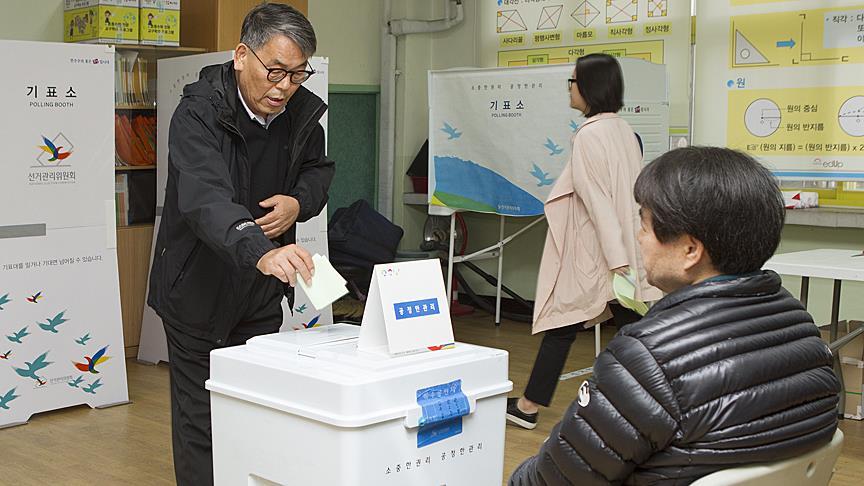
South Korea’s general election appears to have produced a major surprise, as the ruling Saenuri Party performed far below expectations based on exit poll data Wednesday.
All indications going into the nationwide vote were that the conservative camp would win an outright majority in the National Assembly, but the Saenuri Party looks to have gone backwards since it took just over half of the 300 available seats in the 2012 election.
Exit poll results released by local broadcasters placed the Saenuri tally at between 118 and 147 seats – down from pre-election forecasts that ranged between 150 and 175 seats.
The main opposition Minjoo Party of Korea (MPK) may have won as many as 128 seats, having been tipped to struggle to reach the 100 mark.
It could have been even worse for the Saenuri Party had the MPK not suffered a factional split ahead of the election, as the breakaway People’s Party is believed to have made a strong debut showing by claiming up to 43 seats.
Analysts had viewed circumstances as conspiring in the ruling camp’s favor over the last few weeks, not least because of tensions on the peninsula fueled by North Korea’s fourth ever nuclear test and subsequent rocket and missile launches.
Pyongyang’s repeated threats provided conservatives with the opportunity to demonstrate a tough stance on handling the authoritarian state – a position not associated with the MPK, which only recently agreed to apply parliamentary pressure on Pyongyang over its human rights record via legislation that had been years in the waiting.
President Park Geun-hye, a former Saenuri leader, had improved her own approval ratings after joining efforts to strengthen sanctions against the North.
But with the ruling camp almost as divided as the opposition in recent months, it seems to have failed to capitalize on public security concerns.
Pressure will now undoubtedly intensify on party head Kim Moo-sung after numerous clashes with fellow Saenuri lawmakers seen as being staunch supporters of the president.
A relatively high voter turnout is another factor that may have helped the MPK and People’s Party – the National Election Commission calculated a preliminary participation rate of 58 percent, around four percentage points higher than in 2012.
Liberal politics in the country should also have been boosted by the kind of anti-government sentiment that drew tens of thousands of people to the streets of Seoul late last year to rally over multiple issues – from labor reforms to the handling of the Sewol ferry disaster, which will be remembered on its second anniversary this weekend.
If the two opposition parties can find some common ground, they could make life increasingly difficult for the ruling party as well as the president, who may now find it tougher than ever to push through her remaining agenda ahead of next year’s vote to decide her successor.