CAIRO
Egyptian authorities have postponed the application of new rules on banning the weekly Friday prayer in small mosques until October 1.
"The move was taken to give a chance to small mosques and prepare the public opinion to implement the ban," Sabri Ebada, Undersecretary of the Ministry of Religions Endowments (Awqaf), told Anadolu Agency.
He argued that the ban is aimed at "protecting Islamic Da'wah and reviving the mosque role in spreading the true Islamic teachings and the moderate discourse of Al-Azhar".
The ban was scheduled to come into effort as of September 13, as part of a government crackdown on "unlicensed" mosque preachers and imams.
The Ministry of Religious Endowments (Awqaf) had earlier decided to nullify contracts with as many as 45,000 imams who had not graduated from Egypt's Al-Azhar, the leading seat of religious learning in the Sunni Muslim world.
Minister Mohamed Mokhtar said his ministry would make up for the shortfall in mosque imams by enlisting preachers from Al-Azhar and graduates of Al-Azhar University. Preachers, he added, would be paid per sermon.
Mokhtar said his ministry had decided to ban non-Azhar graduates from leading prayers and preaching inside mosques because it wanted to preserve what he called "Al-Azhar's moderate discourse."
He argued that the presence of unspecialized preachers threatened to "confuse Muslims."
The minister said that the Shafai School of Islamic jurisprudence banned Friday prayers in small mosques.
A small mosque, "Zawya" in Arabic, is a small prayer house usually built on the ground floor of a building. Most Zawyas are no larger than 80 square meters.
Zawyas smaller than 80 square meters will be banned from hosting Friday prayers, according to the ministry decision, unless they are located a considerable distance from a major mosque.
Around 100,000 mosques are registered with the Religious Endowments Ministry, yet there are only some 60,000 registered imams and preachers.
About 13,000 Zawyas, meanwhile, are registered with the ministry. There are a large number of Zawyas across the country, however, that are not registered with the authorities.
Earlier this month, the ministry ordered the employment contracts of preachers and imams who were not Al-Azhar graduates to be revoked (or simply not renewed).
The ministry hopes to ensure that preachers will not use their sermons to discuss political issues.
The ministry pays around 70 million Egyptian pounds (roughly $10 million) every year in salaries for preachers who are not Al-Azhar graduates.
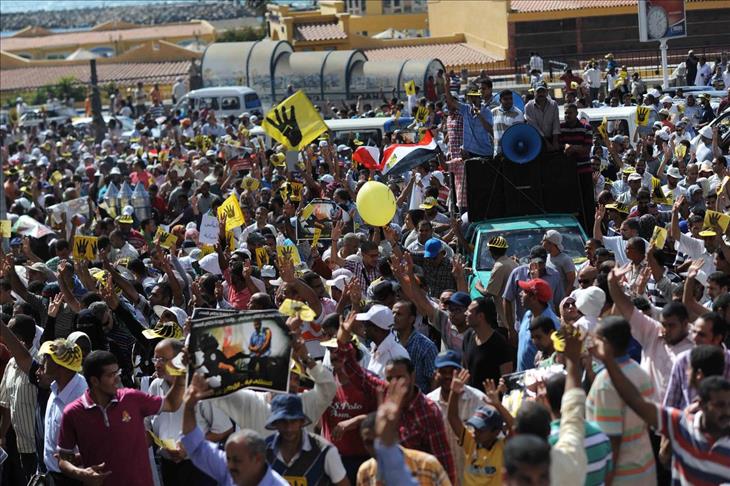
Some Egyptian political and religious forces welcomed the ministry's ban, while other groups rejected the measure as an attempt to prevent opponents – especially the embattled Muslim Brotherhood – from taking the pulpit.
by Sobhi Mujaheed
englishnews@aa.com.tr