Egyptian Presidency said it had begun talks with all parties, including the Muslim Brotherhood, in hopes of achieving national reconciliation.
Ahmed Meslimani, a media adviser to interim President Adly Mansour, said both he and Mansour's political adviser, Mostafa Hegazai, were in contact with the Muslim Brotherhood and other Islamist groups.
Though he declined to elaborate on the outcome of the talks, Meslimani expected most Islamist figures and groups to participate in ongoing reconciliation efforts.
"Reconciliation aims to achieve social peace in the country," he said.
A senior Muslim Brotherhood leader, however, told the Anadolu Agency on Monday that the group insisted on the reinstatement of ousted President Mohammad Morsi before entering into any negotiations aimed at resolving the current political stalemate.
"We reiterated our commitment to democracy, the return of President Morsi, and the reinstatement of the Shura Council and the constitution," Mohammad Ali Beshr, a member of the Muslim Brotherhood's Guidance Office, the group's highest decision-making body, said.
"When this happens, everything can be put on the table for discussion with all political groups," he added.
A source told the AA earlier that Al-Azhar Grand Imam Ahmed al-Tayeb had agreed to chair a national reconciliation committee provided he was given full authority over the talks.
But a source close to al-Tayeb said that the presidency had rejected this condition, describing the entire episode as "embarrassing".
Speaking about US Deputy Secretary of State William Burns' recent visit to Egypt, Meslimani described Egypt's relations with the US as "important".
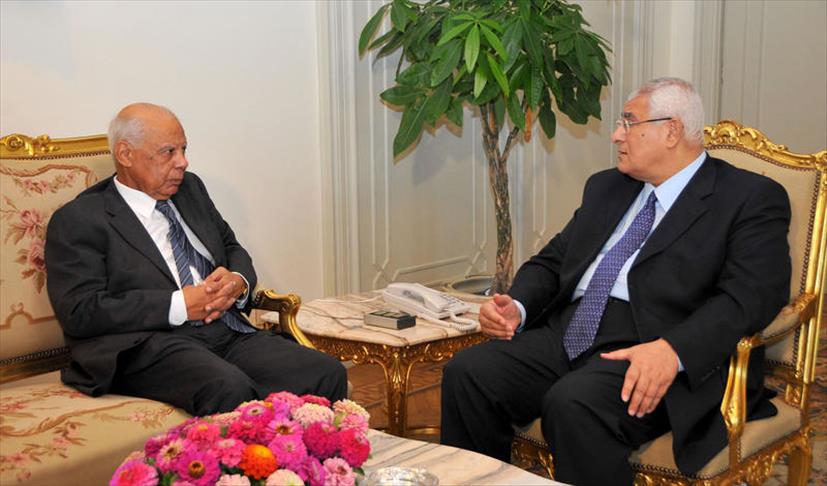
Burns, the first senior US official to visit the country since Morsi's ouster, left Cairo Tuesday after meeting with Mansour, Premier-designate Hazem al-Beblawi as well as with chief of the military and Defense Minister Gen. Abdel Fattah al-Sisi.
Egypt has been in a state of turmoil since the army removed Morsi from office on July 3, suspended the constitution and installed the head of the country's constitutional court as interim president.
Since then, Morsi loyalists have taken to the streets across the country to defend the deposed president's democratic legitimacy and demand that he return to office.