By Ayhan Simsek
BERLIN
Ethnic Turkish politicians and immigrants in Germany have criticized Chancellor Angela Merkel’s coalition partner Christian Social Union, accusing it of drifting into right-wing populism with its demands for immigrants “to speak German at home".
The criticisms came on Wednesday after the coalition’s minor partner CSU sparked a row earlier in the week by preparing a controversial motion ahead of its party congress on Friday, demanding immigrants speak German both in public and among their families at home.
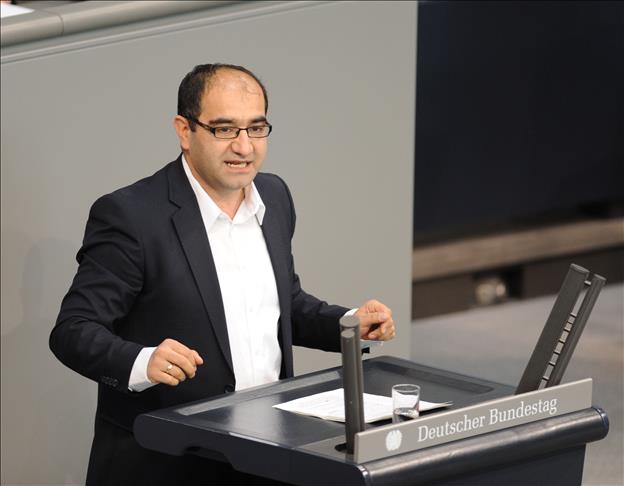
Ozcan Mutlu, an ethnic Turkish deputy from the opposition Green Party, told Anadolu Agency: "The CSU is provoking polemical debate to attract support from far right, but this is a very dangerous game."
"Democrats should refrain from adopting the rhetoric of far-right or populist parties. On the contrary, they should distance themselves from these movements," Mutlu said.
The rise in suspicion and negative feelings towards Muslims across Germany follows reports of violent murders and atrocities committed by the Islamic State of Iraq and the Levant (ISIL).
The changing sentiment has led to anti-immigrant parties and movements in the north European state gathering increasing support, raising worries among politicians.
'Absurd move'
Mutlu went on: "Most of the young generations of immigrants not only speak their mother tongue, but also fluent German, as well as English and often a fourth foreign language. This is today’s reality."
"This demand of the CSU has nothing to do with the reality. It is rather a populist demand aimed at a polemical debate."
Turkish Community in Germany, or TGD, one of the umbrella organizations of Turkish immigrants in the country, described the CSU's move as "absurd".
The TGD said in written statement: "The CSU is trying to impose an obligation for immigrants to speak German language at school, on the street and in the living room. This proposal is absurd, unconstitutional and also hostile to humanity."
"The CSU may be trying to impress the voters of the AfD and right-wing parties, but this is a disservice to democracy,” it said.
'Polemical debate'
With its anti-Euro and anti-immigration rhetoric, Germany’s first Eurosceptic party, AfD, has seen growing support recently which has increased pressure on traditional conservative parties.
The party won seven seats at the European Parliament elections in May and entered state parliaments in Saxony, Brandenburg and Thuringia during 2014.
Mutlu said it was not only the CSU, but also its sister party, Merkel’s Christian Democratic Union (CDU), which were showing drifting into right-wing populism.
He went on: "Some deputies from Merkel’s party have now come up with the idea of forbidding the burqa in Germany. But how many women wear burqa in Germany? This is not an issue here. The aim here is to provoke polemical debate."
Germany has approximately four million Muslims; around three million of them of Turkish origin.
According to a recent representative public poll by Infratest-dimap, 42 percent of Germans now view Islam as "aggressive" and 38 percent as a "threat".
Uncommon alliance
German security organizations estimate that about 550 Germans, mostly young immigrants from Salafist groups, have travelled to Syria and joined ISIL since the beginning of the civil war in Syria.
Around 6,000 Salafists are active in Germany, according to the Interior Ministry, which constitute a very small minority of the Muslim population.
Germany’s leading Muslim organizations say the source of the radicalization of some young immigrants is not Islam itself, but the sociological problems they face such as discrimination, unemployment, or a lack of future prospects.
Anti-immigration and anti-Islam slogans were chanted in a demonstration during which, some 10,000 protestors rallied in Dresden on Monday.
The march was organized by the recently founded group Patriotic Europeans against the Islamization of the West, or PEDISA.
Police and demonstrators clashed in late October when a previously uncommon alliance of hooligans and neo-Nazis, calling itself Hooligans against Salafists, or HoGeSa, rallied with nearly 5,000 protestors in Cologne.
www.aa.com.tr/en