By Mustapha Darboe
BANJUL, Gambia
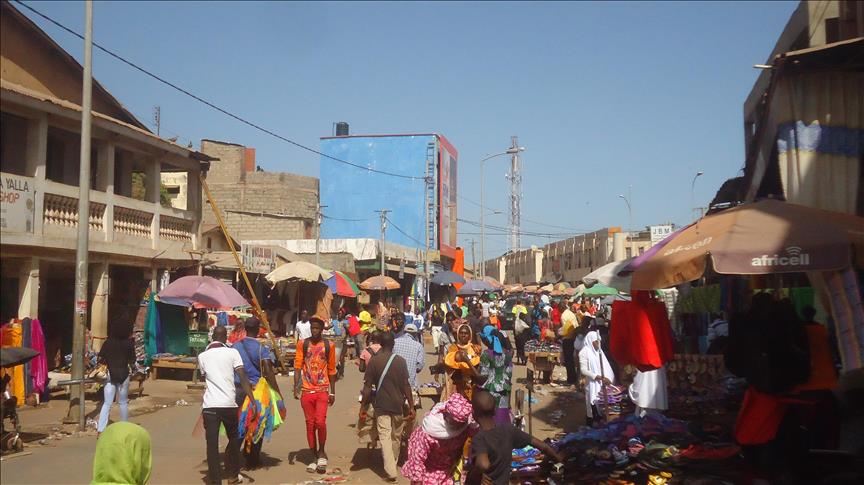
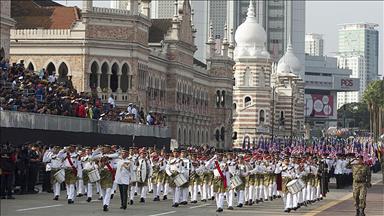
Gambians celebrate 51 years of nationhood on Thursday - raising questions among locals on how far the small west African state has advanced in more than half a century.
The former British protectorate is still dependent on international grants to boost development projects and has a public debt that stands at around 108 percent of last year's $3.3 billion gross domestic product (GDP).
Last year, the International Monetary Fund provided $10.8 million in emergency financial assistance.
Nearly half the population of 2 million people lives on less than a dollar a day and critics have accused post-independence rulers of doing little to improve the lives of ordinary Gambians.
However, unlike many of its neighbors The Gambia has enjoyed long spells of stability, having been ruled by two men since independence in 1965.
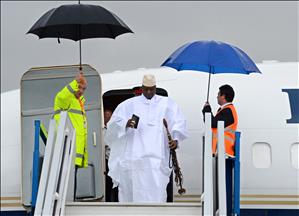
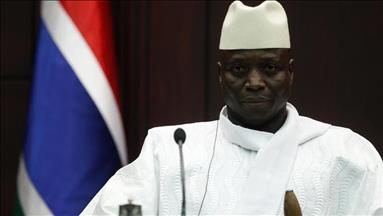
President Yahya Jammeh seized power as a junior army officer in 1994, taking over from Dawda Jawara. Since then he has won four widely criticized elections and defeated several coup attempts.
Last year, Jammeh declared the country, which has a population that is 96 percent Muslim, an Islamic republic to break from its colonial past.
Madi Jobarteh, deputy executive director of Tango, an institution that oversees the operations of NGOs in The Gambia, said the country should have far exceeded current levels of development.
“I am not satisfied with the progress we have made simply because our capacity and the resources we have are so immense that by now we should be counted among the most developed countries in the world,” he told Anadolu Agency.
“We have human resources, a very fertile land, [the] River Gambia, enormous sunlight and wind… I think coming down 51 years, the level of underdevelopment in all sectors is huge to the point that I am completely dissatisfied.”
The Gambia relies heavily on remittances from workers overseas and tourist income, which account for around 40 percent of GDP, according to the CIA World Factbook. Around three-quarters of the population depends on agriculture, which accounts for around 20 percent of GDP and peanuts are the dominant crop.
The Department for Trade, Industry and Employment lists the country’s natural resources as quartz sand, suitable for glass manufacture; beach deposits of minerals such as ilmenite, rutile and zircon; and “promising” hydrocarbon potential. However, in all of these areas the government notes that investment is being sought to exploit their potential.
Turning to politics and civil society, Jobarteh argued the country had “failed” to build a “nation state of sovereign people” where “power will reside in the people and not the government”.
Civil rights and media freedom is high on the list of concerns surrounding The Gambia, as is corruption.
Jammeh’s government has often arrested journalists on superficial charges, according to the U.S.-based Freedom House political freedom and human rights advocacy group, and regularly blocks critical websites.
However, Hassoum Ceesay, a respected historian, said that although there still remained improvements to be made, there were many achievements to celebrate.
“Development is an on-going process,” he said in an interview with Anadolu Agency. “What we can say is that great successes have been made in all areas of development from education to security, agriculture, telecommunication and international relations.
“But of course we have to agree that we still have miles to cover.”
He said the country - written off as an “improbable nation” when it gained independence – had “defied skeptics”.
In 1965, The Gambia had two senior schools and two hospitals with two local doctors and a broken infrastructure.
Now it has hundreds of schools and the University of the Gambia based in Serekunda, the country’s largest city. Its international airport ferries thousands of tourists to the Atlantic beaches every year.
University students approached by Anadolu Agency in the run-up to Independence Day said the country had done well to survive the bitter past of colonial exploitation but that post-independence leaders could have done better.
Essa Sanneh, a political science student, said “tremendous achievements” had been made but that “major challenges, especially in agriculture” were needed. “At 51, we should not be crying over electricity and water shortages and other social problems we are facing.”
Although China is the country’s largest trade partner, Turkey has close links to The Gambia. According to the Turkish Foreign Ministry, trade between the two countries reached $36 million in 2012 and the two countries regularly cooperate internationally at the UN and the Islamic Cooperation Organization.
The Red Crescent and the Turkish Cooperation and Development Agency have worked on aid programs while the Turkish government allocates higher education scholarships to Gambian students every year. A private Turkish school opened in The Gambia in 2010.