By Sandra Cuffe
RIVAS, Nicaragua
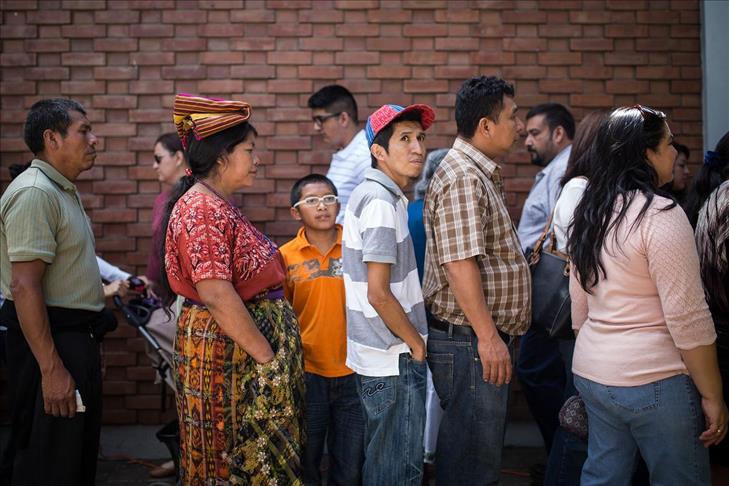
Guatemalans voted in record numbers in general elections, but were still awaiting final results Monday in a race that is too close to call.
Presidential candidate Jimmy Morales of the National Convergence Front (FCN) party is holding on to his early lead with nearly 24 percent of votes.
No candidate is in a position to achieve an outright majority. A runoff election will therefore take place in October between the two candidates with the most votes.
A close race for second place is still underway. National Unity of Hope (UNE) party candidate Sandra Torres maintains a narrow lead against Renewed Democratic Liberty (LIDER) party candidate Manuel Baldizon.
Results from nearly 2 percent of polling stations have yet to be transmitted. Fewer than 5,000 votes separate Torres, who has 19.68 percent of votes, and Baldizon, with 19.59 percent.
The Supreme Electoral Tribunal is transmitting the electronic results on its website. The live transmission is a first, tribunal president Rudy Marlon Pineda told reporters at a press conference Monday afternoon.
“What this Supreme Electoral Tribunal has done is historic,” said Pineda, adding that the transparency represents positive change.
Voter turnout was also historic, said Pineda. More than 70 percent of registered voters cast ballots Sunday, setting a record for the highest turnout since democratic elections resumed three decades ago.
The election took place as corruption scandals continue to rock Guatemala. President Otto Perez Molina resigned Wednesday and now faces legal proceedings for his alleged role in a criminal network that defrauded the state of an estimated $120 million in customs revenue.
With all eyes on how the remaining polling stations may affect who faces off against Morales in the runoff election, Pineda called for calm.
The Office of the Public Prosecutor received 600 reports of electoral infractions, officials announced. Clashes between party adherents, the destruction of ballots and other incidents have been reported in several municipalities around the country.
“This merits investigation, analysis and sanction,” said Salvador Romero, head of the Inter-American Union of Electoral Organisms (UNIORE) electoral observation mission.
The general election, however, was more peaceful than elections in previous years, Romero said at the Supreme Electoral Tribunal press conference Monday afternoon.
Aside from the presidential ballot, Guatemalans also voted for 158 legislators, 338 municipal governments, and representatives for the Central American Parliament.
The Supreme Electoral Tribunal refused to speculate on a timeframe for the preliminary final results.