By Shazia Yousuf
SRINAGAR
India's ruling right-wing Hindu political party will govern in Indian-held Kashmir for the first time in history.
The Bharatiya Janata Party, or BJP, will form a coalition with the Kashmiri regional party, the People's Democratic Party, or PDP, to form the next government in the disputed Himalayan region, announced the Hindu leader in New Delhi Tuesday.
"The two parties have almost reached a consensus (…) and a BJP-PDP alliance government will be formed in the coming days," the Hindu leader Amit Shah told reporters after meeting with the president of the Jammu & Kashmir People's Democratic Party, Mehbooba Mufti .
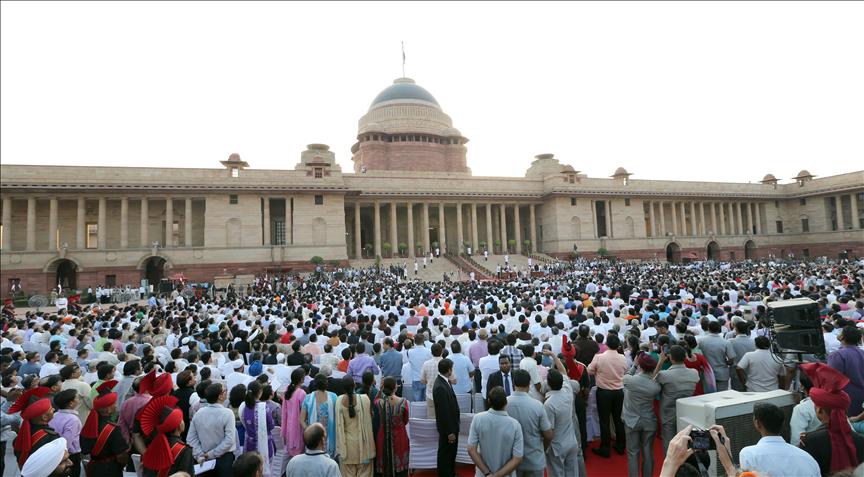
The government is expected to be formed on March 1 with the oath ceremony to take place in the Jammu region of Indian-held Kashmir.
Since the dispute over Kashmir began in 1947 between India and Pakistan, this marks the first time that the rightwing Hindu nationalist party will govern the only Muslim-majority region in India.
After the Assembly elections held in December 2014 which gave no clear majority, the state has been without a government.
The Bharatiya Janata Party consolidated the Hindu vote and emerged as the second largest party with 25 seats out of 87, while the People's Democratic Party had 28 seats.
The popular resistance leadership of Kashmir, which refuses to acknowledge the legitimacy of the elections "held under Indian occupation" told The Anadolu Agency that it was not surprised to see the formation of the coalition.
"All the pro-India parties in the Indian occupied Kashmir are extensions of New Delhi rather than representatives of the people. I have seen these betrayals for the sake of power since 1947 and it further proves our beliefs (...) that Kashmir can only be solved (sic) by giving us a right to self-determination," octogenarian resistance leader and head of separatist Tehreek-e-Hurriyat, Syed Ali Shah Geelani told The Anadolu Agency.
While the pro-India political parties consistently urge people to vote, claiming that the elections concern local governance and not the disputed nature of Kashmir, the Indian state regularly sells the elections as proof of democracy in the region.
And while participation for these elections is traditionally low in Indian-held Kashmir, some who did cast a vote in the December 2014 elections feel betrayed by the latest partnership.
“They (PDP) told us that we should vote to stop the right-wing Hindu BJP from coming to Kashmir and for the first time, we went to the polling booth and cast our vote,” said 47-year-old Mohammad Iqbal Khan. “Now they have joined hands with the same BJP to come to power, leaving us distraught for ever having betrayed the boycott of Indian elections.”
Kashmir, a Muslim-majority Himalayan region, is held by India and Pakistan in parts and claimed by both in full.
The two countries have fought three wars – in 1948, 1965 and 1971 – since they were partitioned in 1947, two of which were fought over Kashmir.
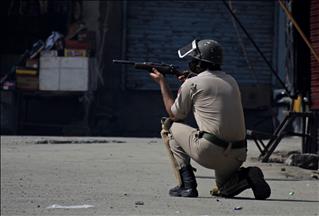
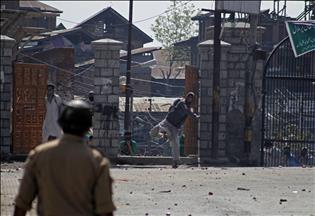
Since 1989, Kashmiri resistance groups in Indian-held Kashmir have been fighting against Indian rule, or for unification with neighboring Pakistan.
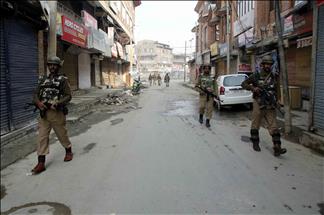
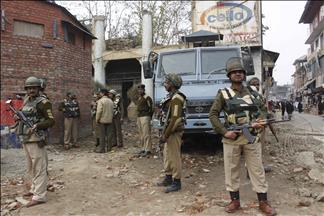
India maintains more than 500,000 troops in the region, and more than 70,000 people, mostly Kashmiris, have reportedly been killed in the conflict so far.