By Alex Jensen
SEOUL
Fifteen years ago to the day, North and South Korea issued a landmark message of hope -- a joint declaration that followed a breakthrough summit of then leaders Kim Jong-il and Kim Dae-jung.
It is a measure of the challenges since that they were not even able to hold a joint celebration of the occasion Monday.
But the anniversary was accompanied by cautious optimism, or at least an improvement on recent bilateral ties, as both sides publicly discussed the possibility of talks.
North Korea came forward first, with its state-run KCNA news agency carrying a statement suggesting that there was “no reason not to hold dialogue”.
Except there was a condition -- Pyongyang’s offer made clear that any talks would depend on an “atmosphere for trust and reconciliation”.
Seoul has repeatedly expressed its willingness to build a stronger relationship with the North, but the two Koreas have also consistently differed in their interpretation of how to move forward.
While North Korea pursues a policy of isolation using its longstanding threat of nuclear war as a deterrent, Pyongyang also demands that its southern neighbor effectively abandon its military alliance with the United States.
Perhaps unsurprisingly, South Korea’s unification ministry released a response later in the day in which it reminded the North to approach dialogue “without laying out improper preconditions”.
There was yet some cause for hope though, as the ministry also confirmed that North Korea planned to send back two South Korean citizens this week.
The pair in their 50s had apparently travelled to the North illegally via China last month -- neither side allows free inter-Korean travel to their people without official permission.
However, Pyongyang has ignored Seoul’s pleas for the release of four other South Korean nationals.
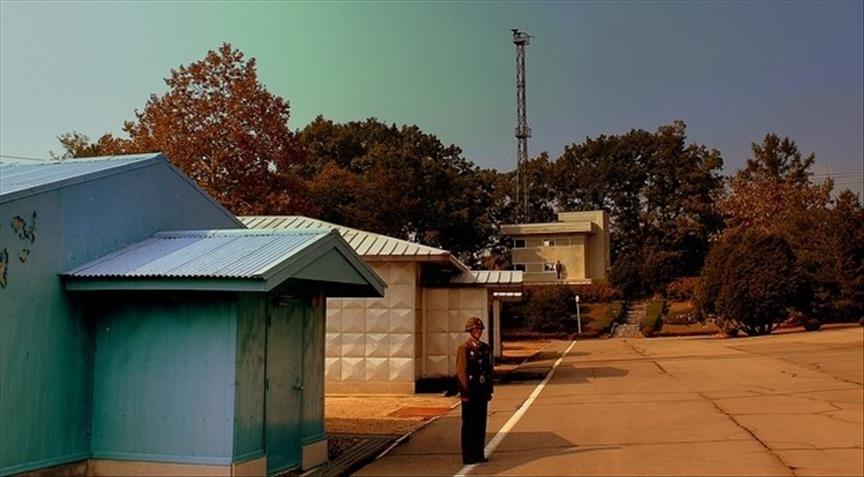
In a further development, a North Korean soldier defected to the South across the Demilitarized Zone for the first time since 2012 earlier in the day.
The border is fraught with tension as the Koreas have technically remained in a state of conflict since the end of the Korean War in 1953.