ANKARA
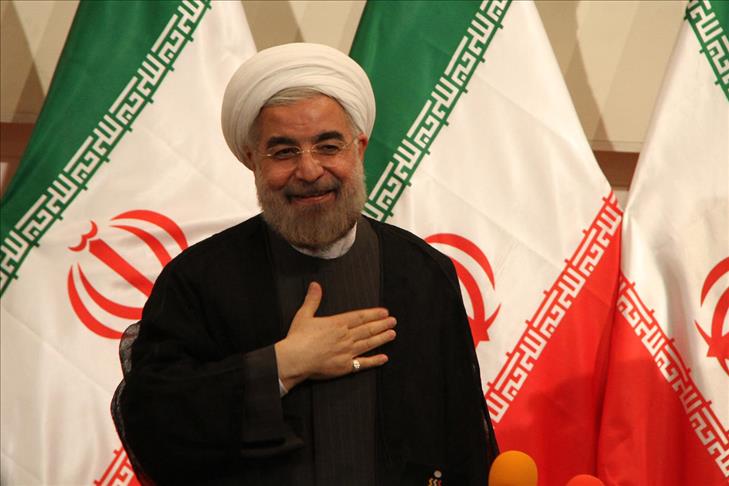
Iran will inaugurate on Sunday its new President, Hassan Rouhani, for a four-year tenure that looks beset with many difficulties.
The shortlist of challenges includes a bad economy gradually getting worse, a sensitive relationship with the Supreme Leader, and increasing international isolation and pressure.
Iran's economy is in dire straits, as Western sanctions aimed at dissuading Iran from its nuclear ambitions weigh more heavily than ever, exacerbating structural problems such as unemployment and high inflation.
Rouhani was quick to make a point of his commitment to improving the economic outlook, as he said in his first public address that economy was his number one priority.
Predecessor Mahmoud Ahmedinejad's eight year in office was marred by an economic meltdown, whose falling curve was unsurprisingly correlated with enhanced sanctions.
The US appears to have achieved its goal of making Iran's currency "essentially unusable outside of Iran," as one White House official put it two months ago when President Obama signed into law a new set of sanctions. Last year in September, the Iranian rial had lost 59% within one week.
In domestic politics, Rouhani is likely to find himself an envoy between the parliament of lawmakers and the powerful Supreme Leader, who has the last say in many policy areas.
On the other hand, the public has high expectations of the new leader, who seems to appeal to a broad audience with his Western education, diplomatic experience, and strong credentials as a religious authority.
Possibly the most important part of the equation in domestic politics will be Rouhani's relationship with Iran's Supreme Leader Ali Khamenei, whom Rouhani represented in Supreme National Security Council as the body's secretary general between 1989 and 2005.
The ties between the two leaders are said to be on good terms, and despite policy differences, they are expected to be able to work well with each other.
Rouhani will encounter a difficult international audience that have consistently denounced Iran's nuclear activities, which they say serves to advance the goal of obtaining a nuclear weapon.
Rouhani served as chief nuclear negotiator during a short period between 2003 and 2005. He is criticized by the country's Islamic hardliners to be too compromising in his talks with the EU Three, consisting of UK, France, and Germany.
Iran is not expected to turn away from its nuclear program whomever holds the office of presidency, yet a change of tone in the country's staunch rhetoric in negotiations with the West would still offer hope for better dialogue.
englishnews@aa.com.tr