Israel polls: When victory isn't enough to form govt
Both Netanyahu and Livni have ruled out the possibility of forming a post-election joint coalition
JERUSALEM
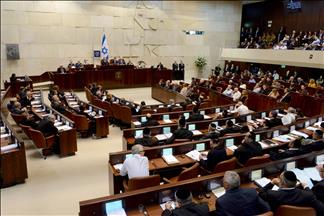
In Israel, it isn't enough to win the largest number of Knesset (parliament) seats for a party to form the government, as other factors are considered as well.
"Winning elections is not the end of the road; post-electoral talks over forming coalitions are no less important," Wadie Abu Nassar, a Palestinian expert in Israeli affairs, told The Anadolu Agency on the eve of Israel's legislative polls.
Abu Nassar recalled the country's 2009 polls, when former Justice Minister Tzipi Livni's centrist Kadima party won 28 of the assembly's 120 seats, edging out Benjamin Netanyahu's right-wing Likud party by a single seat.
Livni, however, failed to form a coalition government, refusing to agree to demands by the ultra-orthodox Shas party, prompting then President Shimon Peres to ask Netanyahu to draw up a cabinet.
Asked by The Jerusalem Post how Kadima's alliance with the leftist Labor party – dubbed the "Zionist Union" – could build a coalition, Livni said that she knew "more than anyone" how difficult it was, as she had failed to form one in 2009.
But in 2009, she said, Netanyahu had 61 Knesset seats in his pocket, whereas now he did not.
Livni's confidence has its reasons. The latest opinion survey, conducted last week by Israel's Channel 2, showed that the Zionist Camp would win 26 seats while Likud was likely to pick up 26.
But one of the two frontrunners will have to form a coalition of at least 61 seats in order to form the next government.
"Livni's 2009 experience is still vivid in Israel's political memory, as she was able to get the largest number of votes but eventually failed to form a government," Abu Nassar told AA.
"We are speaking about two major parties, but neither of them will be able to win half the seats necessary to form the government," he said.
"So they will have to form coalitions – which would bring together five or six parties – in order to secure the 61-seat majority threshold," he added.
Earlier this month, Israeli President Reuven Rivlin urged the main rivals to form a coalition government following the Tuesday polls in order to avoid early elections in the event that no party scores a clear victory.
He also asserted that, in the case of a near-tie between competing parties, he planned to work on cobbling together a coalition government tasked with changing Israel's electoral system.
Rivlin's concerns were driven by the collapse of Netanyahu's cabinet last year following divisions within his coalition government – divisions that eventually led to early elections.
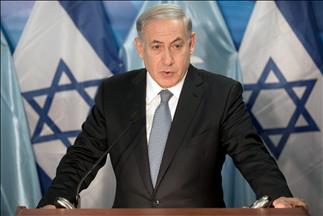
Both Netanyahu and Livni have ruled out the possibility of forming a post-election joint coalition.