Satuk Buğra Kutlugün
09 February 2016•Update: 12 February 2016
TOKYO
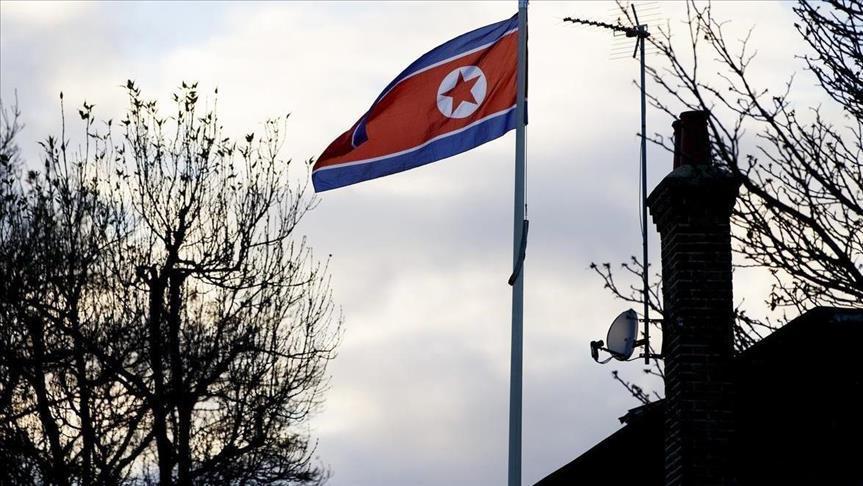
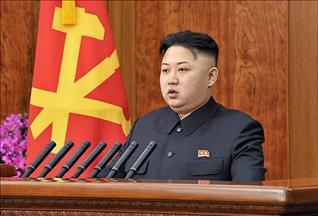
Japan's parliament passed a resolution Tuesday calling on the government to tighten its sanctions against North Korea after the reclusive state conducted a widely criticized rocket launch over the weekend.
The resolution unanimously adopted in the House of Representatives condemned the launch Sunday and strongly protested against Pyongyang, according to Kyodo.
The news agency also cited senior government officials as saying that Prime Minister Shinzo Abe spoke separately with the presidents of the United States and South Korea, with all agreeing on the need for the expedient adoption of a strong resolution against the launch at the UN Security Council.
While the Council has condemned the launch, Pyongyang is also yet to be punished for its claimed hydrogen bomb test last month, despite being barred under UN resolutions from using ballistic missile technology.
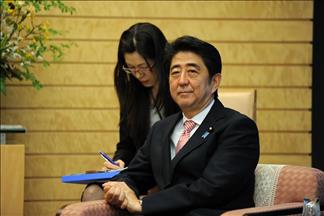
Deputy Chief Cabinet Secretary Hiroshige Seko quoted Abe as saying during a 35-minute phone conversation Tuesday with U.S. President Barack Obama that Sunday’s move "poses a direct and serious threat to Japan and the United States".
The PM stressed the need for the international community to "make every effort to put the brakes on Pyongyang's dangerous provocative acts" and "accelerate the process toward swift adoption of a strong resolution".
"It is necessary to promote specific cooperation in the Japan-U.S. alliance and trilaterally with the United States and South Korea," Abe said.
Seko said that Obama agreed on the need to take immediate action, and expressed Washington’s unshakeable commitment to the defense of its allies Japan and South Korea.
Kyodo also quoted another deputy chief cabinet secretary, Koichi Hagiuda, as saying that Abe underlined during his 15-minute talks with South Korea’s Park Geun Hye that Tokyo seeks to enhance security cooperation with Seoul.
He also expressed support for initiatives for the deployment of a controversial U.S. missile defense system in South Korea known as THAAD, or Terminal High Altitude Area Defense.
Park meanwhile expressed appreciation for plans to tighten Japanese sanctions on the North.
Concerns have been mounting that the North is edging closer to being able to fire long-range nuclear missiles, but China and Russia -- both of whom have the power of veto at the UN Security Council -- have expressed opposition to tougher sanctions against the already isolated state.