By Yassin Juma
NAIROBI
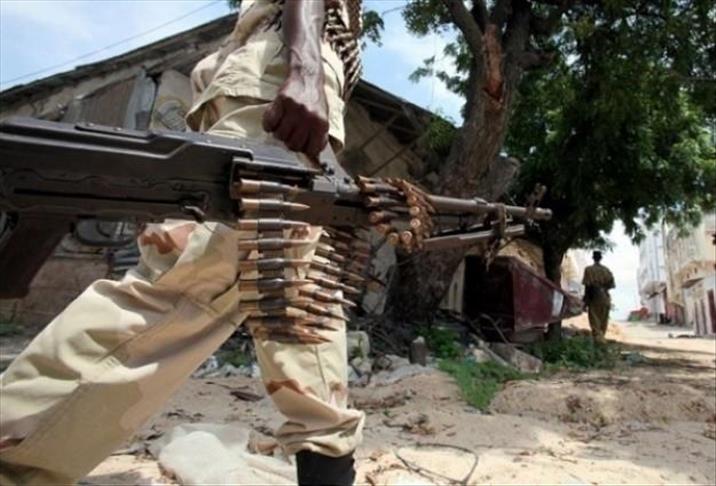
Kenyans fighting with Somalia's Al-Shabaab militant group have had mixed reactions to a recent amnesty offered by the Kenyan government if they lay down their arms.
"I have heard of the amnesty offer by the government," said a Kenyan Al-Shabaab member based in Somalia's Lower Shabelle region who agreed to talk to The Anadolu Agency on condition of anonymity, using only his nickname, Abu Mussa.
"It's the talk among the Muhajirin here, but not publicly, as it is a sensitive matter," he said, using a term that usually refers to Muslims who migrate from their home countries in the cause of Islam.
"Any public talk about leaving the land of jihad – or the group – could be dangerous for Muhajirin," asserted Abu Mussa.
On Tuesday, Kenya announced its willingness to rehabilitate – and pardon – repentant young people who had been radicalized by Al-Shabaab.
"The government hereby calls upon all individuals who had gone to Somalia for training and who wish to disassociate themselves with terrorism to report to national government offices within the next ten days," Cabinet Secretary for the Interior Joseph Nkaissery declared in a statement.
At least 148 people – mostly students – were killed earlier this month in a devastating attack on northern Kenya's Garissa University College.
Somalia's Al-Shabaab group swiftly claimed responsibility for the carnage.
The Al-Qaeda-linked group has vowed to carry out attacks in Kenya as long as the East African country maintains a military presence in neighboring Somalia.
Most of Al-Shabaab's non-Somali members hail from Kenya. Their numbers are estimated at between 600 and 1,000, according to a UN report on the group's recruitment activities.
"But, speaking for myself, I don't think I will ever return to Kenya. I came to Somalia to triumph and achieve martyrdom," said Abu Mussa.
He said he was recruited by Al-Shabaab in 2010 while living in Kenyan capital Nairobi, leaving behind his wife and nine-year-old son.
"I cannot trust the Kenyan government," Abu Mussa told AA.
"They killed many returnees in the past, including my closest brother. The ATPU killed him," he said, referring to Kenya's anti-terror police unit.
However, according to Abu Mussa, some of his fellow Kenyan Al-Shabaab fighters have shown an interest in going home.
Another Kenyan militant, who referred to himself only as Abdi and is based in an Al-Shabaab camp in Somalia's western Gedo region, welcomed the government's amnesty offer.
"If they are honest, I'm ready to return home," he told AA. "I have not been home for four years."
Abdi said he had seen many of his fellow fighters killed.
"I don't fear death, but I don't see this fighting ending soon," he told AA.
Abdi was recruited by Al-Shabaab in Kenya's northern Mandera region.
"We were not told we were coming to fight," he told AA. "I was told we were coming for daawa [preaching] and religious studies."
"I could not return home since I knew I was an Al-Shabaab [fighter] and therefore a wanted man," lamented Abdi.
In Nairobi's Pumwani slums, where many of the Kenyan Al-Shabaab fighters were recruited, Abubakr Swaleh welcomed the amnesty offer.
"The pain of not knowing what is happening to my son in Somalia has affected my health," 68-year-old Swaleh told AA by phone.
"It has been very painful to the whole family," he said. "I believe my son will return home one day."
In his son's absence, Swaleh, who has not seen his son since 2010, has had to take care of his son's wife and daughter.
According to him, his daughter-in-law dreams of the day her husband will come back so the family can be reunited.
"Our fear in the past was that if they returned, they would be killed as has happened to some boys here in Pumwani," he said.
Muslim leaders in Kenya have asked the government to extend to one month the ten-day grace period offered to Kenyan youth fighting with Al-Shabaab.
"Ten days is a very short time," Sheikh Adan Wachu, secretary-general of the Supreme Council of Kenya Muslims, told AA on Wednesday.
"The government should take note that it will exclud many people who want to benefit from the amnesty because of the logistics involved in traveling from Somalia to Kenya," he said.