Muetaz Wannes, Serdar Dincel and Rania Abushamala
30 August 2026•Update: 30 August 2026
Libya’s political rivals on Sunday welcomed the signing by the country’s 4+4 Small Dialogue Committee of a final agreement to restructure the High National Elections Commission and review election laws.
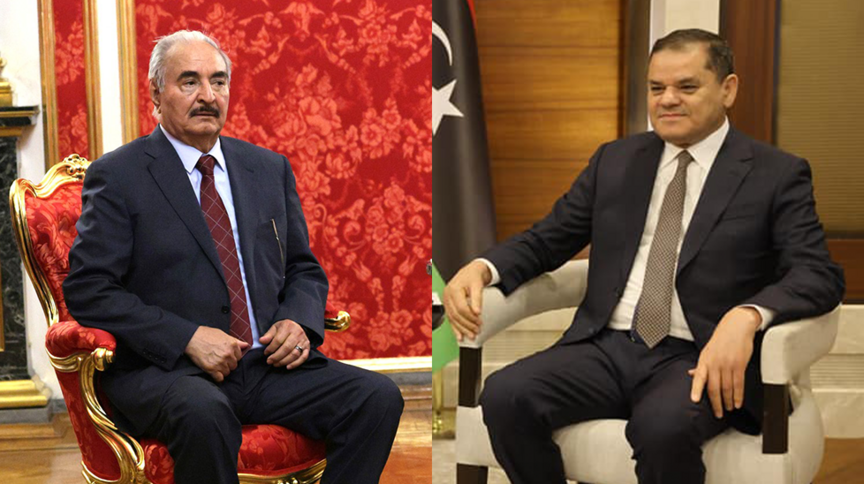
In a statement, Abdul Hamid Dbeibeh, Prime Minister of the Tripoli-based Government of National Unity, hailed the move as “an important step that reinforces the path we have called for from the outset, based on ending transitional phases and moving toward elections.”
“Our vision is clear: the decision should rest with the Libyan people through elections that end the state of division and give all institutions their true legitimacy,” he added.
He expressed hope that the agreement will constitute a "practical step in the right direction, preserving the priority of elections and paving the way for a national process that puts Libya on the path to stability and development.”
Khalifa Haftar, commander-in-chief of the Libyan National Army in the country’s east, also welcomed the agreement.
“The signing of the agreement represents progress in addressing issues that remained unresolved for years and hindered the Libyan people’s determination to move toward holding presidential and parliamentary elections,” Haftar said in a statement.
“We appreciate the role of the parties involved in the Small Dialogue and commend the local and international welcome for the Libyan consensus aimed at overcoming all obstacles preventing an end to the country’s existing divisions,” he added.
Haftar said he supported “the outcomes of the meeting and its commitment to working toward unifying the Libyan state and defending the Libyan people’s demands to end the state of chaos and division.”
Saddam Haftar, the deputy commander-in-chief of the Libyan National Army in the country’s east, also welcomed the agreement in a separate statement.
Saddam called the agreement “an important step toward removing the obstacles that have long stood in the way of fulfilling the Libyan people’s aspirations for holding simultaneous presidential and legislative elections as soon as possible.”
Earlier Sunday, the 4+4 committee announced the signing of a draft agreement that provides for restructuring the board of the High National Elections Commission and appointing Dhaou Ibrahim Attia as chairman of the commission’s board and Sana al-Lishani as deputy chairwoman.
The agreement sets a timetable for holding legislative and presidential elections under a single executive authority and unified national institutions within 24 months.
The latest agreement is part of UN-led efforts to create conditions to hold elections to end Libya's political division between two rival administrations: the Government of National Unity led by Dbeibeh in Tripoli, which governs western Libya, and the eastern-based government headed by Osama Hammad, appointed by the House of Representatives in early 2022 and administering eastern Libya and much of the country's south.