By Mainul Islam Khan
DHAKA, Bangladesh
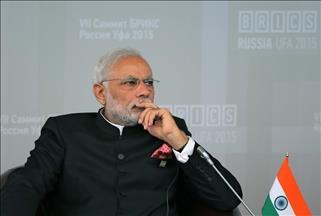
Bangladesh had hoped that when neighboring India's Prime Minister Narendra Modi arrived for a two-day visit on Saturday, he would bear the gift of a long-awaited and crucial water sharing treaty.
That dream has been, yet again, deferred. Despite an earlier announcement of an impending deal for sharing water in the River Teesta, which flows through both countries, Foreign Minister Sushma Swaraj last week said it now would not be signed.
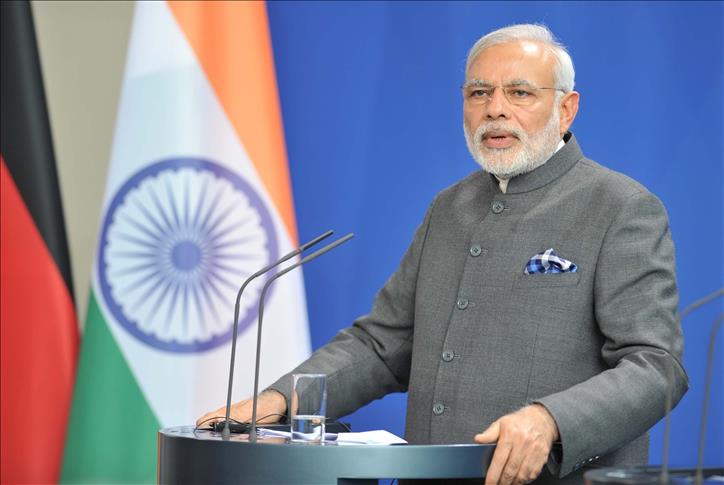
Aside from visiting monuments from Bangladesh's 1971 independence war, which India intervened in during the final days, Modi will, alongside Bangladeshi's Prime Minister Sheikh Hasina, launch two cross-border bus routes and sign a long-awaited land swap deal.
Joining Modi will be Mamata Banerjee, chief minister of West Bengal, the eastern Indian state that both borders and shares cultural and linguistic ties with Bangladesh.
Banerjee has previously blocked the deal but in February, during an ice-breaking trip to Bangladesh, promised: "do not worry about the Teesta deal, it will be signed soon."
Some have suggested however that Banerjee is still reluctant for the deal to pass because of internal politics in her own state.
"West Bengal has an election in 2016 and in the location where Teesta flows, [Banerjee's party] Trinamool has a large vote bank there, so of course Chief Minister Mamata Banerjee would not upset her voters on the Teesta bank by deciding anything now," said Mahfuz Ullah, Secretary General of The Centre for Sustainable Development.
"The way Teesta water is used in India, I doubt how much they would give in reducing their portion. It's important to keep 20 percent of water in the river for environmental flow, so now the question is how much they would provide," he said.
The Teesta begins in India but over a third of the river flows through Bangladesh where, according to a 2013 report by the non-profit Asia Foundation, an estimated 21 million people are dependent on the river for their livelihood.
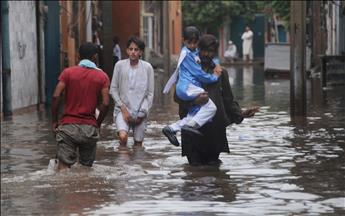
Bangladesh has long claimed however that a reservoir on the India side uses too much of the water, reducing the availability in Bangladesh during the dry season and then causing flooding when water is released during the monsoon rains.
Bangladesh's Foreign Minister AH Mahmood Ali told reporters on Friday that a deal is being negotiated but many are impatient after years of delay on the Teesta agreement.
Junaid Saki, a social and political activist, claimed India's policies are causing the river to dry up on the Bangladeshi side.
"The general international laws for rivers, this policy is also a violation of that. It is also a violation of keeping the environmental balance," said Saki. "We protest this policy and demand they [India] step back from their meddling and sign the treaty as soon as possible, to ensure our rightful portion of water."
The alleged alternating drought and flooding caused by India's use of the Teesta come in a part of Bangladesh that already suffers from a scarcity of water for consumption and irrigation.
Mominul Haque Monju, from Kurigram, a part of northern Bangladesh dependent on the river, told Anadolu Agency that locals are eager to see a deal go through.
"If farmers would get Teesta water on time, this huge area could bring massive change in our agriculture," said Monju. "The river used to flow strong even 20 years ago. Now it is dried up, full of silt, and puts millions in suffering."
"People changed their profession to live," he said, adding: "if the treaty is signed, the Teesta would get its life back.’
Celebrating closer ties
Modi announced his trip shortly after a deal to alter the land boundaries by exchanging 162 enclaves; small areas of land that both countries owned but which they could not administer as they laid on the other side of each other's borders.
The deal was ratified by Bangladesh after its independence in 1971 but it was not until last month that Indian parliament finally passed the bill.
This agreement, which will mean services can be provided to people who have been neglected for decades, has been taken as a sign of growing relations between the two countries since the ruling Awami League party took power in 2009.
"The ratification marks a watershed moment in our ties with Bangladesh," said Modi, in a statement issued through Facebook on Thursday.
"It is with a great sense of enthusiasm and delight that I visit a nation with which India’s ties have been very strong," he said. "I am certain my visit will be beneficial for the people of both our nations and in the larger good of the South Asian neighbourhood."
Indian analysts see the land deal, last year's settling of a maritime border dispute and Modi's visit to Bangladesh -- his first to a Muslim-majority nation -- as a chance for India to prove its regional influence.
"Modi has demonstrated his seriousness about putting neighbours first in India’s foreign policy priorities. If he unveils a forward-looking economic agenda in Dhaka this weekend, the PM can also reinforce his ambition to make India a leading power in the region and beyond," wrote foreign policy expert C Raja Mohan in the Indian Express newspaper.
Some in Bangladesh however, have also pointed out that many issues persist, especially in regard to imbalanced trade between the two countries.
Reaz Bin Mahmood, Vice President for finance of the Bangladesh Garment Manufacturers and Exporters Association, wrote in the daily Dhaka Tribune that there has been no progress in reducing Bangladesh's $5.6 billion trade deficit with India, which increased from $4.2 billion in 2012.
"The visit of the Indian prime minister is also a good occasion to point out the problems which lie in the bilateral trade relations between the two countries, and to ensure mutual trade benefits for both," wrote Mahmood.